Skip to content

vedo.shapes

shapes

glyphs

Glyph

Bases: Mesh

At each vertex of a mesh, another mesh, i.e. a "glyph", is shown with various orientation options and coloring.

The input can also be a simple list of 2D or 3D coordinates. Color can be specified as a colormap which maps the size of the orientation vectors in orientation_array.

Source code in vedo/shapes/glyphs.py
 18
 19
 20
 21
 22
 23
 24
 25
 26
 27
 28
 29
 30
 31
 32
 33
 34
 35
 36
 37
 38
 39
 40
 41
 42
 43
 44
 45
 46
 47
 48
 49
 50
 51
 52
 53
 54
 55
 56
 57
 58
 59
 60
 61
 62
 63
 64
 65
 66
 67
 68
 69
 70
 71
 72
 73
 74
 75
 76
 77
 78
 79
 80
 81
 82
 83
 84
 85
 86
 87
 88
 89
 90
 91
 92
 93
 94
 95
 96
 97
 98
 99
100
101
102
103
104
105
106
107
108
109
110
111
112
113
114
115
116
117
118
119
120
121
122
123
124
125
126
127
128
129
130
131
132
133
134
135
136
137
138
class Glyph(Mesh):
    """
    At each vertex of a mesh, another mesh, i.e. a "glyph", is shown with
    various orientation options and coloring.

    The input can also be a simple list of 2D or 3D coordinates.
    Color can be specified as a colormap which maps the size of the orientation
    vectors in `orientation_array`.
    """

    def __init__(
        self,
        mesh,
        glyph,
        orientation_array=None,
        scale_by_scalar=False,
        scale_by_vector_size=False,
        scale_by_vector_components=False,
        color_by_scalar=False,
        color_by_vector_size=False,
        c="k8",
        alpha=1.0,
    ) -> None:
        """
        Args:
            orientation_array (list, str, vtkArray):
                list of vectors, `vtkArray` or name of an already existing pointdata array
            scale_by_scalar (bool):
                glyph mesh is scaled by the active scalars
            scale_by_vector_size (bool):
                glyph mesh is scaled by the size of the vectors
            scale_by_vector_components (bool):
                glyph mesh is scaled by the 3 vectors components
            color_by_scalar (bool):
                glyph mesh is colored based on the scalar value
            color_by_vector_size (bool):
                glyph mesh is colored based on the vector size

        Examples:
            - [glyphs1.py](https://github.com/marcomusy/vedo/tree/master/examples/basic/glyphs1.py)
            - [glyphs2.py](https://github.com/marcomusy/vedo/tree/master/examples/basic/glyphs2.py)

            ![](https://vedo.embl.es/images/basic/glyphs.png)
        """
        if utils.is_sequence(mesh):
            # create a cloud of points
            poly = utils.buildPolyData(mesh)
        else:
            poly = mesh.dataset

        cmap = ""
        if isinstance(c, str) and c in cmaps_names:
            cmap = c
            c = None
        elif utils.is_sequence(c):  # user passing an array of point colors
            ucols = vtki.vtkUnsignedCharArray()
            ucols.SetNumberOfComponents(3)
            ucols.SetName("GlyphRGB")
            for col in c:
                cl = get_color(col)
                ucols.InsertNextTuple3(cl[0] * 255, cl[1] * 255, cl[2] * 255)
            poly.GetPointData().AddArray(ucols)
            poly.GetPointData().SetActiveScalars("GlyphRGB")
            c = None

        gly = vtki.vtkGlyph3D()
        gly.GeneratePointIdsOn()
        gly.SetInputData(poly)
        try:
            gly.SetSourceData(glyph)
        except TypeError:
            gly.SetSourceData(glyph.dataset)

        if scale_by_scalar:
            gly.SetScaleModeToScaleByScalar()
        elif scale_by_vector_size:
            gly.SetScaleModeToScaleByVector()
        elif scale_by_vector_components:
            gly.SetScaleModeToScaleByVectorComponents()
        else:
            gly.SetScaleModeToDataScalingOff()

        if color_by_vector_size:
            gly.SetVectorModeToUseVector()
            gly.SetColorModeToColorByVector()
        elif color_by_scalar:
            gly.SetColorModeToColorByScalar()
        else:
            gly.SetColorModeToColorByScale()

        if orientation_array is not None:
            gly.OrientOn()
            if isinstance(orientation_array, str):
                if orientation_array.lower() == "normals":
                    gly.SetVectorModeToUseNormal()
                else:  # passing a name
                    poly.GetPointData().SetActiveVectors(orientation_array)
                    gly.SetInputArrayToProcess(0, 0, 0, 0, orientation_array)
                    gly.SetVectorModeToUseVector()
            elif utils.is_sequence(orientation_array):  # passing a list
                varr = vtki.vtkFloatArray()
                varr.SetNumberOfComponents(3)
                varr.SetName("glyph_vectors")
                for v in orientation_array:
                    varr.InsertNextTuple(v)
                poly.GetPointData().AddArray(varr)
                poly.GetPointData().SetActiveVectors("glyph_vectors")
                gly.SetInputArrayToProcess(0, 0, 0, 0, "glyph_vectors")
                gly.SetVectorModeToUseVector()

        gly.Update()

        super().__init__(gly.GetOutput(), c, alpha)
        self.flat()

        if cmap:
            self.cmap(cmap, "VectorMagnitude")
        elif c is None:
            self.pointdata.select("GlyphRGB")

        self.name = "Glyph"

Tensors

Bases: Mesh

Geometric representation of tensors defined on a domain or set of points. Tensors can be scaled and/or rotated according to the source at each input point. Scaling and rotation is controlled by the eigenvalues/eigenvectors of the symmetrical part of the tensor as follows:

For each tensor, the eigenvalues (and associated eigenvectors) are sorted to determine the major, medium, and minor eigenvalues/eigenvectors. The eigenvalue decomposition only makes sense for symmetric tensors, hence the need to only consider the symmetric part of the tensor, which is 1/2*(T+T.transposed()).

Source code in vedo/shapes/glyphs.py
141
142
143
144
145
146
147
148
149
150
151
152
153
154
155
156
157
158
159
160
161
162
163
164
165
166
167
168
169
170
171
172
173
174
175
176
177
178
179
180
181
182
183
184
185
186
187
188
189
190
191
192
193
194
195
196
197
198
199
200
201
202
203
204
205
206
207
208
209
210
211
212
213
214
215
216
217
218
219
220
221
222
223
224
225
226
227
228
229
230
231
232
233
234
235
236
237
238
239
240
241
242
243
244
245
246
247
248
249
250
251
252
253
254
255
256
class Tensors(Mesh):
    """
    Geometric representation of tensors defined on a domain or set of points.
    Tensors can be scaled and/or rotated according to the source at each input point.
    Scaling and rotation is controlled by the eigenvalues/eigenvectors of the
    symmetrical part of the tensor as follows:

    For each tensor, the eigenvalues (and associated eigenvectors) are sorted
    to determine the major, medium, and minor eigenvalues/eigenvectors.
    The eigenvalue decomposition only makes sense for symmetric tensors,
    hence the need to only consider the symmetric part of the tensor,
    which is `1/2*(T+T.transposed())`.
    """

    def __init__(
        self,
        domain,
        source="ellipsoid",
        use_eigenvalues=True,
        is_symmetric=True,
        three_axes=False,
        scale=1.0,
        max_scale=None,
        length=None,
        res=24,
        c=None,
        alpha=1.0,
    ) -> None:
        """
        Args:
            source (str, Mesh):
                preset types of source shapes is "ellipsoid", "cylinder", "cube" or a `Mesh` object.
            use_eigenvalues (bool):
                color source glyph using the eigenvalues or by scalars
            three_axes (bool):
                if `False` scale the source in the x-direction,
                the medium in the y-direction, and the minor in the z-direction.
                Then, the source is rotated so that the glyph's local x-axis lies
                along the major eigenvector, y-axis along the medium eigenvector,
                and z-axis along the minor.

                If `True` three sources are produced, each of them oriented along an eigenvector
                and scaled according to the corresponding eigenvector.
            is_symmetric (bool):
                If `True` each source glyph is mirrored (2 or 6 glyphs will be produced).
                The x-axis of the source glyph will correspond to the eigenvector on output.
            length (float):
                distance from the origin to the tip of the source glyph along the x-axis
            scale (float):
                scaling factor of the source glyph.
            max_scale (float):
                clamp scaling at this factor.

        Examples:
            - [tensors.py](https://github.com/marcomusy/vedo/tree/master/examples/volumetric/tensors.py)
            - [tensor_grid1.py](https://github.com/marcomusy/vedo/tree/master/examples/extras/tensor_grid1.py)

            ![](https://vedo.embl.es/images/volumetric/tensor_grid.png)
        """
        if isinstance(source, Points):
            src = source.dataset
        else:  # is string
            if "ellip" in source:
                src = vtki.new("SphereSource")
                src.SetPhiResolution(res)
                src.SetThetaResolution(res * 2)
            elif "cyl" in source:
                src = vtki.new("CylinderSource")
                src.SetResolution(res)
                src.CappingOn()
            elif source == "cube":
                src = vtki.new("CubeSource")
            else:
                vedo.logger.error(f"Unknown source type {source}")
                raise ValueError()
            src.Update()
            src = src.GetOutput()

        tg = vtki.new("TensorGlyph")
        if isinstance(domain, vtki.vtkPolyData):
            tg.SetInputData(domain)
        else:
            tg.SetInputData(domain.dataset)
        tg.SetSourceData(src)

        if c is None:
            tg.ColorGlyphsOn()
        else:
            tg.ColorGlyphsOff()

        tg.SetSymmetric(int(is_symmetric))

        if length is not None:
            tg.SetLength(length)
        if use_eigenvalues:
            tg.ExtractEigenvaluesOn()
            tg.SetColorModeToEigenvalues()
        else:
            tg.SetColorModeToScalars()

        tg.SetThreeGlyphs(three_axes)
        tg.ScalingOn()
        tg.SetScaleFactor(scale)
        if max_scale is None:
            tg.ClampScalingOn()
            max_scale = scale * 10
        tg.SetMaxScaleFactor(max_scale)

        tg.Update()
        tgn = vtki.new("PolyDataNormals")
        tgn.ComputeCellNormalsOff()
        tgn.SetInputData(tg.GetOutput())
        tgn.Update()

        super().__init__(tgn.GetOutput(), c, alpha)
        self.name = "Tensors"

curves

Arc

Bases: Line

Build a 2D circular arc between 2 points.

Source code in vedo/shapes/curves_core.py
819
820
821
822
823
824
825
826
827
828
829
830
831
832
833
834
835
836
837
838
839
840
841
842
843
844
845
846
847
848
849
850
851
852
853
854
855
856
857
858
859
860
861
862
863
864
865
866
867
868
869
870
871
872
873
874
875
876
877
878
879
880
881
882
883
884
885
886
887
888
889
890
891
892
893
894
895
896
class Arc(Line):
    """
    Build a 2D circular arc between 2 points.
    """

    def __init__(
        self,
        center=None,
        point1=None,
        point2=None,
        normal=None,
        angle=None,
        invert=False,
        res=60,
        c="k3",
        alpha=1.0,
    ) -> None:
        """
        Build a 2D circular arc between 2 points.
        Two modes are available:
            1. [center, point1, point2] are specified

            2. [point1, normal, angle] are specified.

        In the first case it creates an arc defined by two endpoints and a center.
        In the second the arc spans the shortest angular sector defined by
        a starting point, a normal and a spanning angle.
        if `invert=True`, then the opposite happens.

        Example 1:
        ```python
        from vedo import *
        center = [0,1,0]
        p1 = [1,2,0.4]
        p2 = [0.5,3,-1]
        arc = Arc(center, p1, p2).lw(5).c("purple5")
        line2 = Line(center, p2)
        pts = Points([center, p1,p2], r=9, c='r')
        show(pts, line2, arc, f"length={arc.length()}", axes=1).close()
        ```

        Example 2:
        ```python
        from vedo import *
        arc = Arc(point1=[0,1,0], normal=[0,0,1], angle=270)
        arc.lw(5).c("purple5")
        origin = Point([0,0,0], r=9, c='r')
        show(origin, arc, arc.labels2d(), axes=1).close()
        ```
        """
        ar = vtki.new("ArcSource")
        if point2 is not None:
            center = utils.make3d(center)
            point1 = utils.make3d(point1)
            point2 = utils.make3d(point2)
            ar.UseNormalAndAngleOff()
            ar.SetPoint1(point1 - center)
            ar.SetPoint2(point2 - center)
        elif normal is not None and angle and point1 is not None:
            normal = utils.make3d(normal)
            point1 = utils.make3d(point1)
            ar.UseNormalAndAngleOn()
            ar.SetAngle(angle)
            ar.SetPolarVector(point1)
            ar.SetNormal(normal)
            self.top = normal
        else:
            vedo.logger.error("in Arc(), incorrect input combination.")
            raise TypeError
        ar.SetNegative(invert)
        ar.SetResolution(res)
        ar.Update()

        super().__init__(ar.GetOutput(), c, alpha)
        self.lw(2).lighting("off")
        if point2 is not None:  # nb: not center
            self.pos(center)
        self.name = "Arc"

Arrow

Bases: Mesh

Build a 3D arrow from start_pt to end_pt of section size s, expressed as the fraction of the window size.

Source code in vedo/shapes/curves_extras.py
165
166
167
168
169
170
171
172
173
174
175
176
177
178
179
180
181
182
183
184
185
186
187
188
189
190
191
192
193
194
195
196
197
198
199
200
201
202
203
204
205
206
207
208
209
210
211
212
213
214
215
216
217
218
219
220
221
222
223
224
225
226
227
228
229
230
231
232
233
234
235
236
237
238
239
240
241
242
243
244
245
246
247
248
249
250
251
252
253
254
255
256
257
258
259
260
261
262
263
class Arrow(Mesh):
    """
    Build a 3D arrow from `start_pt` to `end_pt` of section size `s`,
    expressed as the fraction of the window size.
    """

    def __init__(
        self,
        start_pt=(0, 0, 0),
        end_pt=(1, 0, 0),
        s=None,
        shaft_radius=None,
        head_radius=None,
        head_length=None,
        res=12,
        c="r4",
        alpha=1.0,
    ) -> None:
        """
        If `c` is a `float` less than 1, the arrow is rendered as a in a color scale
        from white to red.

        .. note:: If `s=None` the arrow is scaled proportionally to its length

        ![](https://raw.githubusercontent.com/lorensen/VTKExamples/master/src/Testing/Baseline/Cxx/GeometricObjects/TestOrientedArrow.png)
        """
        # in case user is passing meshs
        if isinstance(start_pt, vtki.vtkActor):
            start_pt = start_pt.GetPosition()
        if isinstance(end_pt, vtki.vtkActor):
            end_pt = end_pt.GetPosition()

        axis = np.asarray(end_pt) - np.asarray(start_pt)
        length = float(np.linalg.norm(axis))
        if length:
            axis = axis / length
        if len(axis) < 3:  # its 2d
            theta = np.pi / 2
            start_pt = [start_pt[0], start_pt[1], 0.0]
            end_pt = [end_pt[0], end_pt[1], 0.0]
        else:
            theta = np.arccos(axis[2])
        phi = np.arctan2(axis[1], axis[0])
        self.source = vtki.new("ArrowSource")
        self.source.SetShaftResolution(res)
        self.source.SetTipResolution(res)

        if s:
            sz = 0.02
            self.source.SetTipRadius(sz)
            self.source.SetShaftRadius(sz / 1.75)
            self.source.SetTipLength(sz * 15)

        if head_length:
            self.source.SetTipLength(head_length)
        if head_radius:
            self.source.SetTipRadius(head_radius)
        if shaft_radius:
            self.source.SetShaftRadius(shaft_radius)

        self.source.Update()

        t = vtki.vtkTransform()
        t.Translate(start_pt)
        t.RotateZ(np.rad2deg(phi))
        t.RotateY(np.rad2deg(theta))
        t.RotateY(-90)  # put it along Z
        if s:
            sz = 800 * s
            t.Scale(length, sz, sz)
        else:
            t.Scale(length, length, length)

        tf = vtki.new("TransformPolyDataFilter")
        tf.SetInputData(self.source.GetOutput())
        tf.SetTransform(t)
        tf.Update()

        super().__init__(tf.GetOutput(), c, alpha)

        self.transform = LinearTransform().translate(start_pt)

        self.phong().lighting("plastic")
        self.actor.PickableOff()
        self.actor.DragableOff()
        self.base = np.array(start_pt, dtype=float)  # used by pyplot
        self.top = np.array(end_pt, dtype=float)  # used by pyplot
        self.top_index = self.source.GetTipResolution() * 4
        self.fill = True  # used by pyplot.__iadd__()
        self.s = s if s is not None else 1  # used by pyplot.__iadd__()
        self.name = "Arrow"

    def top_point(self):
        """Return the current coordinates of the tip of the Arrow."""
        return self.transform.transform_point(self.top)

    def base_point(self):
        """Return the current coordinates of the base of the Arrow."""
        return self.transform.transform_point(self.base)

base_point()

Return the current coordinates of the base of the Arrow.

Source code in vedo/shapes/curves_extras.py
261
262
263
def base_point(self):
    """Return the current coordinates of the base of the Arrow."""
    return self.transform.transform_point(self.base)

top_point()

Return the current coordinates of the tip of the Arrow.

Source code in vedo/shapes/curves_extras.py
257
258
259
def top_point(self):
    """Return the current coordinates of the tip of the Arrow."""
    return self.transform.transform_point(self.top)

Arrow2D

Bases: Mesh

Build a 2D arrow.

Source code in vedo/shapes/curves_extras.py
365
366
367
368
369
370
371
372
373
374
375
376
377
378
379
380
381
382
383
384
385
386
387
388
389
390
391
392
393
394
395
396
397
398
399
400
401
402
403
404
405
406
407
408
409
410
411
412
413
414
415
416
417
418
419
420
421
422
423
424
425
426
427
428
429
430
431
432
433
434
435
436
437
438
439
440
441
442
443
444
445
446
447
448
449
450
451
452
453
454
455
456
457
458
459
460
461
462
463
464
465
466
467
468
469
470
471
472
class Arrow2D(Mesh):
    """
    Build a 2D arrow.
    """

    def __init__(
        self,
        start_pt=(0, 0, 0),
        end_pt=(1, 0, 0),
        s=1,
        rotation=0.0,
        shaft_length=0.85,
        shaft_width=0.055,
        head_length=0.175,
        head_width=0.175,
        fill=True,
        c="red4",
        alpha=1.0,
    ) -> None:
        """
        Build a 2D arrow from `start_pt` to `end_pt`.

        Args:
            s (float):
                a global multiplicative convenience factor controlling the arrow size
            shaft_length (float):
                fractional shaft length
            shaft_width (float):
                fractional shaft width
            head_length (float):
                fractional head length
            head_width (float):
                fractional head width
            fill (bool):
                if False only generate the outline
        """
        self.fill = fill  ## needed by pyplot.__iadd()
        self.s = s  ## needed by pyplot.__iadd()

        if s != 1:
            shaft_width *= s
            head_width *= np.sqrt(s)

        # in case user is passing meshs
        if isinstance(start_pt, vtki.vtkActor):
            start_pt = start_pt.GetPosition()
        if isinstance(end_pt, vtki.vtkActor):
            end_pt = end_pt.GetPosition()
        if len(start_pt) == 2:
            start_pt = [start_pt[0], start_pt[1], 0]
        if len(end_pt) == 2:
            end_pt = [end_pt[0], end_pt[1], 0]

        headBase = 1 - head_length
        head_width = max(head_width, shaft_width)
        if head_length is None or headBase > shaft_length:
            headBase = shaft_length

        verts = []
        verts.append([0, -shaft_width / 2, 0])
        verts.append([shaft_length, -shaft_width / 2, 0])
        verts.append([headBase, -head_width / 2, 0])
        verts.append([1, 0, 0])
        verts.append([headBase, head_width / 2, 0])
        verts.append([shaft_length, shaft_width / 2, 0])
        verts.append([0, shaft_width / 2, 0])
        if fill:
            faces = ((0, 1, 3, 5, 6), (5, 3, 4), (1, 2, 3))
            poly = utils.buildPolyData(verts, faces)
        else:
            lines = (0, 1, 2, 3, 4, 5, 6, 0)
            poly = utils.buildPolyData(verts, [], lines=lines)

        axis = np.array(end_pt) - np.array(start_pt)
        length = float(np.linalg.norm(axis))
        if length:
            axis = axis / length
        theta = 0
        if len(axis) > 2:
            theta = np.arccos(axis[2])
        phi = np.arctan2(axis[1], axis[0])

        t = vtki.vtkTransform()
        t.Translate(start_pt)
        if phi:
            t.RotateZ(np.rad2deg(phi))
        if theta:
            t.RotateY(np.rad2deg(theta))
        t.RotateY(-90)  # put it along Z
        if rotation:
            t.RotateX(rotation)
        t.Scale(length, length, length)

        tf = vtki.new("TransformPolyDataFilter")
        tf.SetInputData(poly)
        tf.SetTransform(t)
        tf.Update()

        super().__init__(tf.GetOutput(), c, alpha)

        self.transform = LinearTransform().translate(start_pt)

        self.lighting("off")
        self.actor.DragableOff()
        self.actor.PickableOff()
        self.base = np.array(start_pt, dtype=float)  # used by pyplot
        self.top = np.array(end_pt, dtype=float)  # used by pyplot
        self.name = "Arrow2D"

Arrows

Bases: Glyph

Build arrows between two lists of points.

Source code in vedo/shapes/curves_extras.py
266
267
268
269
270
271
272
273
274
275
276
277
278
279
280
281
282
283
284
285
286
287
288
289
290
291
292
293
294
295
296
297
298
299
300
301
302
303
304
305
306
307
308
309
310
311
312
313
314
315
316
317
318
319
320
321
322
323
324
325
326
327
328
329
330
331
332
333
334
335
336
337
338
339
340
341
342
343
344
345
346
347
348
349
350
351
352
353
354
355
356
357
358
359
360
361
362
class Arrows(Glyph):
    """
    Build arrows between two lists of points.
    """

    def __init__(
        self,
        start_pts,
        end_pts=None,
        s=None,
        shaft_radius=None,
        head_radius=None,
        head_length=None,
        thickness=1.0,
        res=6,
        c="k3",
        alpha=1.0,
    ) -> None:
        """
        Build arrows between two lists of points `start_pts` and `end_pts`.
         `start_pts` can be also passed in the form `[[point1, point2], ...]`.

        Color can be specified as a colormap which maps the size of the arrows.

        Args:
            s (float):
                fix aspect-ratio of the arrow and scale its cross section
            c (color):
                color or color map name
            alpha (float):
                set object opacity
            res (int):
                set arrow resolution

        Examples:
            - [glyphs2.py](https://github.com/marcomusy/vedo/tree/master/examples/basic/glyphs2.py)

            ![](https://user-images.githubusercontent.com/32848391/55897850-a1a0da80-5bc1-11e9-81e0-004c8f396b43.jpg)
        """
        if isinstance(start_pts, Points):
            start_pts = start_pts.coordinates
        if isinstance(end_pts, Points):
            end_pts = end_pts.coordinates

        start_pts = np.asarray(start_pts)
        if end_pts is None:
            strt = start_pts[:, 0]
            end_pts = start_pts[:, 1]
            start_pts = strt
        else:
            end_pts = np.asarray(end_pts)

        start_pts = utils.make3d(start_pts)
        end_pts = utils.make3d(end_pts)

        arr = vtki.new("ArrowSource")
        arr.SetShaftResolution(res)
        arr.SetTipResolution(res)

        if s:
            sz = 0.02 * s
            arr.SetTipRadius(sz * 2)
            arr.SetShaftRadius(sz * thickness)
            arr.SetTipLength(sz * 10)

        if head_radius:
            arr.SetTipRadius(head_radius)
        if shaft_radius:
            arr.SetShaftRadius(shaft_radius)
        if head_length:
            arr.SetTipLength(head_length)

        arr.Update()
        out = arr.GetOutput()

        orients = end_pts - start_pts

        color_by_vector_size = utils.is_sequence(c) or c in cmaps_names

        super().__init__(
            start_pts,
            out,
            orientation_array=orients,
            scale_by_vector_size=True,
            color_by_vector_size=color_by_vector_size,
            c=c,
            alpha=alpha,
        )
        self.lighting("off")
        self.actor.PickableOff()
        self.actor.DragableOff()
        if color_by_vector_size:
            vals = np.linalg.norm(orients, axis=1)
            self.mapper.SetScalarRange(vals.min(), vals.max())
        else:
            self.c(c)
        self.name = "Arrows"

Arrows2D

Bases: Glyph

Build 2D arrows between two lists of points.

Source code in vedo/shapes/curves_extras.py
475
476
477
478
479
480
481
482
483
484
485
486
487
488
489
490
491
492
493
494
495
496
497
498
499
500
501
502
503
504
505
506
507
508
509
510
511
512
513
514
515
516
517
518
519
520
521
522
523
524
525
526
527
528
529
530
531
532
533
534
535
536
537
538
539
540
541
542
543
544
545
546
547
548
549
550
551
552
553
554
555
556
557
class Arrows2D(Glyph):
    """
    Build 2D arrows between two lists of points.
    """

    def __init__(
        self,
        start_pts,
        end_pts=None,
        s=1.0,
        rotation=0.0,
        shaft_length=0.8,
        shaft_width=0.05,
        head_length=0.225,
        head_width=0.175,
        fill=True,
        c=None,
        alpha=1.0,
    ) -> None:
        """
        Build 2D arrows between two lists of points `start_pts` and `end_pts`.
        `start_pts` can be also passed in the form `[[point1, point2], ...]`.

        Color can be specified as a colormap which maps the size of the arrows.

        Args:
            shaft_length (float):
                fractional shaft length
            shaft_width (float):
                fractional shaft width
            head_length (float):
                fractional head length
            head_width (float):
                fractional head width
            fill (bool):
                if False only generate the outline
        """
        if isinstance(start_pts, Points):
            start_pts = start_pts.coordinates
        if isinstance(end_pts, Points):
            end_pts = end_pts.coordinates

        start_pts = np.asarray(start_pts, dtype=float)
        if end_pts is None:
            strt = start_pts[:, 0]
            end_pts = start_pts[:, 1]
            start_pts = strt
        else:
            end_pts = np.asarray(end_pts, dtype=float)

        if head_length is None:
            head_length = 1 - shaft_length

        arr = Arrow2D(
            (0, 0, 0),
            (1, 0, 0),
            s=s,
            rotation=rotation,
            shaft_length=shaft_length,
            shaft_width=shaft_width,
            head_length=head_length,
            head_width=head_width,
            fill=fill,
        )

        orients = end_pts - start_pts
        orients = utils.make3d(orients)

        pts = Points(start_pts)
        super().__init__(
            pts,
            arr,
            orientation_array=orients,
            scale_by_vector_size=True,
            c=c,
            alpha=alpha,
        )
        self.flat().lighting("off")
        self.actor.PickableOff()
        self.actor.DragableOff()
        if c is not None:
            self.color(c)
        self.name = "Arrows2D"

Bezier

Bases: Line

Generate the Bezier line that links the first to the last point.

Source code in vedo/shapes/curves_core.py
1128
1129
1130
1131
1132
1133
1134
1135
1136
1137
1138
1139
1140
1141
1142
1143
1144
1145
1146
1147
1148
1149
1150
1151
1152
1153
1154
1155
1156
1157
1158
1159
1160
1161
1162
1163
1164
1165
1166
1167
1168
1169
1170
1171
class Bezier(Line):
    """
    Generate the Bezier line that links the first to the last point.
    """

    def __init__(self, points, res=None) -> None:
        """
        Examples:
            ```python
            from vedo import *
            import numpy as np
            pts = np.random.randn(25,3)
            for i,p in enumerate(pts):
                p += [5*i, 15*sin(i/2), i*i*i/200]
            show(Points(pts), Bezier(pts), axes=1).close()
            ```
            ![](https://user-images.githubusercontent.com/32848391/90437534-dafd2a80-e0d2-11ea-9b93-9ecb3f48a3ff.png)
        """
        N = len(points)
        if res is None:
            res = 10 * N
        t = np.linspace(0, 1, num=res)
        bcurve = np.zeros((res, len(points[0])))

        def binom(n, k):
            b = 1
            for t in range(1, min(k, n - k) + 1):
                b *= n / t
                n -= 1
            return b

        def bernstein(n, k):
            coeff = binom(n, k)

            def _bpoly(x):
                return coeff * x**k * (1 - x) ** (n - k)

            return _bpoly

        for ii in range(N):
            b = bernstein(N - 1, ii)(t)
            bcurve += np.outer(b, points[ii])
        super().__init__(bcurve, lw=2)
        self.name = "BezierLine"

CSpline

Bases: Line

Return a Cardinal spline which runs exactly through all the input points.

Source code in vedo/shapes/curves_core.py
1067
1068
1069
1070
1071
1072
1073
1074
1075
1076
1077
1078
1079
1080
1081
1082
1083
1084
1085
1086
1087
1088
1089
1090
1091
1092
1093
1094
1095
1096
1097
1098
1099
1100
1101
1102
1103
1104
1105
1106
1107
1108
1109
1110
1111
1112
1113
1114
1115
1116
1117
1118
1119
1120
1121
1122
1123
1124
1125
class CSpline(Line):
    """
    Return a Cardinal spline which runs exactly through all the input points.
    """

    def __init__(self, points, closed=False, res=None) -> None:
        """
        Args:
            closed (bool):
                join last to first point to produce a closed curve
            res (int):
                approximate resolution of the output line.
                Default is 20 times the number of input points.

        Warning:
            This class is not necessarily generating the exact number of points
            as requested by `res`. Some points may be concident and removed.

        See also: `Spline` and `KSpline`.
        """

        if isinstance(points, Points):
            points = points.coordinates

        if not res:
            res = len(points) * 20

        points = utils.make3d(points).astype(float)

        vtkCardinalSpline = vtki.get_class("CardinalSpline")
        xspline = vtkCardinalSpline()
        yspline = vtkCardinalSpline()
        zspline = vtkCardinalSpline()
        for s in [xspline, yspline, zspline]:
            s.SetClosed(closed)

        lenp = len(points[0]) > 2

        for i, p in enumerate(points):
            xspline.AddPoint(i, p[0])
            yspline.AddPoint(i, p[1])
            if lenp:
                zspline.AddPoint(i, p[2])

        ln = []
        for pos in np.linspace(0, len(points), res):
            x = xspline.Evaluate(pos)
            y = yspline.Evaluate(pos)
            z = 0
            if lenp:
                z = zspline.Evaluate(pos)
            ln.append((x, y, z))

        super().__init__(ln, lw=2)
        self.clean()
        self.lighting("off")
        self.name = "CSpline"
        self.base = points[0]
        self.top = points[-1]

DashedLine

Bases: Mesh

Consider using Line.pattern() instead.

Build a dashed line segment between points p0 and p1. If p0 is a list of points returns the line connecting them. A 2D set of coords can also be passed as p0=[x..], p1=[y..].

Source code in vedo/shapes/curves_core.py
477
478
479
480
481
482
483
484
485
486
487
488
489
490
491
492
493
494
495
496
497
498
499
500
501
502
503
504
505
506
507
508
509
510
511
512
513
514
515
516
517
518
519
520
521
522
523
524
525
526
527
528
529
530
531
532
533
534
535
536
537
538
539
540
541
542
543
544
545
546
547
548
549
550
551
552
553
554
555
556
557
558
559
560
561
562
563
564
565
566
567
568
569
570
571
572
573
574
575
576
577
578
579
580
581
582
583
584
class DashedLine(Mesh):
    """
    Consider using `Line.pattern()` instead.

    Build a dashed line segment between points `p0` and `p1`.
    If `p0` is a list of points returns the line connecting them.
    A 2D set of coords can also be passed as `p0=[x..], p1=[y..]`.
    """

    def __init__(
        self, p0, p1=None, spacing=0.1, closed=False, lw=2, c="k5", alpha=1.0
    ) -> None:
        """
        Args:
            closed (bool):
                join last to first point
            spacing (float):
                relative size of the dash
            lw (int):
                line width in pixels
        """
        if isinstance(p1, vtki.vtkActor):
            p1 = p1.GetPosition()
            if isinstance(p0, vtki.vtkActor):
                p0 = p0.GetPosition()
        if isinstance(p0, Points):
            p0 = p0.coordinates

        # detect if user is passing a 2D list of points as p0=xlist, p1=ylist:
        if len(p0) > 3:
            if (
                not utils.is_sequence(p0[0])
                and not utils.is_sequence(p1[0])
                and len(p0) == len(p1)
            ):
                # assume input is 2D xlist, ylist
                p0 = np.stack((p0, p1), axis=1)
                p1 = None
            p0 = utils.make3d(p0)
            if closed:
                p0 = np.append(p0, [p0[0]], axis=0)

        if p1 is not None:  # assume passing p0=[x,y]
            if len(p0) == 2 and not utils.is_sequence(p0[0]):
                p0 = (p0[0], p0[1], 0)
            if len(p1) == 2 and not utils.is_sequence(p1[0]):
                p1 = (p1[0], p1[1], 0)

        # detect if user is passing a list of points:
        if utils.is_sequence(p0[0]):
            listp = p0
        else:  # or just 2 points to link
            listp = [p0, p1]

        listp = np.array(listp)
        if listp.shape[1] == 2:
            listp = np.c_[listp, np.zeros(listp.shape[0])]

        xmn = np.min(listp, axis=0)
        xmx = np.max(listp, axis=0)
        dlen = np.linalg.norm(xmx - xmn) * np.clip(spacing, 0.01, 1.0) / 10
        if not dlen:
            super().__init__(vtki.vtkPolyData(), c, alpha)
            self.name = "DashedLine (void)"
            return

        qs = []
        for ipt in range(len(listp) - 1):
            p0 = listp[ipt]
            p1 = listp[ipt + 1]
            v = p1 - p0
            vdist = np.linalg.norm(v)
            n1 = int(vdist / dlen)
            if not n1:
                continue

            res = 0.0
            for i in range(n1 + 2):
                ist = (i - 0.5) / n1
                ist = max(ist, 0)
                qi = p0 + v * (ist - res / vdist)
                if ist > 1:
                    qi = p1
                    res = np.linalg.norm(qi - p1)
                    qs.append(qi)
                    break
                qs.append(qi)

        polylns = vtki.new("AppendPolyData")
        for i, q1 in enumerate(qs):
            if not i % 2:
                continue
            q0 = qs[i - 1]
            line_source = vtki.new("LineSource")
            line_source.SetPoint1(q0)
            line_source.SetPoint2(q1)
            line_source.Update()
            polylns.AddInputData(line_source.GetOutput())
        polylns.Update()

        super().__init__(polylns.GetOutput(), c, alpha)
        self.lw(lw).lighting("off")
        self.base = listp[0]
        if closed:
            self.top = listp[-2]
        else:
            self.top = listp[-1]
        self.name = "DashedLine"

FlatArrow

Bases: Ribbon

Build a 2D arrow in 3D space by joining two close lines.

Source code in vedo/shapes/curves_extras.py
560
561
562
563
564
565
566
567
568
569
570
571
572
573
574
575
576
577
578
579
580
581
582
583
584
585
586
587
588
589
590
591
592
593
594
595
596
597
598
599
600
601
602
class FlatArrow(Ribbon):
    """
    Build a 2D arrow in 3D space by joining two close lines.
    """

    def __init__(self, line1, line2, tip_size=1.0, tip_width=1.0) -> None:
        """
        Build a 2D arrow in 3D space by joining two close lines.

        Examples:
            - [flatarrow.py](https://github.com/marcomusy/vedo/tree/master/examples/basic/flatarrow.py)

                ![](https://vedo.embl.es/images/basic/flatarrow.png)
        """
        if isinstance(line1, Points):
            line1 = line1.coordinates
        if isinstance(line2, Points):
            line2 = line2.coordinates

        sm1, sm2 = np.array(line1[-1], dtype=float), np.array(line2[-1], dtype=float)

        v = (sm1 - sm2) / 3 * tip_width
        p1 = sm1 + v
        p2 = sm2 - v
        pm1 = (sm1 + sm2) / 2
        pm2 = (np.array(line1[-2]) + np.array(line2[-2])) / 2
        pm12 = pm1 - pm2
        tip = (
            pm12 / np.linalg.norm(pm12) * np.linalg.norm(v) * 3 * tip_size / tip_width
            + pm1
        )

        line1.append(p1)
        line1.append(tip)
        line2.append(p2)
        line2.append(tip)
        resm = max(100, len(line1))

        super().__init__(line1, line2, res=(resm, 1))
        self.phong().lighting("off")
        self.actor.PickableOff()
        self.actor.DragableOff()
        self.name = "FlatArrow"

KSpline

Bases: Line

Return a Kochanek spline which runs exactly through all the input points.

Source code in vedo/shapes/curves_core.py
 990
 991
 992
 993
 994
 995
 996
 997
 998
 999
1000
1001
1002
1003
1004
1005
1006
1007
1008
1009
1010
1011
1012
1013
1014
1015
1016
1017
1018
1019
1020
1021
1022
1023
1024
1025
1026
1027
1028
1029
1030
1031
1032
1033
1034
1035
1036
1037
1038
1039
1040
1041
1042
1043
1044
1045
1046
1047
1048
1049
1050
1051
1052
1053
1054
1055
1056
1057
1058
1059
1060
1061
1062
1063
1064
class KSpline(Line):
    """
    Return a [Kochanek spline](https://en.wikipedia.org/wiki/Kochanek%E2%80%93Bartels_spline)
    which runs exactly through all the input points.
    """

    def __init__(
        self, points, continuity=0.0, tension=0.0, bias=0.0, closed=False, res=None
    ) -> None:
        """
        Args:
            continuity (float):
                changes the sharpness in change between tangents
            tension (float):
                changes the length of the tangent vector
            bias (float):
                changes the direction of the tangent vector
            closed (bool):
                join last to first point to produce a closed curve
            res (int):
                approximate resolution of the output line.
                Default is 20 times the number of input points.

        ![](https://user-images.githubusercontent.com/32848391/65975805-73fd6580-e46f-11e9-8957-75eddb28fa72.png)

        Warning:
            This class is not necessarily generating the exact number of points
            as requested by `res`. Some points may be concident and removed.

        See also: `Spline` and `CSpline`.
        """
        if isinstance(points, Points):
            points = points.coordinates

        if not res:
            res = len(points) * 20

        points = utils.make3d(points).astype(float)

        vtkKochanekSpline = vtki.get_class("KochanekSpline")
        xspline = vtkKochanekSpline()
        yspline = vtkKochanekSpline()
        zspline = vtkKochanekSpline()
        for s in [xspline, yspline, zspline]:
            if bias:
                s.SetDefaultBias(bias)
            if tension:
                s.SetDefaultTension(tension)
            if continuity:
                s.SetDefaultContinuity(continuity)
            s.SetClosed(closed)

        lenp = len(points[0]) > 2

        for i, p in enumerate(points):
            xspline.AddPoint(i, p[0])
            yspline.AddPoint(i, p[1])
            if lenp:
                zspline.AddPoint(i, p[2])

        ln = []
        for pos in np.linspace(0, len(points), res):
            x = xspline.Evaluate(pos)
            y = yspline.Evaluate(pos)
            z = 0
            if lenp:
                z = zspline.Evaluate(pos)
            ln.append((x, y, z))

        super().__init__(ln, lw=2)
        self.clean()
        self.lighting("off")
        self.name = "KSpline"
        self.base = np.array(points[0], dtype=float)
        self.top = np.array(points[-1], dtype=float)

Line

Bases: Mesh

Build the line segment between point p0 and point p1.

If p0 is already a list of points, return the line connecting them.

A 2D set of coords can also be passed as p0=[x..], p1=[y..].

Source code in vedo/shapes/curves_core.py
 20
 21
 22
 23
 24
 25
 26
 27
 28
 29
 30
 31
 32
 33
 34
 35
 36
 37
 38
 39
 40
 41
 42
 43
 44
 45
 46
 47
 48
 49
 50
 51
 52
 53
 54
 55
 56
 57
 58
 59
 60
 61
 62
 63
 64
 65
 66
 67
 68
 69
 70
 71
 72
 73
 74
 75
 76
 77
 78
 79
 80
 81
 82
 83
 84
 85
 86
 87
 88
 89
 90
 91
 92
 93
 94
 95
 96
 97
 98
 99
100
101
102
103
104
105
106
107
108
109
110
111
112
113
114
115
116
117
118
119
120
121
122
123
124
125
126
127
128
129
130
131
132
133
134
135
136
137
138
139
140
141
142
143
144
145
146
147
148
149
150
151
152
153
154
155
156
157
158
159
160
161
162
163
164
165
166
167
168
169
170
171
172
173
174
175
176
177
178
179
180
181
182
183
184
185
186
187
188
189
190
191
192
193
194
195
196
197
198
199
200
201
202
203
204
205
206
207
208
209
210
211
212
213
214
215
216
217
218
219
220
221
222
223
224
225
226
227
228
229
230
231
232
233
234
235
236
237
238
239
240
241
242
243
244
245
246
247
248
249
250
251
252
253
254
255
256
257
258
259
260
261
262
263
264
265
266
267
268
269
270
271
272
273
274
275
276
277
278
279
280
281
282
283
284
285
286
287
288
289
290
291
292
293
294
295
296
297
298
299
300
301
302
303
304
305
306
307
308
309
310
311
312
313
314
315
316
317
318
319
320
321
322
323
324
325
326
327
328
329
330
331
332
333
334
335
336
337
338
339
340
341
342
343
344
345
346
347
348
349
350
351
352
353
354
355
356
357
358
359
360
361
362
363
364
365
366
367
368
369
370
371
372
373
374
375
376
377
378
379
380
381
382
383
384
385
386
387
388
389
390
391
392
393
394
395
396
397
398
399
400
401
402
403
404
405
406
407
408
409
410
411
412
413
414
415
416
417
418
419
420
421
422
423
424
425
426
427
428
429
430
431
432
433
434
435
436
437
438
439
440
441
442
443
444
445
446
447
448
449
450
451
452
453
454
455
456
457
458
459
460
461
462
463
464
465
466
467
468
469
470
471
472
473
474
class Line(Mesh):
    """
    Build the line segment between point `p0` and point `p1`.

    If `p0` is already a list of points, return the line connecting them.

    A 2D set of coords can also be passed as `p0=[x..], p1=[y..]`.
    """

    def __init__(
        self, p0, p1=None, closed=False, res=2, lw=1, c="k1", alpha=1.0
    ) -> None:
        """
        Args:
            closed (bool):
                join last to first point
            res (int):
                resolution, number of points along the line
                (only relevant if only 2 points are specified)
            lw (int):
                line width in pixel units
        """

        if isinstance(p1, Points):
            p1 = p1.pos()
            if isinstance(p0, Points):
                p0 = p0.pos()
        try:
            p0 = p0.dataset
        except AttributeError:
            pass

        if isinstance(p0, vtki.vtkPolyData):
            poly = p0
            top = np.array([0, 0, 1])
            base = np.array([0, 0, 0])

        elif utils.is_sequence(p0[0]):  # detect if user is passing a list of points
            p0 = utils.make3d(p0)
            ppoints = vtki.vtkPoints()  # Generate the polyline
            ppoints.SetData(utils.numpy2vtk(np.asarray(p0), dtype=np.float32))
            lines = vtki.vtkCellArray()
            npt = len(p0)
            if closed:
                lines.InsertNextCell(npt + 1)
            else:
                lines.InsertNextCell(npt)
            for i in range(npt):
                lines.InsertCellPoint(i)
            if closed:
                lines.InsertCellPoint(0)
            poly = vtki.vtkPolyData()
            poly.SetPoints(ppoints)
            poly.SetLines(lines)
            top = p0[-1]
            base = p0[0]
            if res != 2:
                vedo.logger.warning(f"Calling Line(res={res}), try remove []?")
                res = 2

        else:  # or just 2 points to link
            line_source = vtki.new("LineSource")
            p0 = utils.make3d(p0)
            p1 = utils.make3d(p1)
            line_source.SetPoint1(p0)
            line_source.SetPoint2(p1)
            line_source.SetResolution(res - 1)
            line_source.Update()
            poly = line_source.GetOutput()
            top = np.asarray(p1, dtype=float)
            base = np.asarray(p0, dtype=float)

        super().__init__(poly, c, alpha)

        self.slope: list[float] = []  # populated by analysis.fit_line
        self.center: list[float] = []
        self.variances: list[float] = []

        self.coefficients: list[float] = []  # populated by pyplot.fit()
        self.covariance_matrix: list[float] = []
        self.coefficient_errors: list[float] = []
        self.monte_carlo_coefficients: list[float] = []
        self.reduced_chi2 = -1
        self.ndof = 0
        self.data_sigma = 0
        self.error_lines: list[Any] = []
        self.error_band = None
        self.res = res
        self.is_closed = closed

        self.lw(lw)
        self.properties.LightingOff()
        self.actor.PickableOff()
        self.actor.DragableOff()
        self.base = base
        self.top = top
        self.name = "Line"

    def clone(self, deep=True) -> Line:
        """
        Return a copy of the ``Line`` object.

        Examples:
            ```python
            from vedo import *
            ln1 = Line([1,1,1], [2,2,2], lw=3).print()
            ln2 = ln1.clone().shift(0,0,1).c('red').print()
            show(ln1, ln2, axes=1, viewup='z').close()
            ```
            ![](https://vedo.embl.es/images/feats/line_clone.png)
        """
        poly = vtki.vtkPolyData()
        if deep:
            poly.DeepCopy(self.dataset)
        else:
            poly.ShallowCopy(self.dataset)
        ln = Line(poly)
        ln.copy_properties_from(self)
        ln.transform = self.transform.clone()
        ln.name = self.name
        ln.base = self.base
        ln.top = self.top
        ln.pipeline = utils.OperationNode(
            "clone", parents=[self], shape="diamond", c="#edede9"
        )
        return ln

    def linecolor(self, lc=None) -> Line:
        """Assign a color to the line"""
        # overrides mesh.linecolor which would have no effect here
        return self.color(lc)

    def eval(self, x: float) -> np.ndarray:
        """
        Calculate the position of an intermediate point
        as a fraction of the length of the line,
        being x=0 the first point and x=1 the last point.
        This corresponds to an imaginary point that travels along the line
        at constant speed.

        Can be used in conjunction with `lin_interpolate()`
        to map any range to the [0,1] range.
        """
        distance1 = 0.0
        length = self.length()
        pts = self.coordinates
        if self.is_closed:
            pts = np.append(pts, [pts[0]], axis=0)

        for i in range(1, len(pts)):
            p0 = pts[i - 1]
            p1 = pts[i]
            seg = p1 - p0
            distance0 = distance1
            distance1 += np.linalg.norm(seg)
            w1 = distance1 / length
            if w1 >= x:
                break
        w0 = distance0 / length
        v = p0 + seg * (x - w0) / (w1 - w0)
        return v

    def eval2d(self, x: float) -> np.ndarray:
        """
        Calculate the position of an intermediate point
        at the specified value of x in absolute units.
        Assume the line is in the xy-plane.
        """
        xcoords, ycoords, _ = self.coordinates.T
        # find the segment where x is located
        idx = np.where((xcoords[:-1] <= x) & (xcoords[1:] >= x))[0]
        if len(idx) > 0:
            i = idx[0]
            return np.array([x, np.interp(x, xcoords[i : i + 2], ycoords[i : i + 2])])
        return np.array([x, 0.0])

    def find_index_at_position(self, p) -> float:
        """
        Find the index of the line vertex that is closest to the point `p`.
        Note that the returned index is fractional as `p` may not be exactly
        one of the vertices of the line.
        """
        tf = vtki.new("TriangleFilter")
        tf.SetPassLines(True)
        tf.SetPassVerts(False)
        tf.SetInputData(self.dataset)
        tf.Update()
        polyline = tf.GetOutput()

        if not self.cell_locator:
            self.cell_locator = vtki.new("StaticCellLocator")
            self.cell_locator.SetDataSet(polyline)
            self.cell_locator.BuildLocator()

        q = [0, 0, 0]
        cid = vtki.mutable(0)
        dist2 = vtki.mutable(0)
        subid = vtki.mutable(0)
        self.cell_locator.FindClosestPoint(p, q, cid, subid, dist2)

        # find the 2 points
        a = polyline.GetCell(cid).GetPointId(0)
        b = polyline.GetCell(cid).GetPointId(1)

        pts = self.coordinates
        if self.is_closed:
            pts = np.append(pts, [pts[0]], axis=0)
        d = np.linalg.norm(pts[a] - pts[b])
        t = a + np.linalg.norm(pts[a] - q) / d
        return t

    def pattern(self, stipple, repeats=10) -> Line:
        """
        Define a stipple pattern for dashing the line.
        Pass the stipple pattern as a string like `'- - -'`.
        Repeats controls the number of times the pattern repeats in a single segment.

        Examples are: `'- -', '--  -  --'`, etc.

        The resolution of the line (nr of points) can affect how pattern will show up.

        Examples:
            ```python
            from vedo import Line
            pts = [[1, 0, 0], [5, 2, 0], [3, 3, 1]]
            ln = Line(pts, c='r', lw=5).pattern('- -', repeats=10)
            ln.show(axes=1).close()
            ```
            ![](https://vedo.embl.es/images/feats/line_pattern.png)
        """
        stipple = str(stipple) * int(2 * repeats)
        dimension = len(stipple)

        image = vtki.vtkImageData()
        image.SetDimensions(dimension, 1, 1)
        image.AllocateScalars(vtki.VTK_UNSIGNED_CHAR, 4)
        image.SetExtent(0, dimension - 1, 0, 0, 0, 0)
        i_dim = 0
        while i_dim < dimension:
            for i in range(dimension):
                image.SetScalarComponentFromFloat(i_dim, 0, 0, 0, 255)
                image.SetScalarComponentFromFloat(i_dim, 0, 0, 1, 255)
                image.SetScalarComponentFromFloat(i_dim, 0, 0, 2, 255)
                if stipple[i] == " ":
                    image.SetScalarComponentFromFloat(i_dim, 0, 0, 3, 0)
                else:
                    image.SetScalarComponentFromFloat(i_dim, 0, 0, 3, 255)
                i_dim += 1

        poly = self.dataset

        # Create texture coordinates
        tcoords = vtki.vtkDoubleArray()
        tcoords.SetName("TCoordsStippledLine")
        tcoords.SetNumberOfComponents(1)
        tcoords.SetNumberOfTuples(poly.GetNumberOfPoints())
        for i in range(poly.GetNumberOfPoints()):
            tcoords.SetTypedTuple(i, [i / 2])
        poly.GetPointData().SetTCoords(tcoords)
        poly.GetPointData().Modified()
        texture = vtki.vtkTexture()
        texture.SetInputData(image)
        texture.InterpolateOff()
        texture.RepeatOn()
        self.actor.SetTexture(texture)
        return self

    def length(self) -> float:
        """Calculate length of the line."""
        pts = self.coordinates
        if self.is_closed:
            pts = np.append(pts, [pts[0]], axis=0)
        distance = 0.0
        for i in range(1, len(pts)):
            distance += np.linalg.norm(pts[i] - pts[i - 1])
        return distance

    def tangents(self) -> np.ndarray:
        """
        Compute the tangents of a line in space.

        Examples:
            ```python
            from vedo import *
            shape = Assembly(dataurl+"timecourse1d.npy")[58]
            pts = shape.rotate_x(30).coordinates
            tangents = Line(pts).tangents()
            arrs = Arrows(pts, pts+tangents, c='blue9')
            show(shape.c('red5').lw(5), arrs, bg='bb', axes=1).close()
            ```
            ![](https://vedo.embl.es/images/feats/line_tangents.png)
        """
        v = np.gradient(self.coordinates)[0]
        ds_dt = np.linalg.norm(v, axis=1)
        tangent = np.array([1 / ds_dt] * 3).transpose() * v
        return tangent

    def curvature(self) -> np.ndarray:
        """
        Compute the signed curvature of a line in space.
        The signed is computed assuming the line is about coplanar to the xy plane.

        Examples:
            ```python
            from vedo import *
            from vedo.pyplot import plot
            shape = Assembly(dataurl+"timecourse1d.npy")[55]
            curvs = Line(shape.coordinates).curvature()
            shape.cmap('coolwarm', curvs, vmin=-2,vmax=2).add_scalarbar3d(c='w')
            shape.render_lines_as_tubes().lw(12)
            pp = plot(curvs, ac='white', lc='yellow5')
            show(shape, pp, N=2, bg='bb', sharecam=False).close()
            ```
            ![](https://vedo.embl.es/images/feats/line_curvature.png)
        """
        v = np.gradient(self.coordinates)[0]
        a = np.gradient(v)[0]
        av = np.cross(a, v)
        mav = np.linalg.norm(av, axis=1)
        mv = utils.mag2(v)
        val = mav * np.sign(av[:, 2]) / np.power(mv, 1.5)
        val[0] = val[1]
        val[-1] = val[-2]
        return val

    def compute_curvature(self, method=0) -> Line:
        """
        Add a pointdata array named 'Curvatures' which contains
        the curvature value at each point.

        NB: keyword `method` is overridden in Mesh and has no effect here.
        """
        # overrides mesh.compute_curvature
        curvs = self.curvature()
        vmin, vmax = np.min(curvs), np.max(curvs)
        if vmin < 0 and vmax > 0:
            v = max(-vmin, vmax)
            self.cmap("coolwarm", curvs, vmin=-v, vmax=v, name="Curvature")
        else:
            self.cmap("coolwarm", curvs, vmin=vmin, vmax=vmax, name="Curvature")
        return self

    def plot_scalar(
        self,
        radius=0.0,
        height=1.1,
        normal=(),
        camera=None,
    ) -> Line:
        """
        Generate a new `Line` which plots the active scalar along the line.

        Args:
            radius (float):
                distance radius to the line
            height (float):
                height of the plot
            normal (list):
                normal vector to the plane of the plot
            camera (vtkCamera):
                camera object to use for the plot orientation

        Examples:
            ```python
            from vedo import *
            circle = Circle(res=360).rotate_y(20)
            pts = circle.coordinates
            bore = Line(pts).lw(5)
            values = np.arctan2(pts[:,1], pts[:,0])
            bore.pointdata["scalars"] = values + np.random.randn(360)/5
            vap = bore.plot_scalar(radius=0, height=1)
            show(bore, vap, axes=1, viewup='z').close()
            ```
            ![](https://vedo.embl.es/images/feats/line_plot_scalar.png)
        """
        ap = vtki.new("ArcPlotter")
        ap.SetInputData(self.dataset)
        ap.SetCamera(camera)
        ap.SetRadius(radius)
        ap.SetHeight(height)
        if len(normal) > 0:
            ap.UseDefaultNormalOn()
            ap.SetDefaultNormal(normal)
        ap.Update()
        vap = Line(ap.GetOutput())
        vap.linewidth(3).lighting("off")
        vap.name = "ArcPlot"
        return vap

    def sweep(self, direction=(1, 0, 0), res=1) -> Mesh:
        """
        Sweep the `Line` along the specified vector direction.

        Returns a `Mesh` surface.
        Line position is updated to allow for additional sweepings.

        Examples:
            ```python
            from vedo import Line, show
            aline = Line([(0,0,0),(1,3,0),(2,4,0)])
            surf1 = aline.sweep((1,0.2,0), res=3)
            surf2 = aline.sweep((0.2,0,1)).alpha(0.5)
            aline.color('r').linewidth(4)
            show(surf1, surf2, aline, axes=1).close()
            ```
            ![](https://vedo.embl.es/images/feats/sweepline.png)
        """
        line = self.dataset
        rows = line.GetNumberOfPoints()

        spacing = 1 / res
        surface = vtki.vtkPolyData()

        res += 1
        npts = rows * res
        npolys = (rows - 1) * (res - 1)
        points = vtki.vtkPoints()
        points.Allocate(npts)

        cnt = 0
        x = [0.0, 0.0, 0.0]
        for row in range(rows):
            for col in range(res):
                p = [0.0, 0.0, 0.0]
                line.GetPoint(row, p)
                x[0] = p[0] + direction[0] * col * spacing
                x[1] = p[1] + direction[1] * col * spacing
                x[2] = p[2] + direction[2] * col * spacing
                points.InsertPoint(cnt, x)
                cnt += 1

        # Generate the quads
        polys = vtki.vtkCellArray()
        polys.Allocate(npolys * 4)
        pts = [0, 0, 0, 0]
        for row in range(rows - 1):
            for col in range(res - 1):
                pts[0] = col + row * res
                pts[1] = pts[0] + 1
                pts[2] = pts[0] + res + 1
                pts[3] = pts[0] + res
                polys.InsertNextCell(4, pts)
        surface.SetPoints(points)
        surface.SetPolys(polys)
        asurface = Mesh(surface)
        asurface.copy_properties_from(self)
        asurface.lighting("default")
        self.coordinates = self.coordinates + direction
        return asurface

    def reverse(self):
        """Reverse the points sequence order."""
        pts = np.flip(self.coordinates, axis=0)
        self.coordinates = pts
        return self

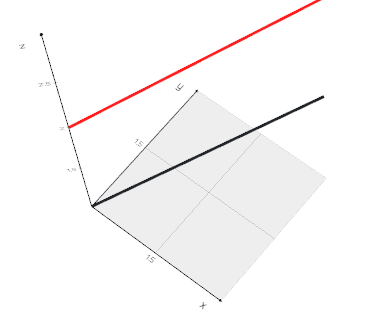
clone(deep=True)

Return a copy of the Line object.

Examples:

from vedo import *
ln1 = Line([1,1,1], [2,2,2], lw=3).print()
ln2 = ln1.clone().shift(0,0,1).c('red').print()
show(ln1, ln2, axes=1, viewup='z').close()
Source code in vedo/shapes/curves_core.py
118
119
120
121
122
123
124
125
126
127
128
129
130
131
132
133
134
135
136
137
138
139
140
141
142
143
144
145
def clone(self, deep=True) -> Line:
    """
    Return a copy of the ``Line`` object.

    Examples:
        ```python
        from vedo import *
        ln1 = Line([1,1,1], [2,2,2], lw=3).print()
        ln2 = ln1.clone().shift(0,0,1).c('red').print()
        show(ln1, ln2, axes=1, viewup='z').close()
        ```
        ![](https://vedo.embl.es/images/feats/line_clone.png)
    """
    poly = vtki.vtkPolyData()
    if deep:
        poly.DeepCopy(self.dataset)
    else:
        poly.ShallowCopy(self.dataset)
    ln = Line(poly)
    ln.copy_properties_from(self)
    ln.transform = self.transform.clone()
    ln.name = self.name
    ln.base = self.base
    ln.top = self.top
    ln.pipeline = utils.OperationNode(
        "clone", parents=[self], shape="diamond", c="#edede9"
    )
    return ln

compute_curvature(method=0)

Add a pointdata array named 'Curvatures' which contains the curvature value at each point.

NB: keyword method is overridden in Mesh and has no effect here.

Source code in vedo/shapes/curves_core.py
345
346
347
348
349
350
351
352
353
354
355
356
357
358
359
360
def compute_curvature(self, method=0) -> Line:
    """
    Add a pointdata array named 'Curvatures' which contains
    the curvature value at each point.

    NB: keyword `method` is overridden in Mesh and has no effect here.
    """
    # overrides mesh.compute_curvature
    curvs = self.curvature()
    vmin, vmax = np.min(curvs), np.max(curvs)
    if vmin < 0 and vmax > 0:
        v = max(-vmin, vmax)
        self.cmap("coolwarm", curvs, vmin=-v, vmax=v, name="Curvature")
    else:
        self.cmap("coolwarm", curvs, vmin=vmin, vmax=vmax, name="Curvature")
    return self

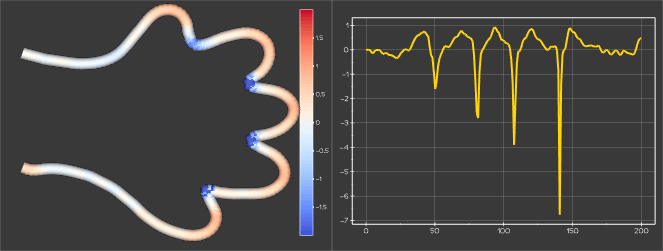
curvature()

Compute the signed curvature of a line in space. The signed is computed assuming the line is about coplanar to the xy plane.

Examples:

from vedo import *
from vedo.pyplot import plot
shape = Assembly(dataurl+"timecourse1d.npy")[55]
curvs = Line(shape.coordinates).curvature()
shape.cmap('coolwarm', curvs, vmin=-2,vmax=2).add_scalarbar3d(c='w')
shape.render_lines_as_tubes().lw(12)
pp = plot(curvs, ac='white', lc='yellow5')
show(shape, pp, N=2, bg='bb', sharecam=False).close()
Source code in vedo/shapes/curves_core.py
317
318
319
320
321
322
323
324
325
326
327
328
329
330
331
332
333
334
335
336
337
338
339
340
341
342
343
def curvature(self) -> np.ndarray:
    """
    Compute the signed curvature of a line in space.
    The signed is computed assuming the line is about coplanar to the xy plane.

    Examples:
        ```python
        from vedo import *
        from vedo.pyplot import plot
        shape = Assembly(dataurl+"timecourse1d.npy")[55]
        curvs = Line(shape.coordinates).curvature()
        shape.cmap('coolwarm', curvs, vmin=-2,vmax=2).add_scalarbar3d(c='w')
        shape.render_lines_as_tubes().lw(12)
        pp = plot(curvs, ac='white', lc='yellow5')
        show(shape, pp, N=2, bg='bb', sharecam=False).close()
        ```
        ![](https://vedo.embl.es/images/feats/line_curvature.png)
    """
    v = np.gradient(self.coordinates)[0]
    a = np.gradient(v)[0]
    av = np.cross(a, v)
    mav = np.linalg.norm(av, axis=1)
    mv = utils.mag2(v)
    val = mav * np.sign(av[:, 2]) / np.power(mv, 1.5)
    val[0] = val[1]
    val[-1] = val[-2]
    return val

eval(x)

Calculate the position of an intermediate point as a fraction of the length of the line, being x=0 the first point and x=1 the last point. This corresponds to an imaginary point that travels along the line at constant speed.

Can be used in conjunction with lin_interpolate() to map any range to the [0,1] range.

Source code in vedo/shapes/curves_core.py
152
153
154
155
156
157
158
159
160
161
162
163
164
165
166
167
168
169
170
171
172
173
174
175
176
177
178
179
180
def eval(self, x: float) -> np.ndarray:
    """
    Calculate the position of an intermediate point
    as a fraction of the length of the line,
    being x=0 the first point and x=1 the last point.
    This corresponds to an imaginary point that travels along the line
    at constant speed.

    Can be used in conjunction with `lin_interpolate()`
    to map any range to the [0,1] range.
    """
    distance1 = 0.0
    length = self.length()
    pts = self.coordinates
    if self.is_closed:
        pts = np.append(pts, [pts[0]], axis=0)

    for i in range(1, len(pts)):
        p0 = pts[i - 1]
        p1 = pts[i]
        seg = p1 - p0
        distance0 = distance1
        distance1 += np.linalg.norm(seg)
        w1 = distance1 / length
        if w1 >= x:
            break
    w0 = distance0 / length
    v = p0 + seg * (x - w0) / (w1 - w0)
    return v

eval2d(x)

Calculate the position of an intermediate point at the specified value of x in absolute units. Assume the line is in the xy-plane.

Source code in vedo/shapes/curves_core.py
182
183
184
185
186
187
188
189
190
191
192
193
194
def eval2d(self, x: float) -> np.ndarray:
    """
    Calculate the position of an intermediate point
    at the specified value of x in absolute units.
    Assume the line is in the xy-plane.
    """
    xcoords, ycoords, _ = self.coordinates.T
    # find the segment where x is located
    idx = np.where((xcoords[:-1] <= x) & (xcoords[1:] >= x))[0]
    if len(idx) > 0:
        i = idx[0]
        return np.array([x, np.interp(x, xcoords[i : i + 2], ycoords[i : i + 2])])
    return np.array([x, 0.0])

find_index_at_position(p)

Find the index of the line vertex that is closest to the point p. Note that the returned index is fractional as p may not be exactly one of the vertices of the line.

Source code in vedo/shapes/curves_core.py
196
197
198
199
200
201
202
203
204
205
206
207
208
209
210
211
212
213
214
215
216
217
218
219
220
221
222
223
224
225
226
227
228
229
def find_index_at_position(self, p) -> float:
    """
    Find the index of the line vertex that is closest to the point `p`.
    Note that the returned index is fractional as `p` may not be exactly
    one of the vertices of the line.
    """
    tf = vtki.new("TriangleFilter")
    tf.SetPassLines(True)
    tf.SetPassVerts(False)
    tf.SetInputData(self.dataset)
    tf.Update()
    polyline = tf.GetOutput()

    if not self.cell_locator:
        self.cell_locator = vtki.new("StaticCellLocator")
        self.cell_locator.SetDataSet(polyline)
        self.cell_locator.BuildLocator()

    q = [0, 0, 0]
    cid = vtki.mutable(0)
    dist2 = vtki.mutable(0)
    subid = vtki.mutable(0)
    self.cell_locator.FindClosestPoint(p, q, cid, subid, dist2)

    # find the 2 points
    a = polyline.GetCell(cid).GetPointId(0)
    b = polyline.GetCell(cid).GetPointId(1)

    pts = self.coordinates
    if self.is_closed:
        pts = np.append(pts, [pts[0]], axis=0)
    d = np.linalg.norm(pts[a] - pts[b])
    t = a + np.linalg.norm(pts[a] - q) / d
    return t

length()

Calculate length of the line.

Source code in vedo/shapes/curves_core.py
287
288
289
290
291
292
293
294
295
def length(self) -> float:
    """Calculate length of the line."""
    pts = self.coordinates
    if self.is_closed:
        pts = np.append(pts, [pts[0]], axis=0)
    distance = 0.0
    for i in range(1, len(pts)):
        distance += np.linalg.norm(pts[i] - pts[i - 1])
    return distance

linecolor(lc=None)

Assign a color to the line

Source code in vedo/shapes/curves_core.py
147
148
149
150
def linecolor(self, lc=None) -> Line:
    """Assign a color to the line"""
    # overrides mesh.linecolor which would have no effect here
    return self.color(lc)

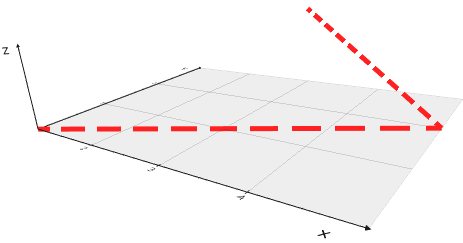
pattern(stipple, repeats=10)

Define a stipple pattern for dashing the line. Pass the stipple pattern as a string like '- - -'. Repeats controls the number of times the pattern repeats in a single segment.

Examples are: '- -', '-- - --', etc.

The resolution of the line (nr of points) can affect how pattern will show up.

Examples:

from vedo import Line
pts = [[1, 0, 0], [5, 2, 0], [3, 3, 1]]
ln = Line(pts, c='r', lw=5).pattern('- -', repeats=10)
ln.show(axes=1).close()
Source code in vedo/shapes/curves_core.py
231
232
233
234
235
236
237
238
239
240
241
242
243
244
245
246
247
248
249
250
251
252
253
254
255
256
257
258
259
260
261
262
263
264
265
266
267
268
269
270
271
272
273
274
275
276
277
278
279
280
281
282
283
284
285
def pattern(self, stipple, repeats=10) -> Line:
    """
    Define a stipple pattern for dashing the line.
    Pass the stipple pattern as a string like `'- - -'`.
    Repeats controls the number of times the pattern repeats in a single segment.

    Examples are: `'- -', '--  -  --'`, etc.

    The resolution of the line (nr of points) can affect how pattern will show up.

    Examples:
        ```python
        from vedo import Line
        pts = [[1, 0, 0], [5, 2, 0], [3, 3, 1]]
        ln = Line(pts, c='r', lw=5).pattern('- -', repeats=10)
        ln.show(axes=1).close()
        ```
        ![](https://vedo.embl.es/images/feats/line_pattern.png)
    """
    stipple = str(stipple) * int(2 * repeats)
    dimension = len(stipple)

    image = vtki.vtkImageData()
    image.SetDimensions(dimension, 1, 1)
    image.AllocateScalars(vtki.VTK_UNSIGNED_CHAR, 4)
    image.SetExtent(0, dimension - 1, 0, 0, 0, 0)
    i_dim = 0
    while i_dim < dimension:
        for i in range(dimension):
            image.SetScalarComponentFromFloat(i_dim, 0, 0, 0, 255)
            image.SetScalarComponentFromFloat(i_dim, 0, 0, 1, 255)
            image.SetScalarComponentFromFloat(i_dim, 0, 0, 2, 255)
            if stipple[i] == " ":
                image.SetScalarComponentFromFloat(i_dim, 0, 0, 3, 0)
            else:
                image.SetScalarComponentFromFloat(i_dim, 0, 0, 3, 255)
            i_dim += 1

    poly = self.dataset

    # Create texture coordinates
    tcoords = vtki.vtkDoubleArray()
    tcoords.SetName("TCoordsStippledLine")
    tcoords.SetNumberOfComponents(1)
    tcoords.SetNumberOfTuples(poly.GetNumberOfPoints())
    for i in range(poly.GetNumberOfPoints()):
        tcoords.SetTypedTuple(i, [i / 2])
    poly.GetPointData().SetTCoords(tcoords)
    poly.GetPointData().Modified()
    texture = vtki.vtkTexture()
    texture.SetInputData(image)
    texture.InterpolateOff()
    texture.RepeatOn()
    self.actor.SetTexture(texture)
    return self

plot_scalar(radius=0.0, height=1.1, normal=(), camera=None)

Generate a new Line which plots the active scalar along the line.

Parameters:

Name Type Description Default
radius float

distance radius to the line

0.0
height float

height of the plot

1.1
normal list

normal vector to the plane of the plot

()
camera vtkCamera

camera object to use for the plot orientation

None

Examples:

from vedo import *
circle = Circle(res=360).rotate_y(20)
pts = circle.coordinates
bore = Line(pts).lw(5)
values = np.arctan2(pts[:,1], pts[:,0])
bore.pointdata["scalars"] = values + np.random.randn(360)/5
vap = bore.plot_scalar(radius=0, height=1)
show(bore, vap, axes=1, viewup='z').close()
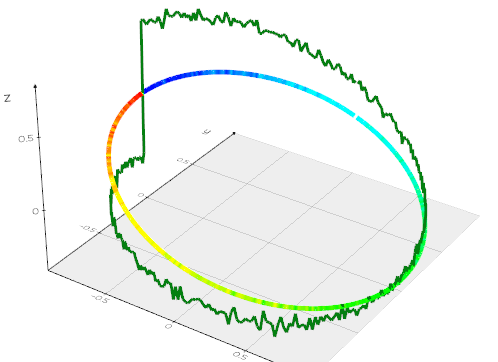
Source code in vedo/shapes/curves_core.py
362
363
364
365
366
367
368
369
370
371
372
373
374
375
376
377
378
379
380
381
382
383
384
385
386
387
388
389
390
391
392
393
394
395
396
397
398
399
400
401
402
403
404
405
406
407
def plot_scalar(
    self,
    radius=0.0,
    height=1.1,
    normal=(),
    camera=None,
) -> Line:
    """
    Generate a new `Line` which plots the active scalar along the line.

    Args:
        radius (float):
            distance radius to the line
        height (float):
            height of the plot
        normal (list):
            normal vector to the plane of the plot
        camera (vtkCamera):
            camera object to use for the plot orientation

    Examples:
        ```python
        from vedo import *
        circle = Circle(res=360).rotate_y(20)
        pts = circle.coordinates
        bore = Line(pts).lw(5)
        values = np.arctan2(pts[:,1], pts[:,0])
        bore.pointdata["scalars"] = values + np.random.randn(360)/5
        vap = bore.plot_scalar(radius=0, height=1)
        show(bore, vap, axes=1, viewup='z').close()
        ```
        ![](https://vedo.embl.es/images/feats/line_plot_scalar.png)
    """
    ap = vtki.new("ArcPlotter")
    ap.SetInputData(self.dataset)
    ap.SetCamera(camera)
    ap.SetRadius(radius)
    ap.SetHeight(height)
    if len(normal) > 0:
        ap.UseDefaultNormalOn()
        ap.SetDefaultNormal(normal)
    ap.Update()
    vap = Line(ap.GetOutput())
    vap.linewidth(3).lighting("off")
    vap.name = "ArcPlot"
    return vap

reverse()

Reverse the points sequence order.

Source code in vedo/shapes/curves_core.py
470
471
472
473
474
def reverse(self):
    """Reverse the points sequence order."""
    pts = np.flip(self.coordinates, axis=0)
    self.coordinates = pts
    return self

sweep(direction=(1, 0, 0), res=1)

Sweep the Line along the specified vector direction.

Returns a Mesh surface. Line position is updated to allow for additional sweepings.

Examples:

from vedo import Line, show
aline = Line([(0,0,0),(1,3,0),(2,4,0)])
surf1 = aline.sweep((1,0.2,0), res=3)
surf2 = aline.sweep((0.2,0,1)).alpha(0.5)
aline.color('r').linewidth(4)
show(surf1, surf2, aline, axes=1).close()
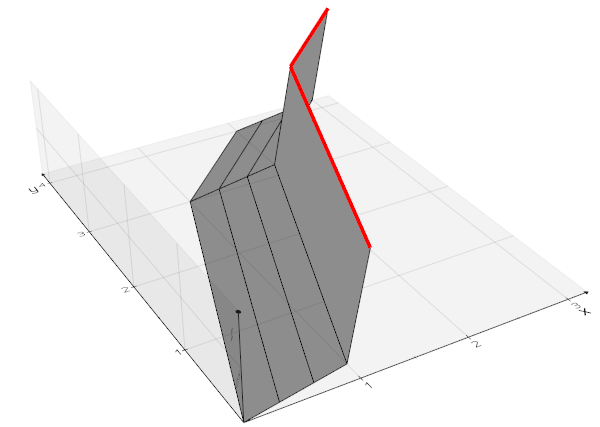
Source code in vedo/shapes/curves_core.py
409
410
411
412
413
414
415
416
417
418
419
420
421
422
423
424
425
426
427
428
429
430
431
432
433
434
435
436
437
438
439
440
441
442
443
444
445
446
447
448
449
450
451
452
453
454
455
456
457
458
459
460
461
462
463
464
465
466
467
468
def sweep(self, direction=(1, 0, 0), res=1) -> Mesh:
    """
    Sweep the `Line` along the specified vector direction.

    Returns a `Mesh` surface.
    Line position is updated to allow for additional sweepings.

    Examples:
        ```python
        from vedo import Line, show
        aline = Line([(0,0,0),(1,3,0),(2,4,0)])
        surf1 = aline.sweep((1,0.2,0), res=3)
        surf2 = aline.sweep((0.2,0,1)).alpha(0.5)
        aline.color('r').linewidth(4)
        show(surf1, surf2, aline, axes=1).close()
        ```
        ![](https://vedo.embl.es/images/feats/sweepline.png)
    """
    line = self.dataset
    rows = line.GetNumberOfPoints()

    spacing = 1 / res
    surface = vtki.vtkPolyData()

    res += 1
    npts = rows * res
    npolys = (rows - 1) * (res - 1)
    points = vtki.vtkPoints()
    points.Allocate(npts)

    cnt = 0
    x = [0.0, 0.0, 0.0]
    for row in range(rows):
        for col in range(res):
            p = [0.0, 0.0, 0.0]
            line.GetPoint(row, p)
            x[0] = p[0] + direction[0] * col * spacing
            x[1] = p[1] + direction[1] * col * spacing
            x[2] = p[2] + direction[2] * col * spacing
            points.InsertPoint(cnt, x)
            cnt += 1

    # Generate the quads
    polys = vtki.vtkCellArray()
    polys.Allocate(npolys * 4)
    pts = [0, 0, 0, 0]
    for row in range(rows - 1):
        for col in range(res - 1):
            pts[0] = col + row * res
            pts[1] = pts[0] + 1
            pts[2] = pts[0] + res + 1
            pts[3] = pts[0] + res
            polys.InsertNextCell(4, pts)
    surface.SetPoints(points)
    surface.SetPolys(polys)
    asurface = Mesh(surface)
    asurface.copy_properties_from(self)
    asurface.lighting("default")
    self.coordinates = self.coordinates + direction
    return asurface

tangents()

Compute the tangents of a line in space.

Examples:

from vedo import *
shape = Assembly(dataurl+"timecourse1d.npy")[58]
pts = shape.rotate_x(30).coordinates
tangents = Line(pts).tangents()
arrs = Arrows(pts, pts+tangents, c='blue9')
show(shape.c('red5').lw(5), arrs, bg='bb', axes=1).close()
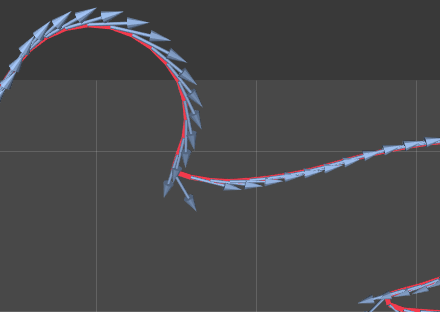
Source code in vedo/shapes/curves_core.py
297
298
299
300
301
302
303
304
305
306
307
308
309
310
311
312
313
314
315
def tangents(self) -> np.ndarray:
    """
    Compute the tangents of a line in space.

    Examples:
        ```python
        from vedo import *
        shape = Assembly(dataurl+"timecourse1d.npy")[58]
        pts = shape.rotate_x(30).coordinates
        tangents = Line(pts).tangents()
        arrs = Arrows(pts, pts+tangents, c='blue9')
        show(shape.c('red5').lw(5), arrs, bg='bb', axes=1).close()
        ```
        ![](https://vedo.embl.es/images/feats/line_tangents.png)
    """
    v = np.gradient(self.coordinates)[0]
    ds_dt = np.linalg.norm(v, axis=1)
    tangent = np.array([1 / ds_dt] * 3).transpose() * v
    return tangent

Lines

Bases: Mesh

Build the line segments between two lists of points start_pts and end_pts. start_pts can be also passed in the form [[point1, point2], ...].

Source code in vedo/shapes/curves_core.py
697
698
699
700
701
702
703
704
705
706
707
708
709
710
711
712
713
714
715
716
717
718
719
720
721
722
723
724
725
726
727
728
729
730
731
732
733
734
735
736
737
738
739
740
741
742
743
744
745
746
747
748
749
750
751
752
753
754
755
756
757
758
759
760
761
762
763
764
765
766
767
768
769
770
771
772
773
774
775
776
777
778
779
780
781
782
783
784
785
786
787
788
789
790
791
792
793
794
795
796
797
798
799
800
801
802
803
804
805
806
807
808
809
810
811
812
813
814
815
816
class Lines(Mesh):
    """
    Build the line segments between two lists of points `start_pts` and `end_pts`.
    `start_pts` can be also passed in the form `[[point1, point2], ...]`.
    """

    def __init__(
        self,
        start_pts,
        end_pts=None,
        dotted=False,
        res=1,
        scale=1.0,
        lw=1,
        c="k4",
        alpha=1.0,
    ) -> None:
        """
        Args:
            scale (float):
                apply a rescaling factor to the lengths.
            c (color, int, str, list):
                color name, number, or list of [R,G,B] colors
            alpha (float):
                opacity in range [0,1]
            lw (int):
                line width in pixel units
            dotted (bool):
                draw a dotted line
            res (int):
                resolution, number of points along the line
                (only relevant if only 2 points are specified)

        Examples:
            - [fitspheres2.py](https://github.com/marcomusy/vedo/tree/master/examples/advanced/fitspheres2.py)

            ![](https://user-images.githubusercontent.com/32848391/52503049-ac9cb600-2be4-11e9-86af-72a538af14ef.png)
        """

        if isinstance(start_pts, vtki.vtkPolyData):  ########
            super().__init__(start_pts, c, alpha)
            self.lw(lw).lighting("off")
            self.name = "Lines"
            return  ########################################

        if (
            utils.is_sequence(start_pts)
            and len(start_pts) > 1
            and isinstance(start_pts[0], Line)
        ):
            # passing a list of Line, see tests/issues/issue_950.py
            polylns = vtki.new("AppendPolyData")
            for ln in start_pts:
                polylns.AddInputData(ln.dataset)
            polylns.Update()

            super().__init__(polylns.GetOutput(), c, alpha)
            self.lw(lw).lighting("off")
            if dotted:
                self.properties.SetLineStipplePattern(0xF0F0)
                self.properties.SetLineStippleRepeatFactor(1)
            self.name = "Lines"
            return  ########################################

        if isinstance(start_pts, Points):
            start_pts = start_pts.coordinates
        if isinstance(end_pts, Points):
            end_pts = end_pts.coordinates

        if end_pts is not None:
            start_pts = np.stack((start_pts, end_pts), axis=1)

        polylns = vtki.new("AppendPolyData")

        if not utils.is_ragged(start_pts):
            for twopts in start_pts:
                line_source = vtki.new("LineSource")
                line_source.SetResolution(res)
                if len(twopts[0]) == 2:
                    line_source.SetPoint1(twopts[0][0], twopts[0][1], 0.0)
                else:
                    line_source.SetPoint1(twopts[0])

                if scale == 1:
                    pt2 = twopts[1]
                else:
                    vers = (np.array(twopts[1]) - twopts[0]) * scale
                    pt2 = np.array(twopts[0]) + vers

                if len(pt2) == 2:
                    line_source.SetPoint2(pt2[0], pt2[1], 0.0)
                else:
                    line_source.SetPoint2(pt2)
                polylns.AddInputConnection(line_source.GetOutputPort())

        else:
            polylns = vtki.new("AppendPolyData")
            for t in start_pts:
                t = utils.make3d(t)
                ppoints = vtki.vtkPoints()  # Generate the polyline
                ppoints.SetData(utils.numpy2vtk(t, dtype=np.float32))
                lines = vtki.vtkCellArray()
                npt = len(t)
                lines.InsertNextCell(npt)
                for i in range(npt):
                    lines.InsertCellPoint(i)
                poly = vtki.vtkPolyData()
                poly.SetPoints(ppoints)
                poly.SetLines(lines)
                polylns.AddInputData(poly)

        polylns.Update()

        super().__init__(polylns.GetOutput(), c, alpha)
        self.lw(lw).lighting("off")
        if dotted:
            self.properties.SetLineStipplePattern(0xF0F0)
            self.properties.SetLineStippleRepeatFactor(1)

        self.name = "Lines"

NormalLines

Bases: Mesh

Build an Glyph to show the normals at cell centers or at mesh vertices.

Parameters:

Name Type Description Default
ratio int

show 1 normal every ratio cells.

1
on str

either "cells" or "points".

'cells'
scale float

scale factor to control size.

1.0
Source code in vedo/shapes/curves_core.py
1174
1175
1176
1177
1178
1179
1180
1181
1182
1183
1184
1185
1186
1187
1188
1189
1190
1191
1192
1193
1194
1195
1196
1197
1198
1199
1200
1201
1202
1203
1204
1205
1206
1207
1208
1209
1210
1211
1212
1213
1214
1215
1216
1217
1218
1219
1220
1221
1222
1223
1224
1225
1226
1227
class NormalLines(Mesh):
    """
    Build an `Glyph` to show the normals at cell centers or at mesh vertices.

    Args:
        ratio (int):
            show 1 normal every `ratio` cells.
        on (str):
            either "cells" or "points".
        scale (float):
            scale factor to control size.
    """

    def __init__(self, msh, ratio=1, on="cells", scale=1.0) -> None:

        poly = msh.clone().dataset

        if "cell" in on:
            centers = vtki.new("CellCenters")
            centers.SetInputData(poly)
            centers.Update()
            poly = centers.GetOutput()

        mask_pts = vtki.new("MaskPoints")
        mask_pts.SetInputData(poly)
        mask_pts.SetOnRatio(ratio)
        mask_pts.RandomModeOff()
        mask_pts.Update()

        ln = vtki.new("LineSource")
        ln.SetPoint1(0, 0, 0)
        ln.SetPoint2(1, 0, 0)
        ln.Update()
        glyph = vtki.vtkGlyph3D()
        glyph.SetSourceData(ln.GetOutput())
        glyph.SetInputData(mask_pts.GetOutput())
        glyph.SetVectorModeToUseNormal()

        b = poly.GetBounds()
        f = max([b[1] - b[0], b[3] - b[2], b[5] - b[4]]) / 50 * scale
        glyph.SetScaleFactor(f)
        glyph.OrientOn()
        glyph.Update()

        super().__init__(glyph.GetOutput())

        self.actor.PickableOff()
        prop = vtki.vtkProperty()
        prop.DeepCopy(msh.properties)
        self.actor.SetProperty(prop)
        self.properties = prop
        self.properties.LightingOff()
        self.mapper.ScalarVisibilityOff()
        self.name = "NormalLines"

Ribbon

Bases: Mesh

Connect two lines to generate the surface inbetween. Set the mode by which to create the ruled surface.

It also works with a single line in input. In this case the ribbon is formed by following the local plane of the line in space.

Source code in vedo/shapes/curves_extras.py
 21
 22
 23
 24
 25
 26
 27
 28
 29
 30
 31
 32
 33
 34
 35
 36
 37
 38
 39
 40
 41
 42
 43
 44
 45
 46
 47
 48
 49
 50
 51
 52
 53
 54
 55
 56
 57
 58
 59
 60
 61
 62
 63
 64
 65
 66
 67
 68
 69
 70
 71
 72
 73
 74
 75
 76
 77
 78
 79
 80
 81
 82
 83
 84
 85
 86
 87
 88
 89
 90
 91
 92
 93
 94
 95
 96
 97
 98
 99
100
101
102
103
104
105
106
107
108
109
110
111
112
113
114
115
116
117
118
119
120
121
122
123
124
125
126
127
128
129
130
131
132
133
134
135
136
137
138
139
140
141
142
143
144
145
146
147
148
149
150
151
152
153
154
155
156
157
158
159
160
161
162
class Ribbon(Mesh):
    """
    Connect two lines to generate the surface inbetween.
    Set the mode by which to create the ruled surface.

    It also works with a single line in input. In this case the ribbon
    is formed by following the local plane of the line in space.
    """

    def __init__(
        self,
        line1,
        line2=None,
        mode=0,
        closed=False,
        width=None,
        res=(200, 5),
        c="indigo3",
        alpha=1.0,
    ) -> None:
        """
        Args:
            mode (int):
                If mode=0, resample evenly the input lines (based on length)
                and generates triangle strips.

                If mode=1, use the existing points and walks around the
                polyline using existing points.

            closed (bool):
                if True, join the last point with the first to form a closed surface

            res (list):
                ribbon resolutions along the line and perpendicularly to it.

        Examples:
            - [ribbon.py](https://github.com/marcomusy/vedo/tree/master/examples/basic/ribbon.py)

                ![](https://vedo.embl.es/images/basic/ribbon.png)
        """

        if isinstance(line1, Points):
            line1 = line1.coordinates

        if isinstance(line2, Points):
            line2 = line2.coordinates

        elif line2 is None:
            #############################################
            ribbon_filter = vtki.new("RibbonFilter")
            aline = Line(line1)
            ribbon_filter.SetInputData(aline.dataset)
            if width is None:
                width = aline.diagonal_size() / 20.0
            ribbon_filter.SetWidth(width)
            ribbon_filter.Update()
            # convert triangle strips to polygons
            tris = vtki.new("TriangleFilter")
            tris.SetInputData(ribbon_filter.GetOutput())
            tris.Update()

            super().__init__(tris.GetOutput(), c, alpha)
            self.name = "Ribbon"
            ##############################################
            return  ######################################
            ##############################################

        line1 = np.asarray(line1)
        line2 = np.asarray(line2)

        if closed:
            line1 = line1.tolist()
            line1 += [line1[0]]
            line2 = line2.tolist()
            line2 += [line2[0]]
            line1 = np.array(line1)
            line2 = np.array(line2)

        if len(line1[0]) == 2:
            line1 = np.c_[line1, np.zeros(len(line1))]
        if len(line2[0]) == 2:
            line2 = np.c_[line2, np.zeros(len(line2))]

        ppoints1 = vtki.vtkPoints()  # Generate the polyline1
        ppoints1.SetData(utils.numpy2vtk(line1, dtype=np.float32))
        lines1 = vtki.vtkCellArray()
        lines1.InsertNextCell(len(line1))
        for i in range(len(line1)):
            lines1.InsertCellPoint(i)
        poly1 = vtki.vtkPolyData()
        poly1.SetPoints(ppoints1)
        poly1.SetLines(lines1)

        ppoints2 = vtki.vtkPoints()  # Generate the polyline2
        ppoints2.SetData(utils.numpy2vtk(line2, dtype=np.float32))
        lines2 = vtki.vtkCellArray()
        lines2.InsertNextCell(len(line2))
        for i in range(len(line2)):
            lines2.InsertCellPoint(i)
        poly2 = vtki.vtkPolyData()
        poly2.SetPoints(ppoints2)
        poly2.SetLines(lines2)

        # build the lines
        lines1 = vtki.vtkCellArray()
        lines1.InsertNextCell(poly1.GetNumberOfPoints())
        for i in range(poly1.GetNumberOfPoints()):
            lines1.InsertCellPoint(i)

        polygon1 = vtki.vtkPolyData()
        polygon1.SetPoints(ppoints1)
        polygon1.SetLines(lines1)

        lines2 = vtki.vtkCellArray()
        lines2.InsertNextCell(poly2.GetNumberOfPoints())
        for i in range(poly2.GetNumberOfPoints()):
            lines2.InsertCellPoint(i)

        polygon2 = vtki.vtkPolyData()
        polygon2.SetPoints(ppoints2)
        polygon2.SetLines(lines2)

        merged_pd = vtki.new("AppendPolyData")
        merged_pd.AddInputData(polygon1)
        merged_pd.AddInputData(polygon2)
        merged_pd.Update()

        rsf = vtki.new("RuledSurfaceFilter")
        rsf.CloseSurfaceOff()
        rsf.SetRuledMode(mode)
        rsf.SetResolution(res[0], res[1])
        rsf.SetInputData(merged_pd.GetOutput())
        rsf.Update()
        # convert triangle strips to polygons
        tris = vtki.new("TriangleFilter")
        tris.SetInputData(rsf.GetOutput())
        tris.Update()
        out = tris.GetOutput()

        super().__init__(out, c, alpha)

        self.name = "Ribbon"

RoundedLine

Bases: Mesh

Create a 2D line of specified thickness (in absolute units) passing through a list of input points. Borders of the line are rounded.

Source code in vedo/shapes/curves_core.py
587
588
589
590
591
592
593
594
595
596
597
598
599
600
601
602
603
604
605
606
607
608
609
610
611
612
613
614
615
616
617
618
619
620
621
622
623
624
625
626
627
628
629
630
631
632
633
634
635
636
637
638
639
640
641
642
643
644
645
646
647
648
649
650
651
652
653
654
655
656
657
658
659
660
661
662
663
664
665
666
667
668
669
670
671
672
673
674
675
676
677
678
679
680
681
682
683
684
685
686
687
688
689
690
691
692
693
694
class RoundedLine(Mesh):
    """
    Create a 2D line of specified thickness (in absolute units) passing through
    a list of input points. Borders of the line are rounded.
    """

    def __init__(self, pts, lw, res=10, c="gray4", alpha=1.0) -> None:
        """
        Args:
            pts (list):
                a list of points in 2D or 3D (z will be ignored).
            lw (float):
                thickness of the line.
            res (int):
                resolution of the rounded regions

        Examples:
            ```python
            from vedo import *
            pts = [(-4,-3),(1,1),(2,4),(4,1),(3,-1),(2,-5),(9,-3)]
            ln = Line(pts).z(0.01)
            ln.color("red5").linewidth(2)
            rl = RoundedLine(pts, 0.6)
            show(Points(pts), ln, rl, axes=1).close()
            ```
            ![](https://vedo.embl.es/images/feats/rounded_line.png)
        """
        pts = utils.make3d(pts)

        def _getpts(pts, revd=False):

            if revd:
                pts = list(reversed(pts))

            if len(pts) == 2:
                p0, p1 = pts
                v = p1 - p0
                dv = np.linalg.norm(v)
                nv = np.cross(v, (0, 0, -1))
                nv = nv / np.linalg.norm(nv) * lw
                return [p0 + nv, p1 + nv]

            ptsnew = []
            for k in range(len(pts) - 2):
                p0 = pts[k]
                p1 = pts[k + 1]
                p2 = pts[k + 2]
                v = p1 - p0
                u = p2 - p1
                du = np.linalg.norm(u)
                dv = np.linalg.norm(v)
                nv = np.cross(v, (0, 0, -1))
                nv = nv / np.linalg.norm(nv) * lw
                nu = np.cross(u, (0, 0, -1))
                nu = nu / np.linalg.norm(nu) * lw
                uv = np.cross(u, v)
                if k == 0:
                    ptsnew.append(p0 + nv)
                if uv[2] <= 0:
                    # the following computation can return a value
                    # ever so slightly > 1.0 causing arccos to fail.
                    uv_arg = np.dot(u, v) / du / dv
                    if uv_arg > 1.0:
                        # since the argument to arcos is 1, simply
                        # assign alpha to 0.0 without calculating the
                        # arccos
                        alpha = 0.0
                    else:
                        alpha = np.arccos(uv_arg)
                    db = lw * np.tan(alpha / 2)
                    p1new = p1 + nv - v / dv * db
                    ptsnew.append(p1new)
                else:
                    p1a = p1 + nv
                    p1b = p1 + nu
                    for i in range(0, res + 1):
                        pab = p1a * (res - i) / res + p1b * i / res
                        vpab = pab - p1
                        vpab = vpab / np.linalg.norm(vpab) * lw
                        ptsnew.append(p1 + vpab)
                if k == len(pts) - 3:
                    ptsnew.append(p2 + nu)
                    if revd:
                        ptsnew.append(p2 - nu)
            return ptsnew

        ptsnew = _getpts(pts) + _getpts(pts, revd=True)

        ppoints = vtki.vtkPoints()  # Generate the polyline
        ppoints.SetData(utils.numpy2vtk(np.asarray(ptsnew), dtype=np.float32))
        lines = vtki.vtkCellArray()
        npt = len(ptsnew)
        lines.InsertNextCell(npt)
        for i in range(npt):
            lines.InsertCellPoint(i)
        poly = vtki.vtkPolyData()
        poly.SetPoints(ppoints)
        poly.SetLines(lines)
        vct = vtki.new("ContourTriangulator")
        vct.SetInputData(poly)
        vct.Update()

        super().__init__(vct.GetOutput(), c, alpha)
        self.flat()
        self.properties.LightingOff()
        self.name = "RoundedLine"
        self.base = ptsnew[0]
        self.top = ptsnew[-1]

Spline

Bases: Line

Find the B-Spline curve through a set of points. This curve does not necessarily pass exactly through all the input points. Needs to import scipy.

Source code in vedo/shapes/curves_core.py
899
900
901
902
903
904
905
906
907
908
909
910
911
912
913
914
915
916
917
918
919
920
921
922
923
924
925
926
927
928
929
930
931
932
933
934
935
936
937
938
939
940
941
942
943
944
945
946
947
948
949
950
951
952
953
954
955
956
957
958
959
960
961
962
963
964
965
966
967
968
969
970
971
972
973
974
975
976
977
978
979
980
981
982
983
984
985
986
987
class Spline(Line):
    """
    Find the B-Spline curve through a set of points. This curve does not necessarily
    pass exactly through all the input points. Needs to import `scipy`.
    """

    def __init__(
        self, points, smooth=0.0, degree=2, closed=False, res=None, easing=""
    ) -> None:
        """
        Args:
            smooth (float):
                smoothing factor.
                - 0 = interpolate points exactly [default].
                - 1 = average point positions.
            degree (int):
                degree of the spline (between 1 and 5).
            easing (str):
                control sensity of points along the spline.
                Available options are
                `[InSine, OutSine, Sine, InQuad, OutQuad, InCubic, OutCubic, InQuart, OutQuart, InCirc, OutCirc].`
                Can be used to create animations (move objects at varying speed).
                See e.g.: https://easings.net
            res (int):
                number of points on the spline

        See also: `CSpline` and `KSpline`.

        Examples:
            - [spline_ease.py](https://github.com/marcomusy/vedo/tree/master/examples/animation/spline_ease.py)

                ![](https://vedo.embl.es/images/animation/spline_ease.gif)
        """
        from scipy.interpolate import splprep, splev

        if isinstance(points, Points):
            points = points.coordinates

        points = utils.make3d(points)

        per = 0
        if closed:
            points = np.append(points, [points[0]], axis=0)
            per = 1

        if res is None:
            res = len(points) * 10

        points = np.array(points, dtype=float)

        minx, miny, minz = np.min(points, axis=0)
        maxx, maxy, maxz = np.max(points, axis=0)
        maxb = max(maxx - minx, maxy - miny, maxz - minz)
        smooth *= maxb / 2  # must be in absolute units

        x = np.linspace(0.0, 1.0, res)
        if easing:
            if easing == "InSine":
                x = 1.0 - np.cos((x * np.pi) / 2)
            elif easing == "OutSine":
                x = np.sin((x * np.pi) / 2)
            elif easing == "Sine":
                x = -(np.cos(np.pi * x) - 1) / 2
            elif easing == "InQuad":
                x = x * x
            elif easing == "OutQuad":
                x = 1.0 - (1 - x) * (1 - x)
            elif easing == "InCubic":
                x = x * x
            elif easing == "OutCubic":
                x = 1.0 - np.power(1 - x, 3)
            elif easing == "InQuart":
                x = x * x * x * x
            elif easing == "OutQuart":
                x = 1.0 - np.power(1 - x, 4)
            elif easing == "InCirc":
                x = 1.0 - np.sqrt(1 - np.power(x, 2))
            elif easing == "OutCirc":
                x = np.sqrt(1.0 - np.power(x - 1, 2))
            else:
                vedo.logger.error(f"unknown ease mode {easing}")

        # find the knots
        tckp, _ = splprep(points.T, task=0, s=smooth, k=degree, per=per)
        # evaluate spLine, including interpolated points:
        xnew, ynew, znew = splev(x, tckp)

        super().__init__(np.c_[xnew, ynew, znew], lw=2)
        self.name = "Spline"

Tube

Bases: Mesh

Build a tube along the line defined by a set of points.

Source code in vedo/shapes/curves_core.py
1230
1231
1232
1233
1234
1235
1236
1237
1238
1239
1240
1241
1242
1243
1244
1245
1246
1247
1248
1249
1250
1251
1252
1253
1254
1255
1256
1257
1258
1259
1260
1261
1262
1263
1264
1265
1266
1267
1268
1269
1270
1271
1272
1273
1274
1275
1276
1277
1278
1279
1280
1281
1282
1283
1284
1285
1286
1287
1288
1289
1290
1291
1292
1293
1294
1295
1296
1297
1298
1299
1300
1301
1302
1303
1304
1305
1306
1307
1308
1309
1310
1311
1312
1313
1314
1315
1316
1317
1318
1319
1320
1321
1322
1323
1324
1325
1326
1327
1328
class Tube(Mesh):
    """
    Build a tube along the line defined by a set of points.
    """

    def __init__(self, points, r=1.0, cap=True, res=12, c=None, alpha=1.0) -> None:
        """
        Args:
            r (float, list):
                constant radius or list of radii.
            res (int):
                resolution, number of the sides of the tube
            c (color):
                constant color or list of colors for each point.

        Examples:
            Create a tube along a line, with data associated to each point:

            ```python
            from vedo import *
            line = Line([(0,0,0), (1,1,1), (2,0,1), (3,1,0)]).lw(5)
            scalars = np.array([0, 1, 2, 3])
            line.pointdata["myscalars"] = scalars
            tube = Tube(line, r=0.1).lw(1)
            tube.cmap('viridis', "myscalars").add_scalarbar3d()
            show(line, tube, axes=1).close()
            ```

        Examples:
            - [ribbon.py](https://github.com/marcomusy/vedo/tree/master/examples/basic/ribbon.py)
            - [tube_radii.py](https://github.com/marcomusy/vedo/tree/master/examples/basic/tube_radii.py)

                ![](https://vedo.embl.es/images/basic/tube.png)
        """
        if utils.is_sequence(points):
            vpoints = vtki.vtkPoints()
            idx = len(points)
            for p in points:
                vpoints.InsertNextPoint(p)
            line = vtki.new("PolyLine")
            line.GetPointIds().SetNumberOfIds(idx)
            for i in range(idx):
                line.GetPointIds().SetId(i, i)
            lines = vtki.vtkCellArray()
            lines.InsertNextCell(line)
            polyln = vtki.vtkPolyData()
            polyln.SetPoints(vpoints)
            polyln.SetLines(lines)
            self.base = np.asarray(points[0], dtype=float)
            self.top = np.asarray(points[-1], dtype=float)

        elif isinstance(points, Mesh):
            polyln = points.dataset
            n = polyln.GetNumberOfPoints()
            self.base = np.array(polyln.GetPoint(0))
            self.top = np.array(polyln.GetPoint(n - 1))

        # from vtkmodules.vtkFiltersCore import vtkTubeBender
        # bender = vtkTubeBender()
        # bender.SetInputData(polyln)
        # bender.SetRadius(r)
        # bender.Update()
        # polyln = bender.GetOutput()

        tuf = vtki.new("TubeFilter")
        tuf.SetCapping(cap)
        tuf.SetNumberOfSides(res)
        tuf.SetInputData(polyln)
        if utils.is_sequence(r):
            arr = utils.numpy2vtk(r, dtype=float)
            arr.SetName("TubeRadius")
            polyln.GetPointData().AddArray(arr)
            polyln.GetPointData().SetActiveScalars("TubeRadius")
            tuf.SetVaryRadiusToVaryRadiusByAbsoluteScalar()
        else:
            tuf.SetRadius(r)

        usingColScals = False
        if utils.is_sequence(c):
            usingColScals = True
            cc = vtki.vtkUnsignedCharArray()
            cc.SetName("TubeColors")
            cc.SetNumberOfComponents(3)
            cc.SetNumberOfTuples(len(c))
            for i, ic in enumerate(c):
                r, g, b = get_color(ic)
                cc.InsertTuple3(i, int(255 * r), int(255 * g), int(255 * b))
            polyln.GetPointData().AddArray(cc)
            c = None
        tuf.Update()

        super().__init__(tuf.GetOutput(), c, alpha)
        self.phong()
        if usingColScals:
            self.mapper.SetScalarModeToUsePointFieldData()
            self.mapper.ScalarVisibilityOn()
            self.mapper.SelectColorArray("TubeColors")
            self.mapper.Modified()
        self.name = "Tube"

Tubes

Bases: Mesh

Build tubes around a Lines object.

Source code in vedo/shapes/curves_core.py
1382
1383
1384
1385
1386
1387
1388
1389
1390
1391
1392
1393
1394
1395
1396
1397
1398
1399
1400
1401
1402
1403
1404
1405
1406
1407
1408
1409
1410
1411
1412
1413
1414
1415
1416
1417
1418
1419
1420
1421
1422
1423
1424
1425
1426
1427
1428
1429
1430
1431
1432
1433
1434
1435
1436
1437
1438
1439
1440
1441
1442
1443
1444
1445
1446
1447
1448
1449
1450
class Tubes(Mesh):
    """
    Build tubes around a `Lines` object.
    """

    def __init__(
        self,
        lines,
        r=1,
        vary_radius_by_scalar=False,
        vary_radius_by_vector=False,
        vary_radius_by_vector_norm=False,
        vary_radius_by_absolute_scalar=False,
        max_radius_factor=100,
        cap=True,
        res=12,
    ) -> None:
        """
        Wrap tubes around the input `Lines` object.

        Args:
            lines (Lines):
                input Lines object.
            r (float):
                constant radius
            vary_radius_by_scalar (bool):
                use scalar array to control radius
            vary_radius_by_vector (bool):
                use vector array to control radius
            vary_radius_by_vector_norm (bool):
                use vector norm to control radius
            vary_radius_by_absolute_scalar (bool):
                use absolute scalar value to control radius
            max_radius_factor (float):
                max tube radius as a multiple of the min radius
            cap (bool):
                capping of the tube
            res (int):
                resolution, number of the sides of the tube
            c (color):
                constant color or list of colors for each point.

        Examples:
            - [streamlines1.py](https://github.com/marcomusy/vedo/blob/master/examples/volumetric/streamlines1.py)
        """
        plines = lines.dataset
        if plines.GetNumberOfLines() == 0:
            vedo.logger.warning("Tubes(): input Lines is empty.")

        tuf = vtki.new("TubeFilter")
        if vary_radius_by_scalar:
            tuf.SetVaryRadiusToVaryRadiusByScalar()
        elif vary_radius_by_vector:
            tuf.SetVaryRadiusToVaryRadiusByVector()
        elif vary_radius_by_vector_norm:
            tuf.SetVaryRadiusToVaryRadiusByVectorNorm()
        elif vary_radius_by_absolute_scalar:
            tuf.SetVaryRadiusToVaryRadiusByAbsoluteScalar()
        tuf.SetRadius(r)
        tuf.SetCapping(cap)
        tuf.SetGenerateTCoords(0)
        tuf.SetSidesShareVertices(1)
        tuf.SetRadiusFactor(max_radius_factor)
        tuf.SetNumberOfSides(res)
        tuf.SetInputData(plines)
        tuf.Update()

        super().__init__(tuf.GetOutput())
        self.name = "Tubes"

ThickTube(pts, r1, r2, res=12, c=None, alpha=1.0)

Create a tube with a thickness along a line of points.

Examples:

from vedo import *
pts = [[sin(x), cos(x), x/3] for x in np.arange(0.1, 3, 0.3)]
vline = Line(pts, lw=5, c='red5')
thick_tube = ThickTube(vline, r1=0.2, r2=0.3).lw(1)
show(vline, thick_tube, axes=1).close()
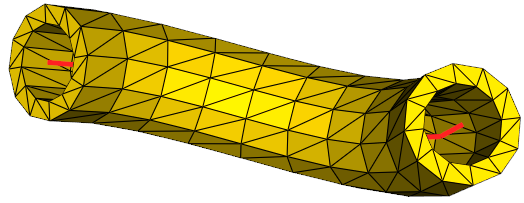
Source code in vedo/shapes/curves_core.py
1331
1332
1333
1334
1335
1336
1337
1338
1339
1340
1341
1342
1343
1344
1345
1346
1347
1348
1349
1350
1351
1352
1353
1354
1355
1356
1357
1358
1359
1360
1361
1362
1363
1364
1365
1366
1367
1368
1369
1370
1371
1372
1373
1374
1375
1376
1377
1378
1379
def ThickTube(pts, r1, r2, res=12, c=None, alpha=1.0) -> Mesh | None:
    """
    Create a tube with a thickness along a line of points.

    Examples:
    ```python
    from vedo import *
    pts = [[sin(x), cos(x), x/3] for x in np.arange(0.1, 3, 0.3)]
    vline = Line(pts, lw=5, c='red5')
    thick_tube = ThickTube(vline, r1=0.2, r2=0.3).lw(1)
    show(vline, thick_tube, axes=1).close()
    ```
    ![](https://vedo.embl.es/images/feats/thick_tube.png)
    """

    def make_cap(t1, t2):
        newpoints = t1.coordinates.tolist() + t2.coordinates.tolist()
        newfaces = []
        for i in range(n - 1):
            newfaces.append([i, i + 1, i + n])
            newfaces.append([i + n, i + 1, i + n + 1])
        newfaces.append([2 * n - 1, 0, n])
        newfaces.append([2 * n - 1, n - 1, 0])
        capm = utils.buildPolyData(newpoints, newfaces)
        return capm

    assert r1 < r2

    t1 = Tube(pts, r=r1, cap=False, res=res)
    t2 = Tube(pts, r=r2, cap=False, res=res)

    tc1a, tc1b = t1.boundaries().split()
    tc2a, tc2b = t2.boundaries().split()
    n = tc1b.npoints

    tc1b.join(reset=True).clean()  # needed because indices are flipped
    tc2b.join(reset=True).clean()

    capa = make_cap(tc1a, tc2a)
    capb = make_cap(tc1b, tc2b)

    thick_tube = merge(t1, t2, capa, capb)
    if thick_tube:
        thick_tube.c(c).alpha(alpha)
        thick_tube.base = t1.base
        thick_tube.top = t1.top
        thick_tube.name = "ThickTube"
        return thick_tube
    return None

primitives

Box

Bases: Mesh

Build a box of specified dimensions.

Source code in vedo/shapes/primitives_solids.py
 21
 22
 23
 24
 25
 26
 27
 28
 29
 30
 31
 32
 33
 34
 35
 36
 37
 38
 39
 40
 41
 42
 43
 44
 45
 46
 47
 48
 49
 50
 51
 52
 53
 54
 55
 56
 57
 58
 59
 60
 61
 62
 63
 64
 65
 66
 67
 68
 69
 70
 71
 72
 73
 74
 75
 76
 77
 78
 79
 80
 81
 82
 83
 84
 85
 86
 87
 88
 89
 90
 91
 92
 93
 94
 95
 96
 97
 98
 99
100
101
102
103
104
105
106
class Box(Mesh):
    """
    Build a box of specified dimensions.
    """

    def __init__(
        self,
        pos=(0, 0, 0),
        length=1.0,
        width=1.0,
        height=1.0,
        size=(),
        c="g4",
        alpha=1.0,
    ) -> None:
        """
        Build a box of dimensions `x=length, y=width and z=height`.
        Alternatively dimensions can be defined by setting `size` keyword with a tuple.

        If `pos` is a list of 6 numbers, this will be interpreted as the bounding box:
        `[xmin,xmax, ymin,ymax, zmin,zmax]`

        Note that the shape polygonal data contains duplicated vertices. This is to allow
        each face to have its own normal, which is essential for some operations.
        Use the `clean()` method to remove duplicate points.

        Examples:
            - [aspring1.py](https://github.com/marcomusy/vedo/tree/master/examples/animation/aspring1.py)

                ![](https://vedo.embl.es/images/animation/50738955-7e891800-11d9-11e9-85cd-02bd4f3f13ea.gif)
        """
        src = vtki.new("CubeSource")

        if len(pos) == 2:
            pos = (pos[0], pos[1], 0)

        #################
        if len(pos) == 6:
            length, width, height = (
                (pos[1] - pos[0]),
                (pos[3] - pos[2]),
                (pos[5] - pos[4]),
            )
            pos = [(pos[0] + pos[1]) / 2, (pos[2] + pos[3]) / 2, (pos[4] + pos[5]) / 2]

        elif len(size) == 3:
            length, width, height = size

        src.SetXLength(length)
        src.SetYLength(width)
        src.SetZLength(height)

        src.Update()
        pd = src.GetOutput()

        tc = [
            [0.0, 0.0],
            [1.0, 0.0],
            [0.0, 1.0],
            [1.0, 1.0],
            [1.0, 0.0],
            [0.0, 0.0],
            [1.0, 1.0],
            [0.0, 1.0],
            [1.0, 1.0],
            [1.0, 0.0],
            [0.0, 1.0],
            [0.0, 0.0],
            [0.0, 1.0],
            [0.0, 0.0],
            [1.0, 1.0],
            [1.0, 0.0],
            [1.0, 0.0],
            [0.0, 0.0],
            [1.0, 1.0],
            [0.0, 1.0],
            [0.0, 0.0],
            [1.0, 0.0],
            [0.0, 1.0],
            [1.0, 1.0],
        ]
        vtc = utils.numpy2vtk(tc)
        pd.GetPointData().SetTCoords(vtc)
        super().__init__(pd, c, alpha)
        self.name = "Box"
        self.pos(pos)

Circle

Bases: Polygon

Build a Circle of radius r.

Source code in vedo/shapes/primitives_planar.py
54
55
56
57
58
59
60
61
62
63
64
65
66
67
68
69
70
71
72
73
74
75
76
77
78
79
80
81
82
83
84
class Circle(Polygon):
    """
    Build a Circle of radius `r`.
    """

    def __init__(self, pos=(0, 0, 0), r=1.0, res=120, c="gray5", alpha=1.0) -> None:
        """
        Build a Circle of radius `r`.
        """
        super().__init__(pos, nsides=res, r=r)

        self.nr_of_points = 0
        self.va = 0
        self.vb = 0
        self.axis1: list[float] = []
        self.axis2: list[float] = []
        self.center: list[float] = []  # filled by pointcloud.pca_ellipse()
        self.pvalue = 0.0  # filled by pointcloud.pca_ellipse()
        self.alpha(alpha).c(c)
        self.name = "Circle"

    def acircularity(self) -> float:
        """
        Return a measure of how different an ellipse is from a circle.
        Values close to zero correspond to a circular object.
        """
        a, b = self.va, self.vb
        value = 0.0
        if a + b:
            value = ((a - b) / (a + b)) ** 2
        return value

acircularity()

Return a measure of how different an ellipse is from a circle. Values close to zero correspond to a circular object.

Source code in vedo/shapes/primitives_planar.py
75
76
77
78
79
80
81
82
83
84
def acircularity(self) -> float:
    """
    Return a measure of how different an ellipse is from a circle.
    Values close to zero correspond to a circular object.
    """
    a, b = self.va, self.vb
    value = 0.0
    if a + b:
        value = ((a - b) / (a + b)) ** 2
    return value

Cone

Bases: Mesh

Build a cone of specified radius and height.

Source code in vedo/shapes/primitives_solids.py
586
587
588
589
590
591
592
593
594
595
596
597
598
599
600
601
602
603
604
605
606
607
608
609
610
611
612
613
614
class Cone(Mesh):
    """Build a cone of specified radius and height."""

    def __init__(
        self,
        pos=(0, 0, 0),
        r=1.0,
        height=3.0,
        axis=(0, 0, 1),
        res=48,
        c="green3",
        alpha=1.0,
    ) -> None:
        """Build a cone of specified radius `r` and `height`, centered at `pos`."""
        con = vtki.new("ConeSource")
        con.SetResolution(res)
        con.SetRadius(r)
        con.SetHeight(height)
        con.SetDirection(axis)
        con.Update()
        super().__init__(con.GetOutput(), c, alpha)
        self.phong()
        if len(pos) == 2:
            pos = (pos[0], pos[1], 0)
        self.pos(pos)
        v = utils.versor(axis) * height / 2
        self.base = pos - v
        self.top = pos + v
        self.name = "Cone"

Cube

Bases: Box

Build a cube shape.

Note that the shape polygonal data contains duplicated vertices. This is to allow each face to have its own normal, which is essential for some operations. Use the clean() method to remove duplicate points.

Source code in vedo/shapes/primitives_solids.py
109
110
111
112
113
114
115
116
117
118
119
120
121
class Cube(Box):
    """
    Build a cube shape.

    Note that the shape polygonal data contains duplicated vertices. This is to allow
    each face to have its own normal, which is essential for some operations.
    Use the `clean()` method to remove duplicate points.
    """

    def __init__(self, pos=(0, 0, 0), side=1.0, c="g4", alpha=1.0) -> None:
        """Build a cube of size `side`."""
        super().__init__(pos, side, side, side, (), c, alpha)
        self.name = "Cube"

Cylinder

Bases: Mesh

Build a cylinder of specified height and radius.

Source code in vedo/shapes/primitives_solids.py
514
515
516
517
518
519
520
521
522
523
524
525
526
527
528
529
530
531
532
533
534
535
536
537
538
539
540
541
542
543
544
545
546
547
548
549
550
551
552
553
554
555
556
557
558
559
560
561
562
563
564
565
566
567
568
569
570
571
572
573
574
575
576
577
578
579
580
581
582
583
class Cylinder(Mesh):
    """
    Build a cylinder of specified height and radius.
    """

    def __init__(
        self,
        pos=(0, 0, 0),
        r=1.0,
        height=2.0,
        axis=(0, 0, 1),
        cap=True,
        res=24,
        c="teal3",
        alpha=1.0,
    ) -> None:
        """
        Build a cylinder of specified height and radius `r`, centered at `pos`.

        If `pos` is a list of 2 points, e.g. `pos=[v1, v2]`, build a cylinder with base
        centered at `v1` and top at `v2`.

        Args:
            cap (bool):
                enable/disable the caps of the cylinder
            res (int):
                resolution of the cylinder sides

        ![](https://raw.githubusercontent.com/lorensen/VTKExamples/master/src/Testing/Baseline/Cxx/GeometricObjects/TestCylinder.png)
        """
        if utils.is_sequence(pos[0]):  # assume user is passing pos=[base, top]
            base = np.array(pos[0], dtype=float)
            top = np.array(pos[1], dtype=float)
            pos = (base + top) / 2
            height = np.linalg.norm(top - base)
            axis = top - base
            axis = utils.versor(axis)
        else:
            axis = utils.versor(axis)
            base = pos - axis * height / 2
            top = pos + axis * height / 2

        cyl = vtki.new("CylinderSource")
        cyl.SetResolution(res)
        cyl.SetRadius(r)
        cyl.SetHeight(height)
        cyl.SetCapping(cap)
        cyl.Update()

        theta = np.arccos(axis[2])
        phi = np.arctan2(axis[1], axis[0])
        t = vtki.vtkTransform()
        t.PostMultiply()
        t.RotateX(90)  # put it along Z
        t.RotateY(np.rad2deg(theta))
        t.RotateZ(np.rad2deg(phi))
        t.Translate(pos)

        tf = vtki.new("TransformPolyDataFilter")
        tf.SetInputData(cyl.GetOutput())
        tf.SetTransform(t)
        tf.Update()

        super().__init__(tf.GetOutput(), c, alpha)

        self.phong()
        self.base = base
        self.top = top
        self.transform = LinearTransform().translate(pos)
        self.name = "Cylinder"

Disc

Bases: Mesh

Build a 2D disc.

Source code in vedo/shapes/primitives_planar.py
167
168
169
170
171
172
173
174
175
176
177
178
179
180
181
182
183
184
185
186
187
188
189
190
191
192
193
194
195
196
197
198
199
200
201
202
203
204
205
206
207
208
209
210
211
class Disc(Mesh):
    """
    Build a 2D disc.
    """

    def __init__(
        self,
        pos=(0, 0, 0),
        r1=0.5,
        r2=1.0,
        res=(1, 120),
        angle_range=(),
        c="gray4",
        alpha=1.0,
    ) -> None:
        """
        Build a 2D disc of inner radius `r1` and outer radius `r2`.

        Set `res` as the resolution in R and Phi (can be a list).

        Use `angle_range` to create a disc sector between the 2 specified angles.

        ![](https://raw.githubusercontent.com/lorensen/VTKExamples/master/src/Testing/Baseline/Cxx/GeometricObjects/TestDisk.png)
        """
        if utils.is_sequence(res):
            res_r, res_phi = res
        else:
            res_r, res_phi = res, 12 * res

        if len(angle_range) == 0:
            ps = vtki.new("DiskSource")
        else:
            ps = vtki.new("SectorSource")
            ps.SetStartAngle(angle_range[0])
            ps.SetEndAngle(angle_range[1])

        ps.SetInnerRadius(r1)
        ps.SetOuterRadius(r2)
        ps.SetRadialResolution(res_r)
        ps.SetCircumferentialResolution(res_phi)
        ps.Update()
        super().__init__(ps.GetOutput(), c, alpha)
        self.flat()
        self.pos(utils.make3d(pos))
        self.name = "Disc"

Earth

Bases: Mesh

Build a textured mesh representing the Earth.

Source code in vedo/shapes/primitives_planar.py
316
317
318
319
320
321
322
323
324
325
326
327
328
329
330
331
332
333
334
335
336
337
338
339
340
341
342
343
344
345
class Earth(Mesh):
    """
    Build a textured mesh representing the Earth.
    """

    def __init__(self, style=1, r=1.0) -> None:
        """
        Build a textured mesh representing the Earth.

        Examples:
            - [geodesic_curve.py](https://github.com/marcomusy/vedo/tree/master/examples/advanced/geodesic_curve.py)

                ![](https://vedo.embl.es/images/advanced/geodesic.png)
        """
        tss = vtki.new("TexturedSphereSource")
        tss.SetRadius(r)
        tss.SetThetaResolution(72)
        tss.SetPhiResolution(36)
        tss.Update()
        super().__init__(tss.GetOutput(), c="w")
        atext = vtki.vtkTexture()
        pnm_reader = vtki.new("JPEGReader")
        fn = vedo.file_io.download(
            vedo.dataurl + f"textures/earth{style}.jpg", verbose=False
        )
        pnm_reader.SetFileName(fn)
        atext.SetInputConnection(pnm_reader.GetOutputPort())
        atext.InterpolateOn()
        self.texture(atext)
        self.name = "Earth"

Ellipsoid

Bases: Mesh

Build a 3D ellipsoid.

Source code in vedo/shapes/primitives_solids.py
394
395
396
397
398
399
400
401
402
403
404
405
406
407
408
409
410
411
412
413
414
415
416
417
418
419
420
421
422
423
424
425
426
427
428
429
430
431
432
433
434
435
436
437
438
439
440
441
442
443
444
445
446
447
448
449
450
451
452
453
454
455
456
457
458
459
460
461
462
463
464
465
466
467
468
469
470
471
472
473
474
475
476
477
478
479
480
481
482
483
484
485
486
487
488
489
490
491
492
493
494
495
496
497
498
499
500
501
502
503
504
505
506
507
508
509
510
511
class Ellipsoid(Mesh):
    """Build a 3D ellipsoid."""

    def __init__(
        self,
        pos=(0, 0, 0),
        axis1=(0.5, 0, 0),
        axis2=(0, 1, 0),
        axis3=(0, 0, 1.5),
        res=24,
        c="cyan4",
        alpha=1.0,
    ) -> None:
        """
        Build a 3D ellipsoid centered at position `pos`.

        Args:
            axis1 (list):
                First axis. Length corresponds to semi-axis.
            axis2 (list):
                Second axis. Length corresponds to semi-axis.
            axis3 (list):
                Third axis. Length corresponds to semi-axis.
        """
        self.center = utils.make3d(pos)

        self.axis1 = utils.make3d(axis1)
        self.axis2 = utils.make3d(axis2)
        self.axis3 = utils.make3d(axis3)

        self.va = np.linalg.norm(self.axis1)
        self.vb = np.linalg.norm(self.axis2)
        self.vc = np.linalg.norm(self.axis3)

        self.va_error = 0
        self.vb_error = 0
        self.vc_error = 0

        self.nr_of_points = 1  # used by pointcloud.pca_ellipsoid()
        self.pvalue = 0  # used by pointcloud.pca_ellipsoid()

        if utils.is_sequence(res):
            res_t, res_phi = res
        else:
            res_t, res_phi = 2 * res, res

        elli_source = vtki.new("SphereSource")
        elli_source.SetRadius(1)
        elli_source.SetThetaResolution(res_t)
        elli_source.SetPhiResolution(res_phi)
        elli_source.Update()

        super().__init__(elli_source.GetOutput(), c, alpha)

        matrix = np.c_[self.axis1, self.axis2, self.axis3]
        lt = LinearTransform(matrix).translate(pos)
        self.apply_transform(lt)
        self.name = "Ellipsoid"

    def asphericity(self) -> float:
        """
        Return a measure of how different an ellipsoid is from a sphere.
        Values close to zero correspond to a spheric object.
        """
        a, b, c = self.va, self.vb, self.vc
        asp = (
            (
                ((a - b) / (a + b)) ** 2
                + ((a - c) / (a + c)) ** 2
                + ((b - c) / (b + c)) ** 2
            )
            / 3.0
            * 4.0
        )
        return float(asp)

    def asphericity_error(self) -> float:
        """
        Calculate statistical error on the asphericity value.

        Errors on the main axes are stored in
        `Ellipsoid.va_error`, Ellipsoid.vb_error` and `Ellipsoid.vc_error`.
        """
        a, b, c = self.va, self.vb, self.vc
        sqrtn = np.sqrt(self.nr_of_points)
        ea, eb, ec = a / 2 / sqrtn, b / 2 / sqrtn, c / 2 / sqrtn

        dL2 = (
            ea**2
            * (
                -8 * (a - b) ** 2 / (3 * (a + b) ** 3)
                - 8 * (a - c) ** 2 / (3 * (a + c) ** 3)
                + 4 * (2 * a - 2 * c) / (3 * (a + c) ** 2)
                + 4 * (2 * a - 2 * b) / (3 * (a + b) ** 2)
            )
            ** 2
            + eb**2
            * (
                4 * (-2 * a + 2 * b) / (3 * (a + b) ** 2)
                - 8 * (a - b) ** 2 / (3 * (a + b) ** 3)
                - 8 * (-b + c) ** 2 / (3 * (b + c) ** 3)
                + 4 * (2 * b - 2 * c) / (3 * (b + c) ** 2)
            )
            ** 2
            + ec**2
            * (
                4 * (-2 * a + 2 * c) / (3 * (a + c) ** 2)
                - 8 * (a - c) ** 2 / (3 * (a + c) ** 3)
                + 4 * (-2 * b + 2 * c) / (3 * (b + c) ** 2)
                - 8 * (-b + c) ** 2 / (3 * (b + c) ** 3)
            )
            ** 2
        )
        err = np.sqrt(dL2)
        self.va_error = ea
        self.vb_error = eb
        self.vc_error = ec
        return err

asphericity()

Return a measure of how different an ellipsoid is from a sphere. Values close to zero correspond to a spheric object.

Source code in vedo/shapes/primitives_solids.py
453
454
455
456
457
458
459
460
461
462
463
464
465
466
467
468
def asphericity(self) -> float:
    """
    Return a measure of how different an ellipsoid is from a sphere.
    Values close to zero correspond to a spheric object.
    """
    a, b, c = self.va, self.vb, self.vc
    asp = (
        (
            ((a - b) / (a + b)) ** 2
            + ((a - c) / (a + c)) ** 2
            + ((b - c) / (b + c)) ** 2
        )
        / 3.0
        * 4.0
    )
    return float(asp)

asphericity_error()

Calculate statistical error on the asphericity value.

Errors on the main axes are stored in Ellipsoid.va_error, Ellipsoid.vb_errorandEllipsoid.vc_error`.

Source code in vedo/shapes/primitives_solids.py
470
471
472
473
474
475
476
477
478
479
480
481
482
483
484
485
486
487
488
489
490
491
492
493
494
495
496
497
498
499
500
501
502
503
504
505
506
507
508
509
510
511
def asphericity_error(self) -> float:
    """
    Calculate statistical error on the asphericity value.

    Errors on the main axes are stored in
    `Ellipsoid.va_error`, Ellipsoid.vb_error` and `Ellipsoid.vc_error`.
    """
    a, b, c = self.va, self.vb, self.vc
    sqrtn = np.sqrt(self.nr_of_points)
    ea, eb, ec = a / 2 / sqrtn, b / 2 / sqrtn, c / 2 / sqrtn

    dL2 = (
        ea**2
        * (
            -8 * (a - b) ** 2 / (3 * (a + b) ** 3)
            - 8 * (a - c) ** 2 / (3 * (a + c) ** 3)
            + 4 * (2 * a - 2 * c) / (3 * (a + c) ** 2)
            + 4 * (2 * a - 2 * b) / (3 * (a + b) ** 2)
        )
        ** 2
        + eb**2
        * (
            4 * (-2 * a + 2 * b) / (3 * (a + b) ** 2)
            - 8 * (a - b) ** 2 / (3 * (a + b) ** 3)
            - 8 * (-b + c) ** 2 / (3 * (b + c) ** 3)
            + 4 * (2 * b - 2 * c) / (3 * (b + c) ** 2)
        )
        ** 2
        + ec**2
        * (
            4 * (-2 * a + 2 * c) / (3 * (a + c) ** 2)
            - 8 * (a - c) ** 2 / (3 * (a + c) ** 3)
            + 4 * (-2 * b + 2 * c) / (3 * (b + c) ** 2)
            - 8 * (-b + c) ** 2 / (3 * (b + c) ** 3)
        )
        ** 2
    )
    err = np.sqrt(dL2)
    self.va_error = ea
    self.vb_error = eb
    self.vc_error = ec
    return err

GeoCircle

Bases: Polygon

Build a Circle of radius r.

Source code in vedo/shapes/primitives_planar.py
 87
 88
 89
 90
 91
 92
 93
 94
 95
 96
 97
 98
 99
100
101
102
103
104
105
106
107
108
109
110
111
112
113
114
class GeoCircle(Polygon):
    """
    Build a Circle of radius `r`.
    """

    def __init__(self, lat, lon, r=1.0, res=60, c="red4", alpha=1.0) -> None:
        """
        Build a Circle of radius `r` as projected on a geographic map.
        Circles near the poles will look very squashed.

        See example:
            ```bash
            vedo -r earthquake
            ```
        """
        coords = []
        sinr, cosr = np.sin(r), np.cos(r)
        sinlat, coslat = np.sin(lat), np.cos(lat)
        for phi in np.linspace(0, 2 * np.pi, num=res, endpoint=False):
            clat = np.arcsin(sinlat * cosr + coslat * sinr * np.cos(phi))
            clng = lon + np.arctan2(
                np.sin(phi) * sinr * coslat, cosr - sinlat * np.sin(clat)
            )
            coords.append([clng / np.pi + 1, clat * 2 / np.pi + 1, 0])

        super().__init__(nsides=res, c=c, alpha=alpha)
        self.coordinates = coords  # warp polygon points to match geo projection
        self.name = "Circle"

Grid

Bases: Mesh

An even or uneven 2D grid.

Source code in vedo/shapes/primitives_planar.py
348
349
350
351
352
353
354
355
356
357
358
359
360
361
362
363
364
365
366
367
368
369
370
371
372
373
374
375
376
377
378
379
380
381
382
383
384
385
386
387
388
389
390
391
392
393
394
395
396
397
398
399
400
401
402
403
404
405
406
407
408
409
410
411
412
413
414
415
416
417
418
419
420
421
422
423
424
425
426
427
428
429
430
431
432
433
434
435
436
437
438
439
440
441
442
class Grid(Mesh):
    """
    An even or uneven 2D grid.
    """

    def __init__(
        self, pos=(0, 0, 0), s=(1, 1), res=(10, 10), lw=1, c="k3", alpha=1.0
    ) -> None:
        """
        Create an even or uneven 2D grid.
        Can also be created from a `np.mgrid` object (see example).

        Args:
            pos (list, Points, Mesh):
                position in space, can also be passed as a bounding box [xmin,xmax, ymin,ymax].
            s (float, list):
                if a float is provided it is interpreted as the total size along x and y,
                if a list of coords is provided they are interpreted as the vertices of the grid along x and y.
                In this case keyword `res` is ignored (see example below).
            res (list):
                resolutions along x and y, e.i. the number of subdivisions
            lw (int):
                line width

        Examples:
            ```python
            from vedo import *
            xcoords = np.arange(0, 2, 0.2)
            ycoords = np.arange(0, 1, 0.2)
            sqrtx = sqrt(xcoords)
            grid = Grid(s=(sqrtx, ycoords)).lw(2)
            grid.show(axes=8).close()

            # Can also create a grid from a np.mgrid:
            X, Y = np.mgrid[-12:12:10*1j, 200:215:10*1j]
            vgrid = Grid(s=(X[:,0], Y[0]))
            vgrid.show(axes=8).close()
            ```
            ![](https://vedo.embl.es/images/feats/uneven_grid.png)
        """
        resx, resy = res
        sx, sy = s

        try:
            bb = pos.bounds()
            pos = [(bb[0] + bb[1]) / 2, (bb[2] + bb[3]) / 2, (bb[4] + bb[5]) / 2]
            sx = bb[1] - bb[0]
            sy = bb[3] - bb[2]
        except AttributeError:
            pass

        if len(pos) == 2:
            pos = (pos[0], pos[1], 0)
        elif len(pos) in [4, 6]:  # passing a bounding box
            bb = pos
            pos = [(bb[0] + bb[1]) / 2, (bb[2] + bb[3]) / 2, 0]
            sx = bb[1] - bb[0]
            sy = bb[3] - bb[2]
            if len(pos) == 6:
                pos[2] = bb[4] - bb[5]

        if utils.is_sequence(sx) and utils.is_sequence(sy):
            verts = []
            for y in sy:
                for x in sx:
                    verts.append([x, y, 0])
            faces = []
            n = len(sx)
            m = len(sy)
            for j in range(m - 1):
                j1n = (j + 1) * n
                for i in range(n - 1):
                    faces.append([i + j * n, i + 1 + j * n, i + 1 + j1n, i + j1n])

            super().__init__([verts, faces], c, alpha)

        else:
            ps = vtki.new("PlaneSource")
            ps.SetResolution(resx, resy)
            ps.Update()

            t = vtki.vtkTransform()
            t.Translate(pos)
            t.Scale(sx, sy, 1)

            tf = vtki.new("TransformPolyDataFilter")
            tf.SetInputData(ps.GetOutput())
            tf.SetTransform(t)
            tf.Update()

            super().__init__(tf.GetOutput(), c, alpha)

        self.wireframe().lw(lw)
        self.properties.LightingOff()
        self.name = "Grid"

Hyperboloid

Bases: Mesh

Build a hyperboloid.

Source code in vedo/shapes/primitives_solids.py
722
723
724
725
726
727
728
729
730
731
732
733
734
735
736
737
738
739
740
741
742
743
744
745
746
747
748
749
750
751
752
753
754
class Hyperboloid(Mesh):
    """
    Build a hyperboloid.
    """

    def __init__(
        self, pos=(0, 0, 0), a2=1.0, value=0.5, res=100, c="pink4", alpha=1.0
    ) -> None:
        """
        Build a hyperboloid of specified aperture `a2` and `height`, centered at `pos`.

        Full volumetric expression is:
            `F(x,y,z)=a_0x^2+a_1y^2+a_2z^2+a_3xy+a_4yz+a_5xz+ a_6x+a_7y+a_8z+a_9`
        """
        q = vtki.new("Quadric")
        q.SetCoefficients(2, 2, -1 / a2, 0, 0, 0, 0, 0, 0, 0)
        # F(x,y,z) = a0*x^2 + a1*y^2 + a2*z^2
        #         + a3*x*y + a4*y*z + a5*x*z
        #         + a6*x   + a7*y   + a8*z  +a9
        sample = vtki.new("SampleFunction")
        sample.SetSampleDimensions(res, res, res)
        sample.SetImplicitFunction(q)

        contours = vtki.new("ContourFilter")
        contours.SetInputConnection(sample.GetOutputPort())
        contours.GenerateValues(1, value, value)
        contours.Update()

        super().__init__(contours.GetOutput(), c, alpha)
        self.compute_normals().phong()
        self.mapper.ScalarVisibilityOff()
        self.pos(pos)
        self.name = "Hyperboloid"

IcoSphere

Bases: Mesh

Create a sphere made of a uniform triangle mesh.

Source code in vedo/shapes/primitives_solids.py
253
254
255
256
257
258
259
260
261
262
263
264
265
266
267
268
269
270
271
272
273
274
275
276
277
278
279
280
281
282
283
284
285
286
287
288
289
290
291
292
293
294
295
296
297
298
299
300
301
302
303
304
305
306
307
308
309
310
311
312
313
314
315
316
317
318
319
320
321
class IcoSphere(Mesh):
    """
    Create a sphere made of a uniform triangle mesh.
    """

    def __init__(self, pos=(0, 0, 0), r=1.0, subdivisions=4, c="r5", alpha=1.0) -> None:
        """
        Create a sphere made of a uniform triangle mesh
        (from recursive subdivision of an icosahedron).

        Examples:
        ```python
        from vedo import *
        icos = IcoSphere(subdivisions=3)
        icos.compute_quality().cmap('coolwarm')
        icos.show(axes=1).close()
        ```
        ![](https://vedo.embl.es/images/basic/icosphere.jpg)
        """
        subdivisions = int(min(subdivisions, 9))  # to avoid disasters

        t = (1.0 + np.sqrt(5.0)) / 2.0
        points = np.array(
            [
                [-1, t, 0],
                [1, t, 0],
                [-1, -t, 0],
                [1, -t, 0],
                [0, -1, t],
                [0, 1, t],
                [0, -1, -t],
                [0, 1, -t],
                [t, 0, -1],
                [t, 0, 1],
                [-t, 0, -1],
                [-t, 0, 1],
            ]
        )
        faces = [
            [0, 11, 5],
            [0, 5, 1],
            [0, 1, 7],
            [0, 7, 10],
            [0, 10, 11],
            [1, 5, 9],
            [5, 11, 4],
            [11, 10, 2],
            [10, 7, 6],
            [7, 1, 8],
            [3, 9, 4],
            [3, 4, 2],
            [3, 2, 6],
            [3, 6, 8],
            [3, 8, 9],
            [4, 9, 5],
            [2, 4, 11],
            [6, 2, 10],
            [8, 6, 7],
            [9, 8, 1],
        ]
        super().__init__([points * r, faces], c=c, alpha=alpha)

        for _ in range(subdivisions):
            self.subdivide(method=1)
            pts = utils.versor(self.coordinates) * r
            self.coordinates = pts

        self.pos(pos)
        self.name = "IcoSphere"

Paraboloid

Bases: Mesh

Build a paraboloid.

Source code in vedo/shapes/primitives_solids.py
687
688
689
690
691
692
693
694
695
696
697
698
699
700
701
702
703
704
705
706
707
708
709
710
711
712
713
714
715
716
717
718
719
class Paraboloid(Mesh):
    """
    Build a paraboloid.
    """

    def __init__(self, pos=(0, 0, 0), height=1.0, res=50, c="cyan5", alpha=1.0) -> None:
        """
        Build a paraboloid of specified height and radius `r`, centered at `pos`.

        Full volumetric expression is:
            `F(x,y,z)=a_0x^2+a_1y^2+a_2z^2+a_3xy+a_4yz+a_5xz+ a_6x+a_7y+a_8z+a_9`

        ![](https://user-images.githubusercontent.com/32848391/51211547-260ef480-1916-11e9-95f6-4a677e37e355.png)
        """
        quadric = vtki.new("Quadric")
        quadric.SetCoefficients(1, 1, 0, 0, 0, 0, 0, 0, height / 4, 0)
        # F(x,y,z) = a0*x^2 + a1*y^2 + a2*z^2
        #         + a3*x*y + a4*y*z + a5*x*z
        #         + a6*x   + a7*y   + a8*z  +a9
        sample = vtki.new("SampleFunction")
        sample.SetSampleDimensions(res, res, res)
        sample.SetImplicitFunction(quadric)

        contours = vtki.new("ContourFilter")
        contours.SetInputConnection(sample.GetOutputPort())
        contours.GenerateValues(1, 0.01, 0.01)
        contours.Update()

        super().__init__(contours.GetOutput(), c, alpha)
        self.compute_normals().phong()
        self.mapper.ScalarVisibilityOff()
        self.pos(pos)
        self.name = "Paraboloid"

Plane

Bases: Mesh

Create a plane in space.

Source code in vedo/shapes/primitives_planar.py
445
446
447
448
449
450
451
452
453
454
455
456
457
458
459
460
461
462
463
464
465
466
467
468
469
470
471
472
473
474
475
476
477
478
479
480
481
482
483
484
485
486
487
488
489
490
491
492
493
494
495
496
497
498
499
500
501
502
503
504
505
506
507
508
509
510
511
512
513
514
515
516
517
518
519
520
521
522
523
524
525
526
527
528
529
530
531
532
533
534
535
536
537
538
539
540
541
542
543
544
545
546
547
548
549
550
551
552
553
554
555
556
557
558
559
560
561
562
563
564
565
566
567
568
569
570
571
572
573
574
575
576
577
578
579
580
581
582
class Plane(Mesh):
    """Create a plane in space."""

    def __init__(
        self,
        pos=(0, 0, 0),
        normal=(0, 0, 1),
        s=(1, 1),
        res=(1, 1),
        edge_direction=(),
        c="gray5",
        alpha=1.0,
    ) -> None:
        """
        Create a plane of size `s=(xsize, ysize)` oriented perpendicular
        to vector `normal` so that it passes through point `pos`, optionally
        aligning an edge with `direction`.

        Args:
            pos (list):
                position of the plane center
            normal (list):
                normal vector to the plane
            s (list):
                size of the plane along x and y
            res (list):
                resolution of the plane along x and y
            edge_direction (list):
                direction vector to align one edge of the plane
        """
        if isinstance(pos, vtki.vtkPolyData):
            super().__init__(pos, c, alpha)

        else:
            ps = vtki.new("PlaneSource")
            ps.SetResolution(res[0], res[1])
            tri = vtki.new("TriangleFilter")
            tri.SetInputConnection(ps.GetOutputPort())
            tri.Update()
            super().__init__(tri.GetOutput(), c, alpha)

            pos = utils.make3d(pos)
            normal = np.asarray(normal, dtype=float)
            axis = normal / np.linalg.norm(normal)

            # Calculate orientation using normal
            theta = np.arccos(axis[2])
            phi = np.arctan2(axis[1], axis[0])

            t = LinearTransform()
            t.scale([s[0], s[1], 1])

            # Rotate to align normal
            t.rotate_y(np.rad2deg(theta))
            t.rotate_z(np.rad2deg(phi))

            # Additional direction alignment
            if len(edge_direction) >= 2:
                direction = utils.make3d(edge_direction).astype(float)
                direction /= np.linalg.norm(direction)

                if s[0] <= s[1]:
                    current_direction = np.asarray([0, 1, 0])
                else:
                    current_direction = np.asarray([1, 0, 0])

                transformed_current_direction = t.transform_point(current_direction)
                n = transformed_current_direction / np.linalg.norm(
                    transformed_current_direction
                )

                if np.linalg.norm(transformed_current_direction) >= 1e-6:
                    angle = np.arccos(np.dot(n, direction))
                    t.rotate(axis=axis, angle=np.rad2deg(angle))

            t.translate(pos)
            self.apply_transform(t)

        self.lighting("off")
        self.name = "Plane"
        self.variance = 0  # used by pointcloud.fit_plane()

    def clone(self, deep=True) -> Plane:
        newplane = Plane()
        if deep:
            newplane.dataset.DeepCopy(self.dataset)
        else:
            newplane.dataset.ShallowCopy(self.dataset)
        newplane.copy_properties_from(self)
        newplane.transform = self.transform.clone()
        newplane.variance = 0
        return newplane

    @property
    def normal(self) -> np.ndarray:
        pts = self.coordinates
        # this is necessary because plane can have high resolution
        # p0, p1 = pts[0], pts[1]
        # AB = p1 - p0
        # AB /= np.linalg.norm(AB)
        # for pt in pts[2:]:
        #     AC = pt - p0
        #     AC /= np.linalg.norm(AC)
        #     cosine_angle = np.dot(AB, AC)
        #     if abs(cosine_angle) < 0.99:
        #         normal = np.cross(AB, AC)
        #         return normal / np.linalg.norm(normal)
        p0, p1, p2 = pts[0], pts[1], pts[int(len(pts) / 2 + 0.5)]
        AB = p1 - p0
        AB /= np.linalg.norm(AB)
        AC = p2 - p0
        AC /= np.linalg.norm(AC)
        normal = np.cross(AB, AC)
        return normal / np.linalg.norm(normal)

    @property
    def center(self) -> np.ndarray:
        pts = self.coordinates
        return np.mean(pts, axis=0)

    def contains(self, points, tol=0) -> np.ndarray:
        """
        Check if each of the provided point lies on this plane.
        `points` is an array of shape (n, 3).
        """
        points = np.array(points, dtype=float)
        bounds = self.coordinates

        mask = np.isclose(np.dot(points - self.center, self.normal), 0, atol=tol)

        for i in [1, 3]:
            AB = bounds[i] - bounds[0]
            AP = points - bounds[0]
            mask_l = np.less_equal(np.dot(AP, AB), np.linalg.norm(AB))
            mask_g = np.greater_equal(np.dot(AP, AB), 0)
            mask = np.logical_and(mask, mask_l)
            mask = np.logical_and(mask, mask_g)
        return mask

contains(points, tol=0)

Check if each of the provided point lies on this plane. points is an array of shape (n, 3).

Source code in vedo/shapes/primitives_planar.py
565
566
567
568
569
570
571
572
573
574
575
576
577
578
579
580
581
582
def contains(self, points, tol=0) -> np.ndarray:
    """
    Check if each of the provided point lies on this plane.
    `points` is an array of shape (n, 3).
    """
    points = np.array(points, dtype=float)
    bounds = self.coordinates

    mask = np.isclose(np.dot(points - self.center, self.normal), 0, atol=tol)

    for i in [1, 3]:
        AB = bounds[i] - bounds[0]
        AP = points - bounds[0]
        mask_l = np.less_equal(np.dot(AP, AB), np.linalg.norm(AB))
        mask_g = np.greater_equal(np.dot(AP, AB), 0)
        mask = np.logical_and(mask, mask_l)
        mask = np.logical_and(mask, mask_g)
    return mask

Polygon

Bases: Mesh

Build a polygon in the xy plane.

Source code in vedo/shapes/primitives_planar.py
31
32
33
34
35
36
37
38
39
40
41
42
43
44
45
46
47
48
49
50
51
class Polygon(Mesh):
    """
    Build a polygon in the `xy` plane.
    """

    def __init__(self, pos=(0, 0, 0), nsides=6, r=1.0, c="coral", alpha=1.0) -> None:
        """
        Build a polygon in the `xy` plane of `nsides` of radius `r`.

        ![](https://raw.githubusercontent.com/lorensen/VTKExamples/master/src/Testing/Baseline/Cxx/GeometricObjects/TestRegularPolygonSource.png)
        """
        t = np.linspace(np.pi / 2, 5 / 2 * np.pi, num=nsides, endpoint=False)
        pts = pol2cart(np.ones_like(t) * r, t).T
        faces = [list(range(nsides))]
        # do not use: vtkRegularPolygonSource
        super().__init__([pts, faces], c, alpha)
        if len(pos) == 2:
            pos = (pos[0], pos[1], 0)
        self.pos(pos)
        self.properties.LightingOff()
        self.name = "Polygon " + str(nsides)

Pyramid

Bases: Cone

Build a pyramidal shape.

Source code in vedo/shapes/primitives_solids.py
617
618
619
620
621
622
623
624
625
class Pyramid(Cone):
    """Build a pyramidal shape."""

    def __init__(
        self, pos=(0, 0, 0), s=1.0, height=1.0, axis=(0, 0, 1), c="green3", alpha=1
    ) -> None:
        """Build a pyramid of specified base size `s` and `height`, centered at `pos`."""
        super().__init__(pos, s, height, axis, 4, c, alpha)
        self.name = "Pyramid"

Rectangle

Bases: Mesh

Build a rectangle in the xy plane.

Source code in vedo/shapes/primitives_planar.py
585
586
587
588
589
590
591
592
593
594
595
596
597
598
599
600
601
602
603
604
605
606
607
608
609
610
611
612
613
614
615
616
617
618
619
620
621
622
623
624
625
626
627
628
629
630
631
632
633
634
635
636
637
638
639
640
641
642
643
644
645
646
647
648
649
650
651
652
653
654
655
656
657
658
659
660
661
662
663
664
665
666
667
668
669
670
671
672
673
674
675
676
677
678
class Rectangle(Mesh):
    """
    Build a rectangle in the xy plane.
    """

    def __init__(
        self, p1=(0, 0), p2=(1, 1), radius=None, res=12, c="gray5", alpha=1.0
    ) -> None:
        """
        Build a rectangle in the xy plane identified by any two corner points.

        Args:
            p1 (list):
                bottom-left position of the corner
            p2 (list):
                top-right position of the corner
            radius (float, list):
                smoothing radius of the corner in world units.
                A list can be passed with 4 individual values.
        """
        if len(p1) == 2:
            p1 = np.array([p1[0], p1[1], 0.0])
        else:
            p1 = np.array(p1, dtype=float)
        if len(p2) == 2:
            p2 = np.array([p2[0], p2[1], 0.0])
        else:
            p2 = np.array(p2, dtype=float)

        self.corner1 = p1
        self.corner2 = p2

        color = c
        smoothr = False
        risseq = False
        if utils.is_sequence(radius):
            risseq = True
            smoothr = True
            if max(radius) == 0:
                smoothr = False
        elif radius:
            smoothr = True

        if not smoothr:
            radius = None
        self.radius = radius

        if smoothr:
            r = radius
            if not risseq:
                r = [r, r, r, r]
            rd, ra, rb, rc = r

            if p1[0] > p2[0]:  # flip p1 - p2
                p1, p2 = p2, p1
            if p1[1] > p2[1]:  # flip p1y - p2y
                p1[1], p2[1] = p2[1], p1[1]

            px, py, _ = p2 - p1
            k = min(px / 2, py / 2)
            ra = min(abs(ra), k)
            rb = min(abs(rb), k)
            rc = min(abs(rc), k)
            rd = min(abs(rd), k)
            beta = np.linspace(0, 2 * np.pi, num=res * 4, endpoint=False)
            betas = np.split(beta, 4)
            rrx = np.cos(betas)
            rry = np.sin(betas)

            q1 = (rd, 0)
            # q2 = (px-ra, 0)
            q3 = (px, ra)
            # q4 = (px, py-rb)
            q5 = (px - rb, py)
            # q6 = (rc, py)
            q7 = (0, py - rc)
            # q8 = (0, rd)
            a = np.c_[rrx[3], rry[3]] * ra + [px - ra, ra] if ra else np.array([])
            b = np.c_[rrx[0], rry[0]] * rb + [px - rb, py - rb] if rb else np.array([])
            c = np.c_[rrx[1], rry[1]] * rc + [rc, py - rc] if rc else np.array([])
            d = np.c_[rrx[2], rry[2]] * rd + [rd, rd] if rd else np.array([])

            pts = [q1, *a.tolist(), q3, *b.tolist(), q5, *c.tolist(), q7, *d.tolist()]
            faces = [list(range(len(pts)))]
        else:
            p1r = np.array([p2[0], p1[1], 0.0])
            p2l = np.array([p1[0], p2[1], 0.0])
            pts = ([0.0, 0.0, 0.0], p1r - p1, p2 - p1, p2l - p1)
            faces = [(0, 1, 2, 3)]

        super().__init__([pts, faces], color, alpha)
        self.pos(p1)
        self.properties.LightingOff()
        self.name = "Rectangle"

Sphere

Bases: Mesh

Build a sphere.

Source code in vedo/shapes/primitives_solids.py
324
325
326
327
328
329
330
331
332
333
334
335
336
337
338
339
340
341
342
343
344
345
346
347
348
349
350
351
352
353
354
355
356
357
358
359
360
361
362
363
364
365
366
367
368
369
370
371
372
373
374
375
376
377
378
379
380
381
382
383
384
385
386
387
388
389
390
391
class Sphere(Mesh):
    """
    Build a sphere.
    """

    def __init__(
        self, pos=(0, 0, 0), r=1.0, res=24, quads=False, c="r5", alpha=1.0
    ) -> None:
        """
        Build a sphere at position `pos` of radius `r`.

        Args:
            r (float):
                sphere radius
            res (int, list):
                resolution in phi, resolution in theta is by default `2*res`
            quads (bool):
                sphere mesh will be made of quads instead of triangles

        [](https://user-images.githubusercontent.com/32848391/72433092-f0a31e00-3798-11ea-85f7-b2f5fcc31568.png)
        """
        if len(pos) == 2:
            pos = np.asarray([pos[0], pos[1], 0])

        self.radius = r  # used by fitSphere
        self.center = pos
        self.residue = 0

        if quads:
            res = max(res, 4)
            img = vtki.vtkImageData()
            img.SetDimensions(res - 1, res - 1, res - 1)
            rs = 1.0 / (res - 2)
            img.SetSpacing(rs, rs, rs)
            gf = vtki.new("GeometryFilter")
            gf.SetInputData(img)
            gf.Update()
            super().__init__(gf.GetOutput(), c, alpha)
            self.lw(0.1)

            cgpts = self.coordinates - (0.5, 0.5, 0.5)

            x, y, z = cgpts.T
            x = x * (1 + x * x) / 2
            y = y * (1 + y * y) / 2
            z = z * (1 + z * z) / 2
            _, theta, phi = cart2spher(x, y, z)

            pts = spher2cart(np.ones_like(phi) * r, theta, phi).T
            self.coordinates = pts

        else:
            if utils.is_sequence(res):
                res_t, res_phi = res
            else:
                res_t, res_phi = 2 * res, res

            ss = vtki.new("SphereSource")
            ss.SetRadius(r)
            ss.SetThetaResolution(res_t)
            ss.SetPhiResolution(res_phi)
            ss.Update()

            super().__init__(ss.GetOutput(), c, alpha)

        self.phong()
        self.pos(pos)
        self.name = "Sphere"

Spheres

Bases: Mesh

Build a large set of spheres.

Source code in vedo/shapes/primitives_planar.py
214
215
216
217
218
219
220
221
222
223
224
225
226
227
228
229
230
231
232
233
234
235
236
237
238
239
240
241
242
243
244
245
246
247
248
249
250
251
252
253
254
255
256
257
258
259
260
261
262
263
264
265
266
267
268
269
270
271
272
273
274
275
276
277
278
279
280
281
282
283
284
285
286
287
288
289
290
291
292
293
294
295
296
297
298
299
300
301
302
303
304
305
306
307
308
309
310
311
312
313
class Spheres(Mesh):
    """
    Build a large set of spheres.
    """

    def __init__(self, centers, r=1.0, res=8, c="red5", alpha=1) -> None:
        """
        Build a (possibly large) set of spheres at `centers` of radius `r`.

        Either `c` or `r` can be a list of RGB colors or radii.

        Examples:
            - [manyspheres.py](https://github.com/marcomusy/vedo/tree/master/examples/basic/manyspheres.py)

            ![](https://vedo.embl.es/images/basic/manyspheres.jpg)
        """

        if isinstance(centers, Points):
            centers = centers.coordinates
        centers = np.asarray(centers, dtype=float)
        base = centers[0]

        cisseq = False
        if utils.is_sequence(c):
            cisseq = True

        if cisseq:
            if len(centers) != len(c):
                vedo.logger.error(
                    f"mismatch #centers {len(centers)} != {len(c)} #colors"
                )
                raise RuntimeError()

        risseq = False
        if utils.is_sequence(r):
            risseq = True

        if risseq:
            if len(centers) != len(r):
                vedo.logger.error(
                    f"mismatch #centers {len(centers)} != {len(r)} #radii"
                )
                raise RuntimeError()
        if cisseq and risseq:
            vedo.logger.error("Limitation: c and r cannot be both sequences.")
            raise RuntimeError()

        src = vtki.new("SphereSource")
        if not risseq:
            src.SetRadius(r)
        if utils.is_sequence(res):
            res_t, res_phi = res
        else:
            res_t, res_phi = 2 * res, res

        src.SetThetaResolution(res_t)
        src.SetPhiResolution(res_phi)
        src.Update()

        psrc = vtki.new("PointSource")
        psrc.SetNumberOfPoints(len(centers))
        psrc.Update()
        pd = psrc.GetOutput()
        vpts = pd.GetPoints()

        glyph = vtki.vtkGlyph3D()
        glyph.SetSourceConnection(src.GetOutputPort())

        if cisseq:
            glyph.SetColorModeToColorByScalar()
            ucols = vtki.vtkUnsignedCharArray()
            ucols.SetNumberOfComponents(3)
            ucols.SetName("Colors")
            for acol in c:
                cx, cy, cz = get_color(acol)
                ucols.InsertNextTuple3(cx * 255, cy * 255, cz * 255)
            pd.GetPointData().AddArray(ucols)
            pd.GetPointData().SetActiveScalars("Colors")
            glyph.ScalingOff()
        elif risseq:
            glyph.SetScaleModeToScaleByScalar()
            urads = utils.numpy2vtk(2 * np.ascontiguousarray(r), dtype=np.float32)
            urads.SetName("Radii")
            pd.GetPointData().AddArray(urads)
            pd.GetPointData().SetActiveScalars("Radii")

        vpts.SetData(utils.numpy2vtk(centers - base, dtype=np.float32))

        glyph.SetInputData(pd)
        glyph.Update()

        super().__init__(glyph.GetOutput(), alpha=alpha)
        self.pos(base)
        self.phong()
        if cisseq:
            self.mapper.ScalarVisibilityOn()
        else:
            self.mapper.ScalarVisibilityOff()
            self.c(c)
        self.name = "Spheres"

Spring

Bases: Mesh

Build a spring model.

Source code in vedo/shapes/primitives_solids.py
169
170
171
172
173
174
175
176
177
178
179
180
181
182
183
184
185
186
187
188
189
190
191
192
193
194
195
196
197
198
199
200
201
202
203
204
205
206
207
208
209
210
211
212
213
214
215
216
217
218
219
220
221
222
223
224
225
226
227
228
229
230
231
232
233
234
235
236
237
238
239
240
241
242
243
244
245
246
247
248
249
250
class Spring(Mesh):
    """
    Build a spring model.
    """

    def __init__(
        self,
        start_pt=(0, 0, 0),
        end_pt=(1, 0, 0),
        coils=20,
        r1=0.1,
        r2=None,
        thickness=None,
        c="gray5",
        alpha=1.0,
    ) -> None:
        """
        Build a spring of specified nr of `coils` between `start_pt` and `end_pt`.

        Args:
            coils (int):
                number of coils
            r1 (float):
                radius at start point
            r2 (float):
                radius at end point
            thickness (float):
                thickness of the coil section
        """
        start_pt = utils.make3d(start_pt)
        end_pt = utils.make3d(end_pt)

        diff = end_pt - start_pt
        length = np.linalg.norm(diff)
        if not length:
            return
        if not r1:
            r1 = length / 20
        trange = np.linspace(0, length, num=50 * coils)
        om = 6.283 * (coils - 0.5) / length
        if not r2:
            r2 = r1
        pts = []
        for t in trange:
            f = (length - t) / length
            rd = r1 * f + r2 * (1 - f)
            pts.append([rd * np.cos(om * t), rd * np.sin(om * t), t])

        pts = [[0, 0, 0]] + pts + [[0, 0, length]]
        diff = diff / length
        theta = np.arccos(diff[2])
        phi = np.arctan2(diff[1], diff[0])
        # Local import avoids circular dependencies during shapes package initialization.
        from .curves_core import Line

        sp = Line(pts)

        t = vtki.vtkTransform()
        t.Translate(start_pt)
        t.RotateZ(np.rad2deg(phi))
        t.RotateY(np.rad2deg(theta))

        tf = vtki.new("TransformPolyDataFilter")
        tf.SetInputData(sp.dataset)
        tf.SetTransform(t)
        tf.Update()

        tuf = vtki.new("TubeFilter")
        tuf.SetNumberOfSides(12)
        tuf.CappingOn()
        tuf.SetInputData(tf.GetOutput())
        if not thickness:
            thickness = r1 / 10
        tuf.SetRadius(thickness)
        tuf.Update()

        super().__init__(tuf.GetOutput(), c, alpha)

        self.phong().lighting("metallic")
        self.base = np.array(start_pt, dtype=float)
        self.top = np.array(end_pt, dtype=float)
        self.name = "Spring"

Star

Bases: Mesh

Build a 2D star shape.

Source code in vedo/shapes/primitives_planar.py
117
118
119
120
121
122
123
124
125
126
127
128
129
130
131
132
133
134
135
136
137
138
139
140
141
142
143
144
145
146
147
148
149
150
151
152
153
154
155
156
157
158
159
160
161
162
163
164
class Star(Mesh):
    """
    Build a 2D star shape.
    """

    def __init__(
        self, pos=(0, 0, 0), n=5, r1=0.7, r2=1.0, line=False, c="blue6", alpha=1.0
    ) -> None:
        """
        Build a 2D star shape of `n` cusps of inner radius `r1` and outer radius `r2`.

        If line is True then only build the outer line (no internal surface meshing).

        Examples:
            - [extrude1.py](https://github.com/marcomusy/vedo/tree/master/examples/basic/extrude1.py)

                ![](https://vedo.embl.es/images/basic/extrude.png)
        """
        t = np.linspace(np.pi / 2, 5 / 2 * np.pi, num=n, endpoint=False)
        x, y = pol2cart(np.ones_like(t) * r2, t)
        pts = np.c_[x, y, np.zeros_like(x)]

        apts = []
        for i, p in enumerate(pts):
            apts.append(p)
            if i + 1 < n:
                apts.append((p + pts[i + 1]) / 2 * r1 / r2)
        apts.append((pts[-1] + pts[0]) / 2 * r1 / r2)

        if line:
            apts.append(pts[0])
            poly = utils.buildPolyData(apts, lines=[list(range(len(apts)))])
            super().__init__(poly, c, alpha)
            self.lw(2)
        else:
            apts.append((0, 0, 0))
            cells = []
            for i in range(2 * n - 1):
                cell = [2 * n, i, i + 1]
                cells.append(cell)
            cells.append([2 * n, i + 1, 0])
            super().__init__([apts, cells], c, alpha)

        if len(pos) == 2:
            pos = (pos[0], pos[1], 0)

        self.properties.LightingOff()
        self.name = "Star"

TessellatedBox

Bases: Mesh

Build a cubic Mesh made of quads.

Source code in vedo/shapes/primitives_solids.py
124
125
126
127
128
129
130
131
132
133
134
135
136
137
138
139
140
141
142
143
144
145
146
147
148
149
150
151
152
153
154
155
156
157
158
159
160
161
162
163
164
165
166
class TessellatedBox(Mesh):
    """
    Build a cubic `Mesh` made of quads.
    """

    def __init__(
        self, pos=(0, 0, 0), n=10, spacing=(1, 1, 1), bounds=(), c="k5", alpha=0.5
    ) -> None:
        """
        Build a cubic `Mesh` made of `n` small quads in the 3 axis directions.

        Args:
            pos (list):
                position of the left bottom corner
            n (int, list):
                number of subdivisions along each side
            spacing (float):
                size of the side of the single quad in the 3 directions
        """
        if utils.is_sequence(n):  # slow
            img = vtki.vtkImageData()
            img.SetDimensions(n[0] + 1, n[1] + 1, n[2] + 1)
            img.SetSpacing(spacing)
            gf = vtki.new("GeometryFilter")
            gf.SetInputData(img)
            gf.Update()
            poly = gf.GetOutput()
        else:  # fast
            n -= 1
            tbs = vtki.new("TessellatedBoxSource")
            tbs.SetLevel(n)
            if len(bounds) > 0:
                tbs.SetBounds(bounds)
            else:
                tbs.SetBounds(0, n * spacing[0], 0, n * spacing[1], 0, n * spacing[2])
            tbs.QuadsOn()
            # tbs.SetOutputPointsPrecision(vtki.vtkAlgorithm.SINGLE_PRECISION)
            tbs.Update()
            poly = tbs.GetOutput()
        super().__init__(poly, c=c, alpha=alpha)
        self.pos(pos)
        self.lw(1).lighting("off")
        self.name = "TessellatedBox"

Torus

Bases: Mesh

Build a toroidal shape.

Source code in vedo/shapes/primitives_solids.py
628
629
630
631
632
633
634
635
636
637
638
639
640
641
642
643
644
645
646
647
648
649
650
651
652
653
654
655
656
657
658
659
660
661
662
663
664
665
666
667
668
669
670
671
672
673
674
675
676
677
678
679
680
681
682
683
684
class Torus(Mesh):
    """
    Build a toroidal shape.
    """

    def __init__(
        self, pos=(0, 0, 0), r1=1.0, r2=0.2, res=36, quads=False, c="yellow3", alpha=1.0
    ) -> None:
        """
        Build a torus of specified outer radius `r1` internal radius `r2`, centered at `pos`.
        If `quad=True` a quad-mesh is generated.
        """
        if utils.is_sequence(res):
            res_u, res_v = res
        else:
            res_u, res_v = 3 * res, res

        if quads:
            # https://github.com/marcomusy/vedo/issues/710

            n = res_v
            m = res_u

            theta = np.linspace(0, 2.0 * np.pi, n)
            phi = np.linspace(0, 2.0 * np.pi, m)
            theta, phi = np.meshgrid(theta, phi)
            t = r1 + r2 * np.cos(theta)
            x = t * np.cos(phi)
            y = t * np.sin(phi)
            z = r2 * np.sin(theta)
            pts = np.column_stack((x.ravel(), y.ravel(), z.ravel()))

            faces = []
            for j in range(m - 1):
                j1n = (j + 1) * n
                for i in range(n - 1):
                    faces.append([i + j * n, i + 1 + j * n, i + 1 + j1n, i + j1n])

            super().__init__([pts, faces], c, alpha)

        else:
            rs = vtki.new("ParametricTorus")
            rs.SetRingRadius(r1)
            rs.SetCrossSectionRadius(r2)
            pfs = vtki.new("ParametricFunctionSource")
            pfs.SetParametricFunction(rs)
            pfs.SetUResolution(res_u)
            pfs.SetVResolution(res_v)
            pfs.Update()

            super().__init__(pfs.GetOutput(), c, alpha)

        self.phong()
        if len(pos) == 2:
            pos = (pos[0], pos[1], 0)
        self.pos(pos)
        self.name = "Torus"

Triangle

Bases: Mesh

Create a triangle from 3 points in space.

Source code in vedo/shapes/primitives_planar.py
21
22
23
24
25
26
27
28
class Triangle(Mesh):
    """Create a triangle from 3 points in space."""

    def __init__(self, p1, p2, p3, c="green7", alpha=1.0) -> None:
        """Create a triangle from 3 points in space."""
        super().__init__([[p1, p2, p3], [[0, 1, 2]]], c, alpha)
        self.properties.LightingOff()
        self.name = "Triangle"

markers

Brace

Bases: Mesh

Create a brace (bracket) shape.

Source code in vedo/shapes/markers.py
109
110
111
112
113
114
115
116
117
118
119
120
121
122
123
124
125
126
127
128
129
130
131
132
133
134
135
136
137
138
139
140
141
142
143
144
145
146
147
148
149
150
151
152
153
154
155
156
157
158
159
160
161
162
163
164
165
166
167
168
169
170
171
172
173
174
175
176
177
178
179
180
181
182
183
184
185
186
187
188
189
190
191
192
193
194
195
196
197
198
199
200
201
202
203
204
205
206
207
208
209
210
211
212
213
214
215
216
217
218
219
220
221
222
223
224
225
226
227
228
229
230
231
232
233
234
235
class Brace(Mesh):
    """
    Create a brace (bracket) shape.
    """

    def __init__(
        self,
        q1,
        q2,
        style="}",
        padding1=0.0,
        font="Theemim",
        comment="",
        justify=None,
        angle=0.0,
        padding2=0.2,
        s=1.0,
        italic=0,
        c="k1",
        alpha=1.0,
    ) -> None:
        """
        Create a brace (bracket) shape which spans from point q1 to point q2.

        Args:
            q1 (list):
                point 1.
            q2 (list):
                point 2.
            style (str):
                style of the bracket, eg. `{}, [], (), <>`.
            padding1 (float):
                padding space in percent form the input points.
            font (str):
                font type
            comment (str):
                additional text to appear next to the brace symbol.
            justify (str):
                specify the anchor point to justify text comment, e.g. "top-left".
            italic : float
                italicness of the text comment (can be a positive or negative number)
            angle (float):
                rotation angle of text. Use `None` to keep it horizontal.
            padding2 (float):
                padding space in percent form brace to text comment.
            s (float):
                scale factor for the comment

        Examples:
            - [scatter3.py](https://github.com/marcomusy/vedo/tree/master/examples/pyplot/scatter3.py)

                ![](https://vedo.embl.es/images/pyplot/scatter3.png)
        """
        if isinstance(q1, vtki.vtkActor):
            q1 = q1.GetPosition()
        if isinstance(q2, vtki.vtkActor):
            q2 = q2.GetPosition()
        if len(q1) == 2:
            q1 = [q1[0], q1[1], 0.0]
        if len(q2) == 2:
            q2 = [q2[0], q2[1], 0.0]
        q1 = np.array(q1, dtype=float)
        q2 = np.array(q2, dtype=float)
        mq = (q1 + q2) / 2
        q1 = q1 - mq
        q2 = q2 - mq
        d = np.linalg.norm(q2 - q1)
        q2[2] = q1[2]

        if style not in "{}[]()<>|I":
            vedo.logger.error(f"unknown style {style}." + "Use {}[]()<>|I")
            style = "}"

        flip = False
        if style in ["{", "[", "(", "<"]:
            flip = True
            i = ["{", "[", "(", "<"].index(style)
            style = ["}", "]", ")", ">"][i]

        br = Text3D(style, font="Theemim", justify="center-left")
        br.scale([0.4, 1, 1])

        angler = np.arctan2(q2[1], q2[0]) * 180 / np.pi - 90
        if flip:
            angler += 180

        _, x1, y0, y1, _, _ = br.bounds()
        if comment:
            just = "center-top"
            if angle is None:
                angle = -angler + 90
                if not flip:
                    angle += 180

            if flip:
                angle += 180
                just = "center-bottom"
            if justify is not None:
                just = justify
            cmt = Text3D(comment, font=font, justify=just, italic=italic)
            cx0, cx1 = cmt.xbounds()
            cmt.rotate_z(90 + angle)
            cmt.scale(1 / (cx1 - cx0) * s * len(comment) / 5)
            cmt.shift(x1 * (1 + padding2), 0, 0)
            poly = merge(br, cmt).dataset

        else:
            poly = br.dataset

        tr = vtki.vtkTransform()
        tr.Translate(mq)
        tr.RotateZ(angler)
        tr.Translate(padding1 * d, 0, 0)
        pscale = 1
        tr.Scale(pscale / (y1 - y0) * d, pscale / (y1 - y0) * d, 1)

        tf = vtki.new("TransformPolyDataFilter")
        tf.SetInputData(poly)
        tf.SetTransform(tr)
        tf.Update()
        poly = tf.GetOutput()

        super().__init__(poly, c, alpha)

        self.base = q1
        self.top = q2
        self.name = "Brace"

Cross3D

Bases: Mesh

Build a 3D cross shape.

Source code in vedo/shapes/markers.py
296
297
298
299
300
301
302
303
304
305
306
307
308
309
310
311
312
313
class Cross3D(Mesh):
    """
    Build a 3D cross shape.
    """

    def __init__(self, pos=(0, 0, 0), s=1.0, thickness=0.3, c="b", alpha=1.0) -> None:
        """
        Build a 3D cross shape, mainly useful as a 3D marker.
        """
        if len(pos) == 2:
            pos = (pos[0], pos[1], 0)

        c1 = Cylinder(r=thickness * s, height=2 * s)
        c2 = Cylinder(r=thickness * s, height=2 * s).rotate_x(90)
        c3 = Cylinder(r=thickness * s, height=2 * s).rotate_y(90)
        poly = merge(c1, c2, c3).color(c).alpha(alpha).pos(pos).dataset
        super().__init__(poly, c, alpha)
        self.name = "Cross3D"

ParametricShape

Bases: Mesh

A set of built-in shapes mainly for illustration purposes.

Source code in vedo/shapes/markers.py
316
317
318
319
320
321
322
323
324
325
326
327
328
329
330
331
332
333
334
335
336
337
338
339
340
341
342
343
344
345
346
347
348
349
350
351
352
353
354
355
356
357
358
359
360
361
362
363
364
365
366
367
368
369
370
371
372
373
374
375
376
377
378
379
380
381
382
383
384
385
386
387
388
389
390
391
392
393
394
395
396
397
398
399
400
401
402
403
404
405
406
407
408
409
410
411
412
413
414
415
416
417
418
419
420
421
422
423
424
425
426
427
428
429
430
431
432
433
434
435
436
437
438
439
440
441
class ParametricShape(Mesh):
    """
    A set of built-in shapes mainly for illustration purposes.
    """

    def __init__(self, name, res=51, n=25, seed=1):
        """
        A set of built-in shapes mainly for illustration purposes.

        Name can be an integer or a string in this list:
            `['Boy', 'ConicSpiral', 'CrossCap', 'Dini', 'Enneper',
            'Figure8Klein', 'Klein', 'Mobius', 'RandomHills', 'Roman',
            'SuperEllipsoid', 'BohemianDome', 'Bour', 'CatalanMinimal',
            'Henneberg', 'Kuen', 'PluckerConoid', 'Pseudosphere']`.

        Examples:
            ```python
            from vedo import *
            settings.immediate_rendering = False
            plt = Plotter(N=18)
            for i in range(18):
                ps = ParametricShape(i).color(i)
                plt.at(i).show(ps, ps.name)
            plt.interactive().close()
            ```
            <img src="https://user-images.githubusercontent.com/32848391/69181075-bb6aae80-0b0e-11ea-92f7-d0cd3b9087bf.png" width="700">
        """

        shapes = [
            "Boy",
            "ConicSpiral",
            "CrossCap",
            "Enneper",
            "Figure8Klein",
            "Klein",
            "Dini",
            "Mobius",
            "RandomHills",
            "Roman",
            "SuperEllipsoid",
            "BohemianDome",
            "Bour",
            "CatalanMinimal",
            "Henneberg",
            "Kuen",
            "PluckerConoid",
            "Pseudosphere",
        ]

        if isinstance(name, int):
            name = name % len(shapes)
            name = shapes[name]

        if name == "Boy":
            ps = vtki.new("ParametricBoy")
        elif name == "ConicSpiral":
            ps = vtki.new("ParametricConicSpiral")
        elif name == "CrossCap":
            ps = vtki.new("ParametricCrossCap")
        elif name == "Dini":
            ps = vtki.new("ParametricDini")
        elif name == "Enneper":
            ps = vtki.new("ParametricEnneper")
        elif name == "Figure8Klein":
            ps = vtki.new("ParametricFigure8Klein")
        elif name == "Klein":
            ps = vtki.new("ParametricKlein")
        elif name == "Mobius":
            ps = vtki.new("ParametricMobius")
            ps.SetRadius(2.0)
            ps.SetMinimumV(-0.5)
            ps.SetMaximumV(0.5)
        elif name == "RandomHills":
            ps = vtki.new("ParametricRandomHills")
            ps.AllowRandomGenerationOn()
            ps.SetRandomSeed(seed)
            ps.SetNumberOfHills(n)
        elif name == "Roman":
            ps = vtki.new("ParametricRoman")
        elif name == "SuperEllipsoid":
            ps = vtki.new("ParametricSuperEllipsoid")
            ps.SetN1(0.5)
            ps.SetN2(0.4)
        elif name == "BohemianDome":
            ps = vtki.new("ParametricBohemianDome")
            ps.SetA(5.0)
            ps.SetB(1.0)
            ps.SetC(2.0)
        elif name == "Bour":
            ps = vtki.new("ParametricBour")
        elif name == "CatalanMinimal":
            ps = vtki.new("ParametricCatalanMinimal")
        elif name == "Henneberg":
            ps = vtki.new("ParametricHenneberg")
        elif name == "Kuen":
            ps = vtki.new("ParametricKuen")
            ps.SetDeltaV0(0.001)
        elif name == "PluckerConoid":
            ps = vtki.new("ParametricPluckerConoid")
        elif name == "Pseudosphere":
            ps = vtki.new("ParametricPseudosphere")
        else:
            vedo.logger.error(f"unknown ParametricShape {name}")
            return

        pfs = vtki.new("ParametricFunctionSource")
        pfs.SetParametricFunction(ps)
        pfs.SetUResolution(res)
        pfs.SetVResolution(res)
        pfs.SetWResolution(res)
        pfs.SetScalarModeToZ()
        pfs.Update()

        super().__init__(pfs.GetOutput())

        if name == "RandomHills":
            self.shift([0, -10, -2.25])
        if name != "Kuen":
            self.normalize()
        if name == "Dini":
            self.scale(0.4)
        if name == "Enneper":
            self.scale(0.4)
        if name == "ConicSpiral":
            self.bc("tomato")
        self.name = name

Star3D

Bases: Mesh

Build a 3D starred shape.

Source code in vedo/shapes/markers.py
238
239
240
241
242
243
244
245
246
247
248
249
250
251
252
253
254
255
256
257
258
259
260
261
262
263
264
265
266
267
268
269
270
271
272
273
274
275
276
277
278
279
280
281
282
283
284
285
286
287
288
289
290
291
292
293
class Star3D(Mesh):
    """
    Build a 3D starred shape.
    """

    def __init__(
        self, pos=(0, 0, 0), r=1.0, thickness=0.1, c="blue4", alpha=1.0
    ) -> None:
        """
        Build a 3D star shape of 5 cusps, mainly useful as a 3D marker.
        """
        pts = (
            (1.34, 0.0, -0.37),
            (5.75e-3, -0.588, thickness / 10),
            (0.377, 0.0, -0.38),
            (0.0116, 0.0, -1.35),
            (-0.366, 0.0, -0.384),
            (-1.33, 0.0, -0.385),
            (-0.600, 0.0, 0.321),
            (-0.829, 0.0, 1.19),
            (-1.17e-3, 0.0, 0.761),
            (0.824, 0.0, 1.20),
            (0.602, 0.0, 0.328),
            (6.07e-3, 0.588, thickness / 10),
        )
        fcs = [
            [0, 1, 2],
            [0, 11, 10],
            [2, 1, 3],
            [2, 11, 0],
            [3, 1, 4],
            [3, 11, 2],
            [4, 1, 5],
            [4, 11, 3],
            [5, 1, 6],
            [5, 11, 4],
            [6, 1, 7],
            [6, 11, 5],
            [7, 1, 8],
            [7, 11, 6],
            [8, 1, 9],
            [8, 11, 7],
            [9, 1, 10],
            [9, 11, 8],
            [10, 1, 0],
            [10, 11, 9],
        ]

        super().__init__([pts, fcs], c, alpha)
        self.rotate_x(90)
        self.scale(r).lighting("shiny")

        if len(pos) == 2:
            pos = (pos[0], pos[1], 0)
        self.pos(pos)
        self.name = "Star3D"

Marker(symbol, pos=(0, 0, 0), c='k', alpha=1.0, s=0.1, filled=True)

Generate a marker shape. Typically used in association with Glyph.

Source code in vedo/shapes/markers.py
 33
 34
 35
 36
 37
 38
 39
 40
 41
 42
 43
 44
 45
 46
 47
 48
 49
 50
 51
 52
 53
 54
 55
 56
 57
 58
 59
 60
 61
 62
 63
 64
 65
 66
 67
 68
 69
 70
 71
 72
 73
 74
 75
 76
 77
 78
 79
 80
 81
 82
 83
 84
 85
 86
 87
 88
 89
 90
 91
 92
 93
 94
 95
 96
 97
 98
 99
100
101
102
103
104
105
106
def Marker(symbol, pos=(0, 0, 0), c="k", alpha=1.0, s=0.1, filled=True) -> Any:
    """
    Generate a marker shape. Typically used in association with `Glyph`.
    """
    if isinstance(symbol, Mesh):
        return symbol.c(c).alpha(alpha).lighting("off")

    if isinstance(symbol, int):
        symbs = [
            ".",
            "o",
            "O",
            "0",
            "p",
            "*",
            "h",
            "D",
            "d",
            "v",
            "^",
            ">",
            "<",
            "s",
            "x",
            "a",
        ]
        symbol = symbol % len(symbs)
        symbol = symbs[symbol]

    if symbol == ".":
        mesh = Polygon(nsides=24, r=s * 0.6)
    elif symbol == "o":
        mesh = Polygon(nsides=24, r=s * 0.75)
    elif symbol == "O":
        mesh = Disc(r1=s * 0.6, r2=s * 0.75, res=(1, 24))
    elif symbol == "0":
        m1 = Disc(r1=s * 0.6, r2=s * 0.75, res=(1, 24))
        m2 = Circle(r=s * 0.36).reverse()
        mesh = merge(m1, m2)
    elif symbol == "p":
        mesh = Polygon(nsides=5, r=s)
    elif symbol == "*":
        mesh = Star(r1=0.65 * s * 1.1, r2=s * 1.1, line=not filled)
    elif symbol == "h":
        mesh = Polygon(nsides=6, r=s)
    elif symbol == "D":
        mesh = Polygon(nsides=4, r=s)
    elif symbol == "d":
        mesh = Polygon(nsides=4, r=s * 1.1).scale([0.5, 1, 1])
    elif symbol == "v":
        mesh = Polygon(nsides=3, r=s).rotate_z(180)
    elif symbol == "^":
        mesh = Polygon(nsides=3, r=s)
    elif symbol == ">":
        mesh = Polygon(nsides=3, r=s).rotate_z(-90)
    elif symbol == "<":
        mesh = Polygon(nsides=3, r=s).rotate_z(90)
    elif symbol == "s":
        mesh = Mesh(
            [[[-1, -1, 0], [1, -1, 0], [1, 1, 0], [-1, 1, 0]], [[0, 1, 2, 3]]]
        ).scale(s / 1.4)
    elif symbol == "x":
        mesh = Text3D("+", pos=(0, 0, 0), s=s * 2.6, justify="center", depth=0)
        # mesh.rotate_z(45)
    elif symbol == "a":
        mesh = Text3D("*", pos=(0, 0, 0), s=s * 2.6, justify="center", depth=0)
    else:
        mesh = Text3D(symbol, pos=(0, 0, 0), s=s * 2, justify="center", depth=0)
    mesh.flat().lighting("off").wireframe(not filled).c(c).alpha(alpha)
    if len(pos) == 2:
        pos = (pos[0], pos[1], 0)
    mesh.pos(pos)
    mesh.name = "Marker"
    return mesh

text

Latex

Bases: Image

Render Latex text and formulas.

Source code in vedo/shapes/latex.py
15
16
17
18
19
20
21
22
23
24
25
26
27
28
29
30
31
32
33
34
35
36
37
38
39
40
41
42
43
44
45
46
47
48
49
50
51
52
53
54
55
56
57
58
59
60
61
62
63
64
65
66
67
68
69
70
71
72
73
74
75
76
77
78
79
80
81
82
83
84
85
86
87
88
89
90
91
92
93
94
95
96
class Latex(Image):
    """
    Render Latex text and formulas.
    """

    def __init__(
        self,
        formula,
        pos=(0, 0, 0),
        s=1.0,
        bg=None,
        res=150,
        usetex=False,
        c="k",
        alpha=1.0,
    ) -> None:
        """
        Render Latex text and formulas.

        Args:
            formula (str):
                latex text string
            pos (list):
                position coordinates in space
            bg (color):
                background color box
            res (int):
                dpi resolution
            usetex (bool):
                use latex compiler of matplotlib if available

        You can access the latex formula in `Latex.formula`.

        Examples:
            - [latex.py](https://github.com/marcomusy/vedo/tree/master/examples/pyplot/latex.py)

            ![](https://vedo.embl.es/images/pyplot/latex.png)
        """
        from tempfile import NamedTemporaryFile
        import matplotlib.pyplot as mpltib

        def build_img_plt(formula, tfile):

            mpltib.rc("text", usetex=usetex)

            formula1 = "$" + formula + "$"
            mpltib.axis("off")
            col = get_color(c)
            if bg:
                bx = dict(boxstyle="square", ec=col, fc=get_color(bg))
            else:
                bx = None
            mpltib.text(
                0.5,
                0.5,
                formula1,
                size=res,
                color=col,
                alpha=alpha,
                ha="center",
                va="center",
                bbox=bx,
            )
            mpltib.savefig(
                tfile, format="png", transparent=True, bbox_inches="tight", pad_inches=0
            )
            mpltib.close()

        if len(pos) == 2:
            pos = (pos[0], pos[1], 0)

        tmp_file = NamedTemporaryFile(delete=True)
        tmp_file.name = tmp_file.name + ".png"

        build_img_plt(formula, tmp_file.name)

        super().__init__(tmp_file.name, channels=4)
        self.alpha(alpha)
        self.scale([0.25 / res * s, 0.25 / res * s, 0.25 / res * s])
        self.pos(pos)
        self.name = "Latex"
        self.formula = formula

Text2D

Create a 2D text object.

Source code in vedo/shapes/text2d.py
 19
 20
 21
 22
 23
 24
 25
 26
 27
 28
 29
 30
 31
 32
 33
 34
 35
 36
 37
 38
 39
 40
 41
 42
 43
 44
 45
 46
 47
 48
 49
 50
 51
 52
 53
 54
 55
 56
 57
 58
 59
 60
 61
 62
 63
 64
 65
 66
 67
 68
 69
 70
 71
 72
 73
 74
 75
 76
 77
 78
 79
 80
 81
 82
 83
 84
 85
 86
 87
 88
 89
 90
 91
 92
 93
 94
 95
 96
 97
 98
 99
100
101
102
103
104
105
106
107
108
109
110
111
112
113
114
115
116
117
118
119
120
121
122
123
124
125
126
127
128
129
130
131
132
133
134
135
136
137
138
139
140
141
142
143
144
145
146
147
148
149
150
151
152
153
154
155
156
157
158
159
160
161
162
163
164
165
166
167
168
169
170
171
172
173
174
175
176
177
178
179
180
181
182
183
184
185
186
187
188
189
190
191
192
193
194
195
196
197
198
199
200
201
202
203
204
205
206
207
208
209
210
211
212
213
214
215
216
217
218
219
220
221
222
223
224
225
226
227
228
229
230
231
232
233
234
235
236
237
238
239
240
241
242
243
244
245
246
247
248
249
250
251
252
253
254
255
256
257
258
259
260
261
262
263
264
265
266
267
268
269
270
271
272
273
274
275
276
277
278
279
280
281
282
283
284
285
286
287
288
289
290
291
292
293
294
295
296
297
298
299
300
301
302
303
304
305
306
307
308
309
310
311
312
313
314
315
316
317
318
319
320
321
322
323
324
325
326
327
328
329
330
331
332
333
334
335
336
337
338
339
340
341
342
343
344
345
346
347
348
class Text2D:
    """
    Create a 2D text object.
    """

    def __init__(
        self,
        txt="",
        pos="top-left",
        s=1.0,
        bg=None,
        font="",
        justify="",
        bold=False,
        italic=False,
        c=None,
        alpha=0.5,
    ) -> None:
        """
        Create a 2D text object.

        All properties of the text, and the text itself, can be changed after creation
        (which is especially useful in loops).

        Args:
            pos (str):
                text is placed in one of the 8 positions:
                - bottom-left
                - bottom-right
                - top-left
                - top-right
                - bottom-middle
                - middle-right
                - middle-left
                - top-middle

                If a pair (x,y) is passed as input the 2D text is place at that
                position in the coordinate system of the 2D screen (with the
                origin sitting at the bottom left).

            s (float):
                size of text
            bg (color):
                background color
            alpha (float):
                background opacity
            justify (str):
                text justification

            font (str):
                built-in available fonts are:
                - Antares
                - Arial
                - Bongas
                - Calco
                - Comae
                - ComicMono
                - Courier
                - Glasgo
                - Kanopus
                - LogoType
                - Normografo
                - Quikhand
                - SmartCouric
                - Theemim
                - Times
                - VictorMono
                - More fonts at: https://vedo.embl.es/fonts/

                A path to a `.otf` or `.ttf` font-file can also be supplied as input.

        Examples:
            - [fonts.py](https://github.com/marcomusy/vedo/tree/master/examples/pyplot/fonts.py)
            - [caption.py](https://github.com/marcomusy/vedo/tree/master/examples/pyplot/caption.py)
            - [colorcubes.py](https://github.com/marcomusy/vedo/tree/master/examples/basic/colorcubes.py)

                ![](https://vedo.embl.es/images/basic/colorcubes.png)
        """
        self.name = "Text2D"
        self.rendered_at = set()

        self.filename = ""
        self.time = 0
        self.info = {}

        if isinstance(settings.default_font, int):
            lfonts = list(settings.font_parameters.keys())
            font = settings.default_font % len(lfonts)
            self.fontname = lfonts[font]
        else:
            self.fontname = settings.default_font

        self.mapper = vtki.new("TextMapper")

        self.properties = self.mapper.GetTextProperty()

        self.actor = vedo.visual.Actor2D()  # vtki.vtkActor2D()
        self.actor.SetMapper(self.mapper)

        self.actor.retrieve_object = weak_ref_to(self)

        self.actor.GetPositionCoordinate().SetCoordinateSystemToNormalizedViewport()

        # automatic black or white
        if c is None:
            c = (0.1, 0.1, 0.1)
            plt = vedo.current_plotter()
            if plt and plt.renderer:
                if plt.renderer.GetGradientBackground():
                    bgcol = plt.renderer.GetBackground2()
                else:
                    bgcol = plt.renderer.GetBackground()
                c = (0.9, 0.9, 0.9)
                if np.sum(bgcol) > 1.5:
                    c = (0.1, 0.1, 0.1)

        self.font(font).color(c).background(bg, alpha).bold(bold).italic(italic)
        self.pos(pos, justify).size(s).text(txt).line_spacing(1.2).line_offset(5)
        self.actor.PickableOff()

    def pos(self, pos="top-left", justify=""):
        """
        Set position of the text to draw. Keyword `pos` can be a string
        or 2D coordinates in the range [0,1], being (0,0) the bottom left corner.
        """
        ajustify = "top-left"  # autojustify
        if isinstance(pos, str):  # corners
            ajustify = pos
            if "top" in pos:
                if "left" in pos:
                    pos = (0.008, 0.994)
                elif "right" in pos:
                    pos = (0.994, 0.994)
                elif "mid" in pos or "cent" in pos:
                    pos = (0.5, 0.994)
            elif "bottom" in pos:
                if "left" in pos:
                    pos = (0.008, 0.008)
                elif "right" in pos:
                    pos = (0.994, 0.008)
                elif "mid" in pos or "cent" in pos:
                    pos = (0.5, 0.008)
            elif "mid" in pos or "cent" in pos:
                if "left" in pos:
                    pos = (0.008, 0.5)
                elif "right" in pos:
                    pos = (0.994, 0.5)
                else:
                    pos = (0.5, 0.5)

            else:
                vedo.logger.warning(f"cannot understand text position {pos}")
                pos = (0.008, 0.994)
                ajustify = "top-left"

        elif len(pos) != 2:
            vedo.logger.error("pos must be of length 2 or integer value or string")
            raise RuntimeError()

        if not justify:
            justify = ajustify

        self.properties.SetJustificationToLeft()
        if "top" in justify:
            self.properties.SetVerticalJustificationToTop()
        if "bottom" in justify:
            self.properties.SetVerticalJustificationToBottom()
        if "cent" in justify or "mid" in justify:
            self.properties.SetJustificationToCentered()
        if "left" in justify:
            self.properties.SetJustificationToLeft()
        if "right" in justify:
            self.properties.SetJustificationToRight()

        self.actor.SetPosition(pos)
        return self

    def text(self, txt=None):
        """Set/get the input text string."""
        if txt is None:
            return self.mapper.GetInput()

        if ":" in txt:
            for r in _reps:
                txt = txt.replace(r[0], r[1])
        else:
            txt = str(txt)

        self.mapper.SetInput(txt)
        return self

    def size(self, s):
        """Set the font size."""
        self.properties.SetFontSize(int(s * 22.5))
        return self

    def angle(self, value: float):
        """Orientation angle in degrees"""
        self.properties.SetOrientation(value)
        return self

    def line_spacing(self, value: float):
        """Set the extra spacing between lines
        expressed as a text height multiplicative factor."""
        self.properties.SetLineSpacing(value)
        return self

    def line_offset(self, value: float):
        """Set/Get the vertical offset (measured in pixels)."""
        self.properties.SetLineOffset(value)
        return self

    def bold(self, value=True):
        """Set bold face"""
        self.properties.SetBold(value)
        return self

    def italic(self, value=True):
        """Set italic face"""
        self.properties.SetItalic(value)
        return self

    def shadow(self, offset=(1, -1)):
        """Text shadowing. Set to `None` to disable it."""
        if offset is None:
            self.properties.ShadowOff()
        else:
            self.properties.ShadowOn()
            self.properties.SetShadowOffset(offset)
        return self

    def color(self, c=None):
        """Set the text color"""
        if c is None:
            return get_color(self.properties.GetColor())
        self.properties.SetColor(get_color(c))
        return self

    def c(self, color=None):
        """Set the text color"""
        if color is None:
            return get_color(self.properties.GetColor())
        return self.color(color)

    def alpha(self, value: float):
        """Set the text opacity"""
        self.properties.SetOpacity(value)
        return self

    def background(self, color="k9", alpha=1.0):
        """Text background. Set to `None` to disable it."""
        if color is None:
            self.properties.SetBackgroundOpacity(0)
        elif isinstance(color, str) and color.replace(" ", "").lower() == "auto":
            if alpha:
                self.properties.SetBackgroundOpacity(alpha)
        else:
            self.properties.SetBackgroundColor(get_color(color))
            if alpha:
                self.properties.SetBackgroundOpacity(alpha)
        return self

    def frame(self, color="k1", lw=2):
        """Border color and width"""
        if color is None:
            self.properties.FrameOff()
        else:
            c = get_color(color)
            self.properties.FrameOn()
            self.properties.SetFrameColor(c)
            self.properties.SetFrameWidth(lw)
        return self

    def font(self, font: str):
        """Text font face"""
        if isinstance(font, int):
            lfonts = list(settings.font_parameters.keys())
            n = font % len(lfonts)
            font = lfonts[n]
            self.fontname = font

        if not font:  # use default font
            font = self.fontname
            fpath = os.path.join(vedo.fonts_path, font + ".ttf")
        elif font.startswith("https"):  # user passed URL link, make it a path
            fpath = vedo.file_io.download(font, verbose=False, force=False)
        elif font.endswith(".ttf"):  # user passing a local path to font file
            fpath = font
        else:  # user passing name of preset font
            fpath = os.path.join(vedo.fonts_path, font + ".ttf")

        if font == "Courier":
            self.properties.SetFontFamilyToCourier()
        elif font == "Times":
            self.properties.SetFontFamilyToTimes()
        elif font == "Arial":
            self.properties.SetFontFamilyToArial()
        else:
            fpath = utils.get_font_path(font)
            self.properties.SetFontFamily(vtki.VTK_FONT_FILE)
            self.properties.SetFontFile(fpath)
        self.fontname = font  # io.tonumpy() uses it

        return self

    def on(self):
        """Make text visible"""
        self.actor.SetVisibility(True)
        return self

    def off(self):
        """Make text invisible"""
        self.actor.SetVisibility(False)
        return self

    def toggle(self):
        """Toggle text visibility"""
        self.actor.SetVisibility(not self.actor.GetVisibility())
        return self

    def pickable(self, value=True):
        """Set the pickable state of the text"""
        self.actor.SetPickable(value)
        return self

    def add_observer(self, event, func, priority=1) -> int:
        """Add an observer to the widget."""
        event = utils.get_vtk_name_event(event)
        cid = self.actor.AddObserver(event, func, priority)
        return cid

add_observer(event, func, priority=1)

Add an observer to the widget.

Source code in vedo/shapes/text2d.py
344
345
346
347
348
def add_observer(self, event, func, priority=1) -> int:
    """Add an observer to the widget."""
    event = utils.get_vtk_name_event(event)
    cid = self.actor.AddObserver(event, func, priority)
    return cid

alpha(value)

Set the text opacity

Source code in vedo/shapes/text2d.py
263
264
265
266
def alpha(self, value: float):
    """Set the text opacity"""
    self.properties.SetOpacity(value)
    return self

angle(value)

Orientation angle in degrees

Source code in vedo/shapes/text2d.py
215
216
217
218
def angle(self, value: float):
    """Orientation angle in degrees"""
    self.properties.SetOrientation(value)
    return self

background(color='k9', alpha=1.0)

Text background. Set to None to disable it.

Source code in vedo/shapes/text2d.py
268
269
270
271
272
273
274
275
276
277
278
279
def background(self, color="k9", alpha=1.0):
    """Text background. Set to `None` to disable it."""
    if color is None:
        self.properties.SetBackgroundOpacity(0)
    elif isinstance(color, str) and color.replace(" ", "").lower() == "auto":
        if alpha:
            self.properties.SetBackgroundOpacity(alpha)
    else:
        self.properties.SetBackgroundColor(get_color(color))
        if alpha:
            self.properties.SetBackgroundOpacity(alpha)
    return self

bold(value=True)

Set bold face

Source code in vedo/shapes/text2d.py
231
232
233
234
def bold(self, value=True):
    """Set bold face"""
    self.properties.SetBold(value)
    return self

c(color=None)

Set the text color

Source code in vedo/shapes/text2d.py
257
258
259
260
261
def c(self, color=None):
    """Set the text color"""
    if color is None:
        return get_color(self.properties.GetColor())
    return self.color(color)

color(c=None)

Set the text color

Source code in vedo/shapes/text2d.py
250
251
252
253
254
255
def color(self, c=None):
    """Set the text color"""
    if c is None:
        return get_color(self.properties.GetColor())
    self.properties.SetColor(get_color(c))
    return self

font(font)

Text font face

Source code in vedo/shapes/text2d.py
292
293
294
295
296
297
298
299
300
301
302
303
304
305
306
307
308
309
310
311
312
313
314
315
316
317
318
319
320
321
322
def font(self, font: str):
    """Text font face"""
    if isinstance(font, int):
        lfonts = list(settings.font_parameters.keys())
        n = font % len(lfonts)
        font = lfonts[n]
        self.fontname = font

    if not font:  # use default font
        font = self.fontname
        fpath = os.path.join(vedo.fonts_path, font + ".ttf")
    elif font.startswith("https"):  # user passed URL link, make it a path
        fpath = vedo.file_io.download(font, verbose=False, force=False)
    elif font.endswith(".ttf"):  # user passing a local path to font file
        fpath = font
    else:  # user passing name of preset font
        fpath = os.path.join(vedo.fonts_path, font + ".ttf")

    if font == "Courier":
        self.properties.SetFontFamilyToCourier()
    elif font == "Times":
        self.properties.SetFontFamilyToTimes()
    elif font == "Arial":
        self.properties.SetFontFamilyToArial()
    else:
        fpath = utils.get_font_path(font)
        self.properties.SetFontFamily(vtki.VTK_FONT_FILE)
        self.properties.SetFontFile(fpath)
    self.fontname = font  # io.tonumpy() uses it

    return self

frame(color='k1', lw=2)

Border color and width

Source code in vedo/shapes/text2d.py
281
282
283
284
285
286
287
288
289
290
def frame(self, color="k1", lw=2):
    """Border color and width"""
    if color is None:
        self.properties.FrameOff()
    else:
        c = get_color(color)
        self.properties.FrameOn()
        self.properties.SetFrameColor(c)
        self.properties.SetFrameWidth(lw)
    return self

italic(value=True)

Set italic face

Source code in vedo/shapes/text2d.py
236
237
238
239
def italic(self, value=True):
    """Set italic face"""
    self.properties.SetItalic(value)
    return self

line_offset(value)

Set/Get the vertical offset (measured in pixels).

Source code in vedo/shapes/text2d.py
226
227
228
229
def line_offset(self, value: float):
    """Set/Get the vertical offset (measured in pixels)."""
    self.properties.SetLineOffset(value)
    return self

line_spacing(value)

Set the extra spacing between lines expressed as a text height multiplicative factor.

Source code in vedo/shapes/text2d.py
220
221
222
223
224
def line_spacing(self, value: float):
    """Set the extra spacing between lines
    expressed as a text height multiplicative factor."""
    self.properties.SetLineSpacing(value)
    return self

off()

Make text invisible

Source code in vedo/shapes/text2d.py
329
330
331
332
def off(self):
    """Make text invisible"""
    self.actor.SetVisibility(False)
    return self

on()

Make text visible

Source code in vedo/shapes/text2d.py
324
325
326
327
def on(self):
    """Make text visible"""
    self.actor.SetVisibility(True)
    return self

pickable(value=True)

Set the pickable state of the text

Source code in vedo/shapes/text2d.py
339
340
341
342
def pickable(self, value=True):
    """Set the pickable state of the text"""
    self.actor.SetPickable(value)
    return self

pos(pos='top-left', justify='')

Set position of the text to draw. Keyword pos can be a string or 2D coordinates in the range [0,1], being (0,0) the bottom left corner.

Source code in vedo/shapes/text2d.py
139
140
141
142
143
144
145
146
147
148
149
150
151
152
153
154
155
156
157
158
159
160
161
162
163
164
165
166
167
168
169
170
171
172
173
174
175
176
177
178
179
180
181
182
183
184
185
186
187
188
189
190
191
192
193
194
def pos(self, pos="top-left", justify=""):
    """
    Set position of the text to draw. Keyword `pos` can be a string
    or 2D coordinates in the range [0,1], being (0,0) the bottom left corner.
    """
    ajustify = "top-left"  # autojustify
    if isinstance(pos, str):  # corners
        ajustify = pos
        if "top" in pos:
            if "left" in pos:
                pos = (0.008, 0.994)
            elif "right" in pos:
                pos = (0.994, 0.994)
            elif "mid" in pos or "cent" in pos:
                pos = (0.5, 0.994)
        elif "bottom" in pos:
            if "left" in pos:
                pos = (0.008, 0.008)
            elif "right" in pos:
                pos = (0.994, 0.008)
            elif "mid" in pos or "cent" in pos:
                pos = (0.5, 0.008)
        elif "mid" in pos or "cent" in pos:
            if "left" in pos:
                pos = (0.008, 0.5)
            elif "right" in pos:
                pos = (0.994, 0.5)
            else:
                pos = (0.5, 0.5)

        else:
            vedo.logger.warning(f"cannot understand text position {pos}")
            pos = (0.008, 0.994)
            ajustify = "top-left"

    elif len(pos) != 2:
        vedo.logger.error("pos must be of length 2 or integer value or string")
        raise RuntimeError()

    if not justify:
        justify = ajustify

    self.properties.SetJustificationToLeft()
    if "top" in justify:
        self.properties.SetVerticalJustificationToTop()
    if "bottom" in justify:
        self.properties.SetVerticalJustificationToBottom()
    if "cent" in justify or "mid" in justify:
        self.properties.SetJustificationToCentered()
    if "left" in justify:
        self.properties.SetJustificationToLeft()
    if "right" in justify:
        self.properties.SetJustificationToRight()

    self.actor.SetPosition(pos)
    return self

shadow(offset=(1, -1))

Text shadowing. Set to None to disable it.

Source code in vedo/shapes/text2d.py
241
242
243
244
245
246
247
248
def shadow(self, offset=(1, -1)):
    """Text shadowing. Set to `None` to disable it."""
    if offset is None:
        self.properties.ShadowOff()
    else:
        self.properties.ShadowOn()
        self.properties.SetShadowOffset(offset)
    return self

size(s)

Set the font size.

Source code in vedo/shapes/text2d.py
210
211
212
213
def size(self, s):
    """Set the font size."""
    self.properties.SetFontSize(int(s * 22.5))
    return self

text(txt=None)

Set/get the input text string.

Source code in vedo/shapes/text2d.py
196
197
198
199
200
201
202
203
204
205
206
207
208
def text(self, txt=None):
    """Set/get the input text string."""
    if txt is None:
        return self.mapper.GetInput()

    if ":" in txt:
        for r in _reps:
            txt = txt.replace(r[0], r[1])
    else:
        txt = str(txt)

    self.mapper.SetInput(txt)
    return self

toggle()

Toggle text visibility

Source code in vedo/shapes/text2d.py
334
335
336
337
def toggle(self):
    """Toggle text visibility"""
    self.actor.SetVisibility(not self.actor.GetVisibility())
    return self

Text3D

Bases: Mesh

Generate a 3D polygonal Mesh to represent a text string.

Source code in vedo/shapes/text3d.py
 19
 20
 21
 22
 23
 24
 25
 26
 27
 28
 29
 30
 31
 32
 33
 34
 35
 36
 37
 38
 39
 40
 41
 42
 43
 44
 45
 46
 47
 48
 49
 50
 51
 52
 53
 54
 55
 56
 57
 58
 59
 60
 61
 62
 63
 64
 65
 66
 67
 68
 69
 70
 71
 72
 73
 74
 75
 76
 77
 78
 79
 80
 81
 82
 83
 84
 85
 86
 87
 88
 89
 90
 91
 92
 93
 94
 95
 96
 97
 98
 99
100
101
102
103
104
105
106
107
108
109
110
111
112
113
114
115
116
117
118
119
120
121
122
123
124
125
126
127
128
129
130
131
132
133
134
135
136
137
138
139
140
141
142
143
144
145
146
147
148
149
150
151
152
153
154
155
156
157
158
159
160
161
162
163
164
165
166
167
168
169
170
171
172
173
174
175
176
177
178
179
180
181
182
183
184
185
186
187
188
189
190
191
192
193
194
195
196
197
198
199
200
201
202
203
204
205
206
207
208
209
210
211
212
213
214
215
216
217
218
219
220
221
222
223
224
225
226
227
228
229
230
231
232
233
234
235
236
237
238
239
240
241
242
243
244
245
246
247
248
249
250
251
252
253
254
255
256
257
258
259
260
261
262
263
264
265
266
267
268
269
270
271
272
273
274
275
276
277
278
279
280
281
282
283
284
285
286
287
288
289
290
291
292
293
294
295
296
297
298
299
300
301
302
303
304
305
306
307
308
309
310
311
312
313
314
315
316
317
318
319
320
321
322
323
324
325
326
327
328
329
330
331
332
333
334
335
336
337
338
339
340
341
342
343
344
345
346
347
348
349
350
351
352
353
354
355
356
357
358
359
360
361
362
363
364
365
366
367
class Text3D(Mesh):
    """
    Generate a 3D polygonal Mesh to represent a text string.
    """

    def __init__(
        self,
        txt,
        pos=(0, 0, 0),
        s=1.0,
        font="",
        hspacing=1.15,
        vspacing=2.15,
        depth=0.0,
        italic=False,
        justify="bottom-left",
        literal=False,
        c=None,
        alpha=1.0,
    ) -> None:
        """
        Generate a 3D polygonal `Mesh` representing a text string.

        Can render strings like `3.7 10^9` or `H_2 O` with subscripts and superscripts.
        Most Latex symbols are also supported.

        Symbols `~ ^ _` are reserved modifiers:
        - use ~ to add a short space, 1/4 of the default empty space,
        - use ^ and _ to start up/sub scripting, a space terminates their effect.

        Monospaced fonts are: `Calco, ComicMono, Glasgo, SmartCouric, VictorMono, Justino`.

        More fonts at: https://vedo.embl.es/fonts/

        Args:
            pos (list):
                position coordinates in 3D space
            s (float):
                vertical size of the text (as scaling factor)
            depth (float):
                text thickness (along z)
            italic : (bool), float
                italic font type (can be a signed float too)
            justify (str):
                text justification as centering of the bounding box
                (bottom-left, bottom-right, top-left, top-right, centered)
            font (str, int):
                some of the available 3D-polygonized fonts are:
                Bongas, Calco, Comae, ComicMono, Kanopus, Glasgo, Ubuntu,
                LogoType, Normografo, Quikhand, SmartCouric, Theemim, VictorMono, VTK,
                Capsmall, Cartoons123, Vega, Justino, Spears, Meson.

                Check for more at https://vedo.embl.es/fonts/

                Or type in your terminal `vedo --run fonts`.

                Default is Normografo, which can be changed using `settings.default_font`.

            hspacing (float):
                horizontal spacing of the font
            vspacing (float):
                vertical spacing of the font for multiple lines text
            literal (bool):
                if set to True will ignore modifiers like _ or ^

        Examples:
            - [markpoint.py](https://github.com/marcomusy/vedo/tree/master/examples/pyplot/markpoint.py)
            - [fonts.py](https://github.com/marcomusy/vedo/tree/master/examples/pyplot/fonts.py)
            - [caption.py](https://github.com/marcomusy/vedo/tree/master/examples/pyplot/caption.py)

            ![](https://vedo.embl.es/images/pyplot/fonts3d.png)

        .. note:: Type `vedo -r fonts` for a demo.
        """
        if len(pos) == 2:
            pos = (pos[0], pos[1], 0)

        if c is None:  # automatic black or white
            pli = vedo.current_plotter()
            if pli and pli.renderer:
                c = (0.9, 0.9, 0.9)
                if pli.renderer.GetGradientBackground():
                    bgcol = pli.renderer.GetBackground2()
                else:
                    bgcol = pli.renderer.GetBackground()
                if np.sum(bgcol) > 1.5:
                    c = (0.1, 0.1, 0.1)
            else:
                c = (0.6, 0.6, 0.6)

        tpoly = self._get_text3d_poly(
            txt, s, font, hspacing, vspacing, depth, italic, justify, literal
        )

        super().__init__(tpoly, c, alpha)

        self.pos(pos)
        self.lighting("off")

        self.actor.PickableOff()
        self.actor.DragableOff()
        self.init_scale = s
        self.name = "Text3D"
        self.txt = txt
        self.justify = justify

    def text(
        self,
        txt=None,
        s=1,
        font="",
        hspacing=1.15,
        vspacing=2.15,
        depth=0,
        italic=False,
        justify="",
        literal=False,
    ) -> Text3D:
        """
        Update the text and some of its properties.

        Check [available fonts here](https://vedo.embl.es/fonts).
        """
        if txt is None:
            return self.txt
        if not justify:
            justify = self.justify

        poly = self._get_text3d_poly(
            txt,
            self.init_scale * s,
            font,
            hspacing,
            vspacing,
            depth,
            italic,
            justify,
            literal,
        )

        # apply the current transformation to the new polydata
        tf = vtki.new("TransformPolyDataFilter")
        tf.SetInputData(poly)
        tf.SetTransform(self.transform.T)
        tf.Update()
        tpoly = tf.GetOutput()

        self._update(tpoly)
        self.txt = txt
        return self

    @staticmethod
    def _get_text3d_poly(
        txt,
        s=1,
        font="",
        hspacing=1.15,
        vspacing=2.15,
        depth=0,
        italic=False,
        justify="bottom-left",
        literal=False,
    ) -> vtki.vtkPolyData:
        if not font:
            font = settings.default_font

        txt = str(txt)

        if font == "VTK":  #######################################
            vtt = vtki.new("VectorText")
            vtt.SetText(txt)
            vtt.Update()
            tpoly = vtt.GetOutput()

        else:  ###################################################
            stxt = set(txt)  # check here if null or only spaces
            if not txt or (len(stxt) == 1 and " " in stxt):
                return vtki.vtkPolyData()

            if italic is True:
                italic = 1

            if isinstance(font, int):
                lfonts = list(settings.font_parameters.keys())
                font = font % len(lfonts)
                font = lfonts[font]

            if font not in settings.font_parameters.keys():
                fpars = settings.font_parameters["Normografo"]
            else:
                fpars = settings.font_parameters[font]

            # ad hoc adjustments
            mono = fpars["mono"]
            lspacing = fpars["lspacing"]
            hspacing *= fpars["hspacing"]
            fscale = fpars["fscale"]
            dotsep = fpars["dotsep"]

            # replacements
            if ":" in txt:
                for r in _reps:
                    txt = txt.replace(r[0], r[1])

            if not literal:
                reps2 = [
                    (r"\_", "┭"),  # trick to protect ~ _ and ^ chars
                    (r"\^", "┮"),  #
                    (r"\~", "┯"),  #
                    ("**", "^"),  # order matters
                    ("e+0", dotsep + "10^"),
                    ("e-0", dotsep + "10^-"),
                    ("E+0", dotsep + "10^"),
                    ("E-0", dotsep + "10^-"),
                    ("e+", dotsep + "10^"),
                    ("e-", dotsep + "10^-"),
                    ("E+", dotsep + "10^"),
                    ("E-", dotsep + "10^-"),
                ]
                for r in reps2:
                    txt = txt.replace(r[0], r[1])

            xmax, ymax, yshift, scale = 0.0, 0.0, 0.0, 1.0
            save_xmax = 0.0

            notfounds = set()
            polyletters = []
            ntxt = len(txt)
            for i, t in enumerate(txt):
                ##########
                if t == "┭":
                    t = "_"
                elif t == "┮":
                    t = "^"
                elif t == "┯":
                    t = "~"
                elif t == "^" and not literal:
                    if yshift < 0:
                        xmax = save_xmax
                    yshift = 0.9 * fscale
                    scale = 0.5
                    continue
                elif t == "_" and not literal:
                    if yshift > 0:
                        xmax = save_xmax
                    yshift = -0.3 * fscale
                    scale = 0.5
                    continue
                elif (t in (" ", "\\n")) and yshift:
                    yshift = 0.0
                    scale = 1.0
                    save_xmax = xmax
                    if t == " ":
                        continue
                elif t == "~" and not literal:
                    if i < ntxt - 1 and txt[i + 1] == "_":
                        continue
                    xmax += hspacing * scale * fscale / 4
                    continue

                ############
                if t == " ":
                    xmax += hspacing * scale * fscale

                elif t == "\n":
                    xmax = 0.0
                    save_xmax = 0.0
                    ymax -= vspacing

                else:
                    poly = _get_font_letter(font, t)
                    if not poly:
                        notfounds.add(t)
                        xmax += hspacing * scale * fscale
                        continue

                    if poly.GetNumberOfPoints() == 0:
                        continue

                    tr = vtki.vtkTransform()
                    tr.Translate(xmax, ymax + yshift, 0)
                    pscale = scale * fscale / 1000
                    tr.Scale(pscale, pscale, pscale)
                    if italic:
                        tr.Concatenate(
                            [1, italic * 0.15, 0, 0, 0, 1, 0, 0, 0, 0, 1, 0, 0, 0, 0, 1]
                        )
                    tf = vtki.new("TransformPolyDataFilter")
                    tf.SetInputData(poly)
                    tf.SetTransform(tr)
                    tf.Update()
                    poly = tf.GetOutput()
                    polyletters.append(poly)

                    bx = poly.GetBounds()
                    if mono:
                        xmax += hspacing * scale * fscale
                    else:
                        xmax += bx[1] - bx[0] + hspacing * scale * fscale * lspacing
                    if yshift == 0:
                        save_xmax = xmax

            if len(polyletters) == 1:
                tpoly = polyletters[0]
            else:
                polyapp = vtki.new("AppendPolyData")
                for polyd in polyletters:
                    polyapp.AddInputData(polyd)
                polyapp.Update()
                tpoly = polyapp.GetOutput()

            if notfounds:
                wmsg = f"unavailable characters in font name '{font}': {notfounds}."
                wmsg += '\nType "vedo -r fonts" for a demo.'
                vedo.logger.warning(wmsg)

        bb = tpoly.GetBounds()
        dx, dy = (bb[1] - bb[0]) / 2 * s, (bb[3] - bb[2]) / 2 * s
        shift = -np.array([(bb[1] + bb[0]), (bb[3] + bb[2]), (bb[5] + bb[4])]) * s / 2
        if "bottom" in justify:
            shift += np.array([0, dy, 0.0])
        if "top" in justify:
            shift += np.array([0, -dy, 0.0])
        if "left" in justify:
            shift += np.array([dx, 0, 0.0])
        if "right" in justify:
            shift += np.array([-dx, 0, 0.0])

        if tpoly.GetNumberOfPoints():
            t = vtki.vtkTransform()
            t.PostMultiply()
            t.Scale(s, s, s)
            t.Translate(shift)
            tf = vtki.new("TransformPolyDataFilter")
            tf.SetInputData(tpoly)
            tf.SetTransform(t)
            tf.Update()
            tpoly = tf.GetOutput()

            if depth:
                extrude = vtki.new("LinearExtrusionFilter")
                extrude.SetInputData(tpoly)
                extrude.SetExtrusionTypeToVectorExtrusion()
                extrude.SetVector(0, 0, 1)
                extrude.SetScaleFactor(depth * dy)
                extrude.Update()
                tpoly = extrude.GetOutput()

        return tpoly

text(txt=None, s=1, font='', hspacing=1.15, vspacing=2.15, depth=0, italic=False, justify='', literal=False)

Update the text and some of its properties.

Check available fonts here.

Source code in vedo/shapes/text3d.py
125
126
127
128
129
130
131
132
133
134
135
136
137
138
139
140
141
142
143
144
145
146
147
148
149
150
151
152
153
154
155
156
157
158
159
160
161
162
163
164
165
166
167
168
def text(
    self,
    txt=None,
    s=1,
    font="",
    hspacing=1.15,
    vspacing=2.15,
    depth=0,
    italic=False,
    justify="",
    literal=False,
) -> Text3D:
    """
    Update the text and some of its properties.

    Check [available fonts here](https://vedo.embl.es/fonts).
    """
    if txt is None:
        return self.txt
    if not justify:
        justify = self.justify

    poly = self._get_text3d_poly(
        txt,
        self.init_scale * s,
        font,
        hspacing,
        vspacing,
        depth,
        italic,
        justify,
        literal,
    )

    # apply the current transformation to the new polydata
    tf = vtki.new("TransformPolyDataFilter")
    tf.SetInputData(poly)
    tf.SetTransform(self.transform.T)
    tf.Update()
    tpoly = tf.GetOutput()

    self._update(tpoly)
    self.txt = txt
    return self

analysis

ConvexHull

Bases: Mesh

Create the 2D/3D convex hull from a set of points.

Source code in vedo/shapes/analysis.py
16
17
18
19
20
21
22
23
24
25
26
27
28
29
30
31
32
33
34
35
36
37
38
39
40
41
42
43
44
45
46
47
48
49
50
51
52
53
54
55
56
57
58
59
60
class ConvexHull(Mesh):
    """
    Create the 2D/3D convex hull from a set of points.
    """

    def __init__(self, pts) -> None:
        """
        Create the 2D/3D convex hull from a set of input points or input Mesh.

        Examples:
            - [convex_hull.py](https://github.com/marcomusy/vedo/tree/master/examples/advanced/convex_hull.py)

                ![](https://vedo.embl.es/images/advanced/convexHull.png)
        """
        if utils.is_sequence(pts):
            pts = utils.make3d(pts).astype(float)
            mesh = Points(pts)
        else:
            mesh = pts
        apoly = mesh.clean().dataset

        # Create the convex hull of the pointcloud
        z0, z1 = mesh.zbounds()
        d = mesh.diagonal_size()
        if (z1 - z0) / d > 0.0001:
            delaunay = vtki.new("Delaunay3D")
            delaunay.SetInputData(apoly)
            delaunay.Update()
            surfaceFilter = vtki.new("DataSetSurfaceFilter")
            surfaceFilter.SetInputConnection(delaunay.GetOutputPort())
            surfaceFilter.Update()
            out = surfaceFilter.GetOutput()
        else:
            delaunay = vtki.new("Delaunay2D")
            delaunay.SetInputData(apoly)
            delaunay.Update()
            fe = vtki.new("FeatureEdges")
            fe.SetInputConnection(delaunay.GetOutputPort())
            fe.BoundaryEdgesOn()
            fe.Update()
            out = fe.GetOutput()

        super().__init__(out, c=mesh.color(), alpha=0.75)
        self.flat()
        self.name = "ConvexHull"

Create the 3D vedo logo.

Source code in vedo/shapes/__init__.py
10
11
12
13
14
def VedoLogo(distance=0.0, c=None, bc="t", version=False, frame=True):
    """Create the 3D vedo logo."""
    from vedo.shapes.branding import vedo_logo

    return vedo_logo(distance=distance, c=c, bc=bc, version=version, frame=frame)